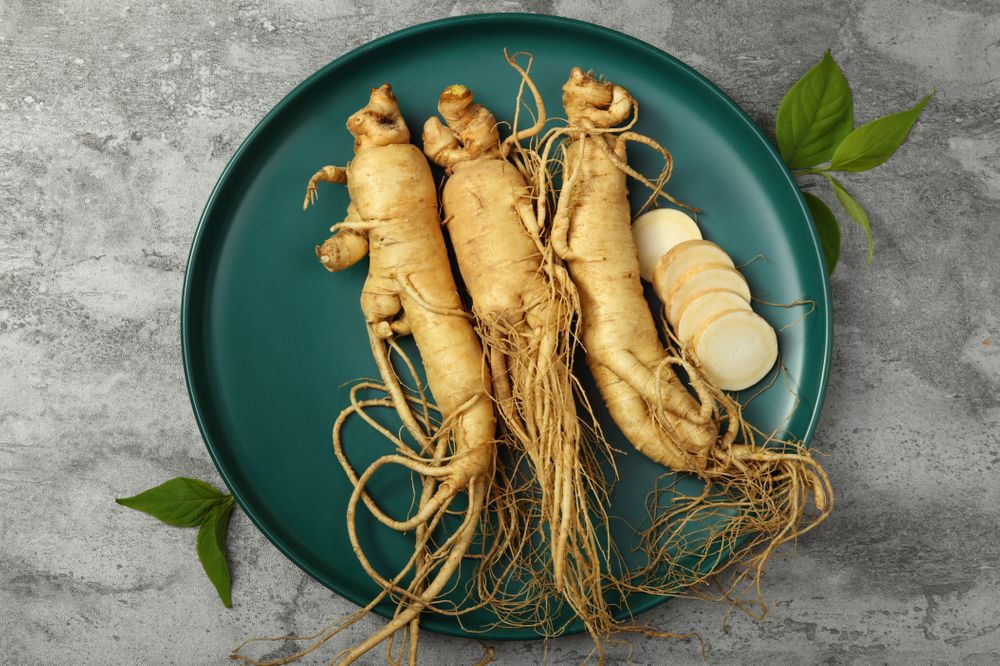
Ginseng has been used in traditional Chinese medicine for centuries. This slow-growing plant with fleshy roots can be classified in three ways, depending on the cultivation period: fresh, white, or red.
Fresh ginseng is harvested before 4 years, while white ginseng is harvested between 4 and 6 years, and red ginseng is harvested after 6 or more years.
There are many types of plants, but the most popular are American ginseng (Panax quinquefolius) and Asian ginseng (Panax ginseng).
American and Asian ginseng vary in terms of the concentration of active compounds and their effects on the body. It is believed that American ginseng acts as a relaxing agent, while the Asian variety has a revitalizing effect.
Ginseng contains two significant compounds: ginsenosides and gintonin. These compounds complement each other to provide health benefits.
Powerful Antioxidant That Can Reduce Inflammation
Ginseng has beneficial antioxidant and anti-inflammatory properties. Some testing studies have shown that ginseng extracts and their compounds can inhibit inflammation and increase antioxidant capacity in cells.
Research has concluded that red ginseng may help reduce oxidative stress by increasing antioxidant enzyme activities.
Beneficial for the Brain
Ginseng helps improve brain functions such as memory, behavior, and mood, both in healthy individuals and those suffering from Alzheimer’s disease.
Improves Erectile Dysfunction
Research has shown that ginseng can be a useful alternative for treating erectile dysfunction in men. Its compounds may protect against oxidative stress in blood vessels and tissues, helping to restore normal function.
Stimulates the Immune System
Ginseng can strengthen the immune system in sick individuals and even enhance the effects of certain vaccinations. Extracts from this plant increase resistance to infections.
Potential Cancer-Fighting Benefits
Ginseng may help reduce the risk of certain types of cancer. Research has shown that extracts of this plant help reduce inflammation and provide antioxidant protection, preventing abnormal cell growth.
Combats Fatigue and Increases Energy Levels
An analysis of over 155 studies suggested that ginseng supplements not only help reduce fatigue but also increase physical activity by decreasing oxidative damage and increasing energy production in cells.
Reduces Blood Sugar
This plant may be beneficial in controlling blood glucose levels. Ginseng has been shown to improve pancreatic cell function, stimulate insulin production, and enhance the absorption of blood sugar into tissues.
Easy to Add to Your Diet
Ginseng root can be consumed in many ways.
Tea: Chop the ginseng root (1-2 teaspoons per cup), then add hot water and let it steep for a few minutes.
It can also be added to various recipes, such as soups and pastries. The extract is available in powder, tablet, capsule, and oil forms.
How Much Should Be Consumed?
Generally, daily doses of 1-2 grams of raw root or 200-400 mg of extract are suggested. It is best to start with small doses and gradually increase over time.
To maximize its benefits, ginseng should be taken in cycles of 2-3 weeks, followed by a break of another two weeks.
Attention! According to researchers, ginseng appears to be safe and should not produce adverse effects. However, individuals taking diabetes medications should closely monitor their blood sugar levels when using ginseng to ensure these levels do not drop too low.
Additionally, ginseng may reduce the effectiveness of anticoagulant medications.
Note that due to the lack of safety studies, ginseng is not recommended for children, pregnant women, or nursing mothers.




