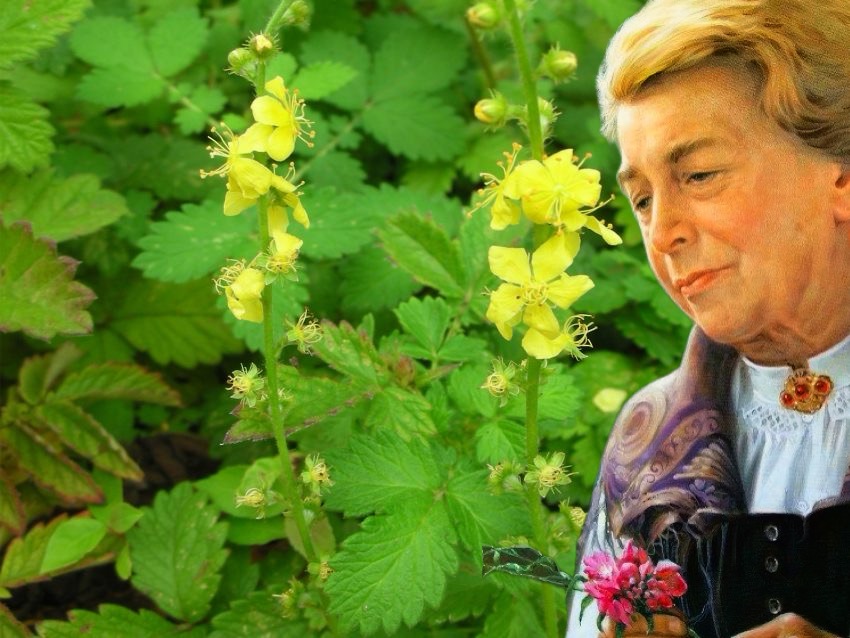
When the liver is tired, the gallbladder sluggish, or the spleen inflamed, the body suffers. Maria Treben firmly recommends great agrimony (Agrimonia eupatoria) tea for these ailments, as it is a plant with detoxifying, anti-inflammatory, and regenerative action on the hepato-biliary system.
What Maria Treben Said:
Great agrimony is the plant for the liver and spleen. Those with pain in the right side under the ribs, with a sick liver or sluggish gallbladder, will feel different after a cure with this plant.
Maria Treben
Recipe (authentic, from the book)
Ingredients:
- 1 tablespoon of dried great agrimony (finely chopped)
- 250 ml of boiling water
Preparation Method:
- Pour hot water over the plant and let it
, then strain.
Administration Method:
- Drink 2-3 cups a day, before meals.
- The cure should last at least 3 weeks and can be repeated after a break of 7-10 days.
- In chronic conditions, Maria Treben recommends daily use for extended periods.
Benefits
Great Agrimony:
- Contains tannins, flavonoids, volatile oils, and silicon, which act beneficially on the liver and gallbladder.
- Has a choleretic effect (stimulates bile secretion) and a chologogue effect (promotes bile elimination).
- Relieves spasms and pain in the right hypochondrium, common in liver diseases.
- Has a mild detoxifying effect on the liver and supports the regeneration of liver cells.
- Is effective in spleen inflammation, hepatitis, hepatic steatosis, and biliary dyskinesia.
What Do Modern Studies Say?
- A study published in Journal of Ethnopharmacology (2017) confirmed the hepatoprotective effect of great agrimony extract, due to its content of flavonoids and ursolic acid, with antioxidant and anti-inflammatory potential.
- Other research has shown that this plant reduces transaminase levels in cases of fatty liver and hepatic inflammation.
Contraindications
- Not recommended for pregnant or breastfeeding women without medical advice.
- May interact with anticoagulant medications as great agrimony contains tannins with potential astringent effects.
- Avoid in cases of severe chronic constipation due to its mild astringent effect.
Sources:
- Maria Treben – Health from the Pharmacy of the Lord
- Journal of Ethnopharmacology, Hepatoprotective activity of Agrimonia eupatoria in experimental liver injury
- Planta Medica, Flavonoids from Agrimonia eupatoria and their biological activity




