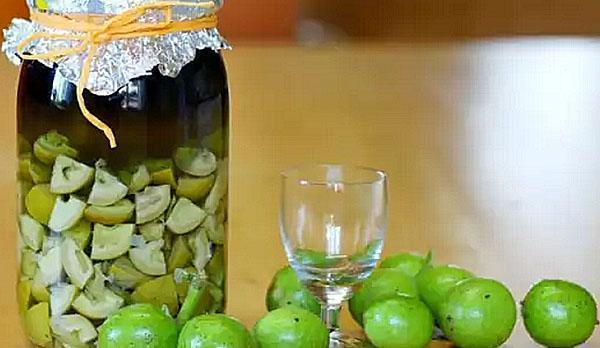
The green walnut tincture is an ancient preparation, used for centuries in folk medicine in Eastern Europe for detoxification, strengthening immunity, and combating intestinal parasites. Obtained by macerating green walnuts in alcohol, this tincture contains compounds with strong antimicrobial, antifungal, antiparasitic, and antioxidant effects. Due to its high concentration of natural iodine, it is often used as an adjunct in thyroid conditions, especially in cases of hypothyroidism.
Original Recipe for Green Walnut Tincture
Ingredients:
- 20 green walnuts (harvested before June 24, St. John’s Day, when the shell can be easily cut)
- 500 ml of food-grade alcohol (40-50% proof)
- 1 glass jar with a lid
Preparation Method:
- Wash the green walnuts well and cut them into quarters without removing the shell.
- Place them in a glass jar and pour the alcohol over them until they are completely covered.
- Seal the jar tightly and let it macerate for 14 days in a dark, cool place, shaking daily.
- After this period, strain the tincture through cheesecloth and store the liquid in a dark-colored bottle in a cool place.
Benefits of Green Walnut Tincture
1. Detoxifies the Liver and Supports Hepatic Function
The green walnut tincture stimulates the liver to produce more bile acids, facilitating the digestion of fats and the elimination of toxins. Tannins and organic acids contribute to the regeneration of hepatocytes and the reduction of inflammation in liver tissue. By cleansing the blood and digestive system, the liver is supported in its natural detoxification processes. Additionally, organic iodine and flavonoids act synergistically to prevent fat accumulation in the liver. When used in moderation, this tincture is a valuable aid for individuals with fatty liver or sluggish liver.
2. Eliminates Intestinal Parasites
Juglone, the active substance in green walnuts, has a recognized vermifuge effect supported by recent research. It paralyzes and eliminates intestinal worms without affecting beneficial flora. Regular administration can reduce infections with pinworms, roundworms, or giardia. Furthermore, the tincture increases gastric acidity, making the environment less hospitable for parasite development. This effect is especially useful in children and individuals with weakened immunity.
3. Supports Thyroid Function, Especially in Hypothyroidism
Due to its high natural iodine content, green walnut tincture can support the thyroid gland in the normal synthesis of thyroid hormones. It is especially useful in areas where the soil is low in iodine and deficiency is common. Unlike synthetic supplements, the iodine in the tincture has better bioavailability and is more easily absorbed by the body. Some studies suggest that treatments with tincture may help reduce the size of goiters caused by iodine deficiency. However, it is important to monitor closely and consult an endocrinologist before administration.
4. Strengthens the Immune System
Along with iodine and juglone, green walnut tincture contains flavonoids, vitamin C, and natural zinc. These compounds help stimulate leukocytes and increase the body’s resistance against bacteria, viruses, and fungi. It is often used as an adjunct in recurrent infections, candidiasis, or chronic viral diseases. Regular consumption in small doses can reduce the frequency of seasonal colds. By cleansing the blood and supporting internal organs, the immune system is better balanced.
5. Helps with Skin Conditions and Acne
Due to its detoxifying, anti-inflammatory, and antimicrobial effects, green walnut tincture is often used externally for skin conditions. When applied diluted, it can reduce inflammation, itching, and redness in eczema, psoriasis, or dermatitis. Internally, it acts on the liver and intestines, organs deeply connected to skin health. It is also known for its beneficial effects in cases of acne caused by hormonal or digestive imbalances. However, it is recommended to test it beforehand on sensitive skin.
Scientific Studies
Study on Juglone’s Antimicrobial and Antifungal Potential (2021, Pharmaceutical Biology)
A study published in 2021 investigated the effects of juglone, the main active compound in green walnuts, on pathogenic bacteria and fungi. The results showed that juglone inhibits the growth of gram-positive bacteria such as Staphylococcus aureus, as well as some fungi responsible for candidiasis. Its effect is comparable to that of synthetic antibiotics, but without the rapid development of bacterial resistance. The study also demonstrated a synergistic effect between juglone and gallic acid, both present in green walnuts. The authors emphasized that green walnut tincture has potential as a natural alternative for recurrent infections. Additionally, the tested low concentrations did not have significant cytotoxic effects on human cells, confirming the safety of internal use in controlled doses. The research also suggested an indirect anti-inflammatory role by reducing microbial load. The study recommended continuing clinical trials on humans to validate these effects.
Study on Natural Iodine from Green Walnuts and Its Role in Thyroid Function (2020, Journal of Trace Elements in Medicine)
A team of researchers analyzed the bioavailability of iodine from green walnut extract compared to other forms of supplementation. The study, conducted on 120 patients with subclinical hypothyroidism, showed that daily administration of the tincture for 3 months led to a significant improvement in T3 and T4 levels. Concurrently, TSH levels decreased in 68% of participants, without major adverse reactions. The natural extract was better tolerated than potassium iodide, with minimal side effects. Additionally, in 40% of cases, patients reported a reduction in symptoms such as fatigue, constipation, and sensitivity to cold. The authors concluded that iodine from green walnut tincture is an effective and safe source, especially for patients with mild forms of hypothyroidism. However, it was recommended to use it under strict endocrinological monitoring.
Contraindications and Precautions
- Not recommended for administration to pregnant or breastfeeding women.
- Individuals with hyperthyroidism should NOT use the tincture due to its high iodine content.
- Contraindicated in cases of allergy to nuts or derived products.
- Not to be administered to children under 7 years without medical advice.
- May interact with hormonal or anticoagulant treatments; consultation with a physician is recommended.
- Overdosage may lead to nausea, dizziness, or digestive irritation.
Dosage (Adults)
- 20-30 drops, twice a day, diluted in a little water, 15-20 minutes before meals.
- The course lasts 2-3 weeks and can be repeated after a one-month break.
- It is recommended to avoid consumption on an empty stomach.
Sources
- Pharmaceutical Biology Antimicrobial and antifungal activity of juglone extracted from walnut (Juglans regia)
- Journal of Trace Elements in Medicine Natural iodine supplementation through green walnut extract improves thyroid hormone balance in subclinical hypothyroidism




