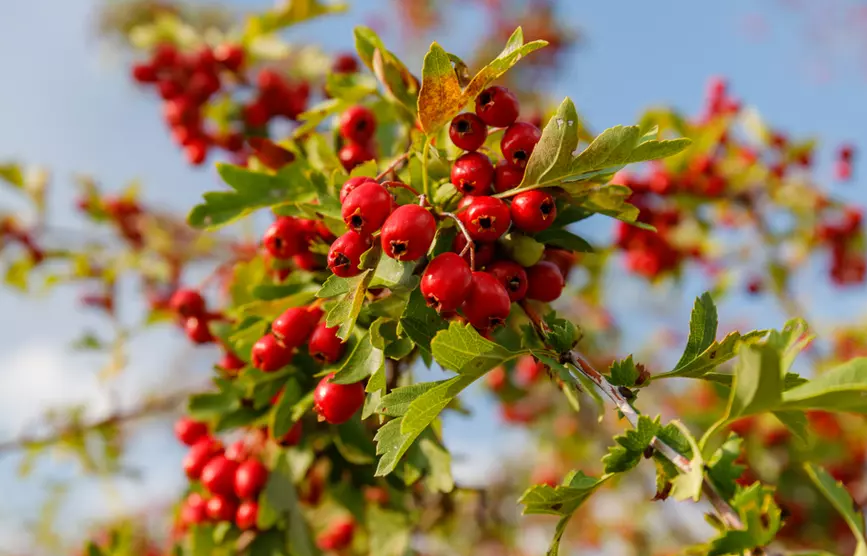
Hawthorn is known in folk medicine as the doctor of the heart.
In fact, it is probably the best medicinal plant for heart health.
Hawthorn is the best plant for the heart and blood vessels
What properties does hawthorn have
Hawthorn (Crataegus spp.) has vasodilatory, hypotensive or hypertensive, antioxidant, anti-inflammatory, antispasmodic, cardiac tonic, diuretic, and sedative properties.
It supports the heart and blood vessels due to the flavonoids (anthocyanins) it contains. These antioxidants have a tonifying and anti-inflammatory effect at the tissue level.
Strengthens blood vessels and the heart
Another benefit of consuming hawthorn is the strengthening of the heart. It is recommended in all heart conditions from this perspective. It regulates heart activity.
Hawthorn is special in that it modulates blood pressure according to the problem. If the pressure is high, hawthorn lowers it; if it is too low, it raises it.
Thus, it is a useful plant in both hypertension and hypotension.
Anti-inflammatory, vasodilator
Hawthorn improves coronary and cerebral blood circulation. It tones the small blood vessels and promotes the elimination of fats accumulated on the walls of the arteries.
By cleansing the blood vessels of cholesterol deposits, it also improves blood circulation.
Due to its antioxidants, hawthorn helps eradicate free radicals and harmful acids. It also aids in any type of inflammation.
Sedative effect in heart conditions with a nervous substrate
In addition to its cardiovascular properties, hawthorn has a favorable action on the central nervous system. It can be useful as a sedative in insomnia and in conditions of the adrenal glands.
Therapeutic indications
Hawthorn preparations are beneficial in the following conditions:
For therapeutic purposes, the leaves, flowers, and fruits of hawthorn are used, which are harvested at different times of the year. The flowers are picked after blooming, the leaves from May to July, and the fruits in autumn, when they are well ripened, from September to November.
Hawthorn can be administered in the form of tea or tincture. Both preparations can be consumed long-term without issues.




