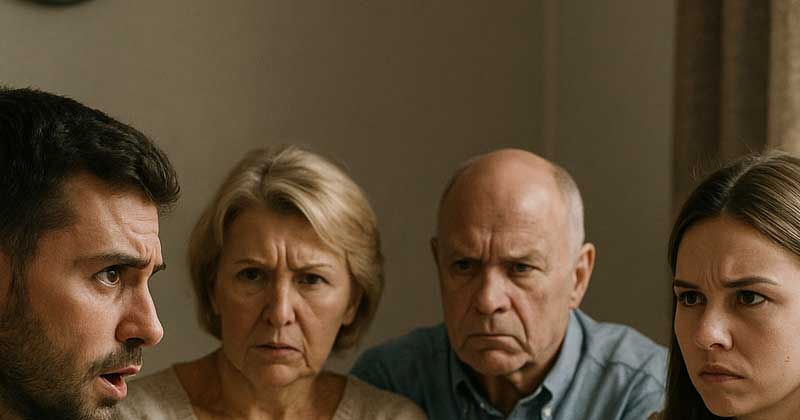
Catinca rolled her eyes and murmured something silently.
– Catinca, say it out loud, – said Iura, seeing the silent spectacle.
– Iurică, it doesn’t seem right this way, – she said hesitantly.
– What’s not right? – Iura asked, dissatisfied. – These “relatives,” as I’ll call them, borrowed considerable sums! And they wrote receipts with their own hands! And now we need money!
– But why this way? – Catinca said, averting her gaze. – It could have been different!
– Forgive them? – Iura laughed. – Such sums are not forgiven! And they are not forgotten!
– Well, Iura! – Catinca looked at him gently.
– What, Iura? – he began to get angry. – My business has gone bankrupt! And not just bankrupt, but with huge debts! They took my driving license until I pay my debts! Yes, I got a job. For eighty thousand! But half will be taken for the debt! And how are we supposed to live on forty thousand?
The silence settled over the table. The barely touched plates, unfinished glasses, and red faces of shame and anger created a hard-to-watch tableau. Iura breathed heavily, like a man who had finally said everything that had weighed on him for years.
For the first time, the relatives no longer seemed sure of themselves. Usually, family meals ended with jokes at his expense, with veiled reproaches that “he doesn’t help enough,” that “money comes and goes, but blood remains.” This time, however, the blood had turned bitter.
– Listen to me well, – Iura raised his voice. – I didn’t ask for anything that isn’t due to me. I didn’t come to take your houses or the bread off your table. I only asked you to keep your word. For us, Romanians, a given word is more sacred than paper. But you have forgotten that.
His mother-in-law flinched. She was raised in a family where “a man’s word” was respected, and now she felt caught with her hand in the cookie jar. His brother, Slavic, turned even redder, remembering how their father used to say: “A man who doesn’t pay his debts is not a man, he’s just a shadow.”
– And do you know what’s the saddest thing? – Iura continued, leaning back in his chair. – That not only money has been lost. Trust has been lost. And trust, once broken, cannot be mended.
Aunt Lenuța wiped her eyes with the corner of her scarf. The image of her sister, Iura’s mother, came to mind, always repeating: “Son, don’t let anyone trample on your work. Who doesn’t respect money, doesn’t respect people either.”
– I don’t want to break ties, – Iura added more gently but firmly. – But I will no longer accept being taken for a fool. In the village, when a man borrows from another, the men gather at the tavern and shake hands over the table. If you lie, everyone finds out, and you become a disgrace. I didn’t want to disgrace you. But maybe you deserve it.
The heavy smell of cold roast lingered in the air. The silence became oppressive. Only the clock on the wall ticked, reminding them all that time passes and that none of them are children anymore.
Catinca looked at him for a long time, tears in her eyes. She loved him, but she feared how much he had changed. Still, deep down, she knew he was right. As long as he worked and the others lived off him, not only his business was collapsing, but their marriage as well.
– Iura… – she whispered. – Maybe you should have spoken up earlier.
He gently touched her hand. – Better late than never.
From the corner of the table, Slavic burst out: – Fine! I’ll give you the money! I don’t know how, but I will! But don’t let me hear any more talk about “not being a man.”
– That’s how I want you, brother! – Iura said with a tired smile. – Do it not for me, but for yourself.
His mother-in-law and father-in-law exchanged worried glances. They knew Iura was right. And, although with difficulty, they understood that the time for hiding behind excuses had passed.
Aunt Lenuța sighed deeply. – I’ll see what I can do. Maybe I’ll sell the girl’s apartment. Just don’t drag me through the courts…
– Then let’s start with that, – Iura agreed. – I don’t want a scandal, I want justice.
At that moment, each of them felt that something had changed forever. It was no longer just about money, but about dignity, about the courage to face the truth.
And, for the first time in many years, Iura felt his heart lighten. He didn’t know what tomorrow would bring, but he knew he had laid the foundation on truth. And that, in Romanian culture, meant the beginning of a new life – with fewer noisy meals, but with more peace in the soul.
This work is inspired by real events and people, but has been fictionalized for creative purposes. Names, characters, and details have been changed to protect privacy and enhance the narrative. Any resemblance to real persons, living or dead, or to real events is purely coincidental and not intended by the author.
The author and publisher do not assume responsibility for the accuracy of events or for how characters are portrayed and are not liable for any misinterpretations. This story is provided “as is,” and any opinions expressed belong to the characters and do not reflect the views of the author or publisher.


