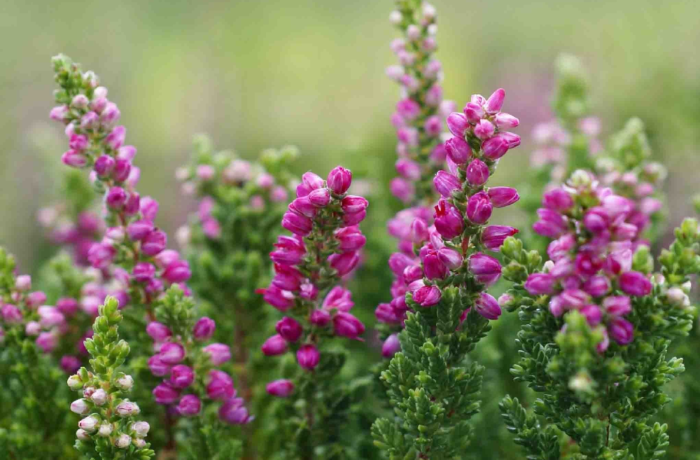
Heather (Calluna vulgaris), also known as caluna or heather, is a plant with small purple flowers, found in meadows, hills, and forests across Europe and Asia. Although it was frequently used in traditional phytotherapy for urinary issues and rheumatism, recent studies have highlighted its important role in balancing the nervous system. An infusion or tincture made from heather flowers can be a natural solution for symptoms of anxiety, insomnia, or mild nervous disorders.
Detailed Benefits
1. Calms the nervous system and reduces mental agitation
Heather contains flavonoids (quercetin, kaempferol), tannins, and volatile oils that act as mild sedatives on the central nervous system. These substances help regulate neurotransmitters involved in anxiety and stress.
2. Alleviates insomnia and improves sleep quality
By reducing nervous excitability and relaxing the muscles, heather tea is recommended in the evening routine to induce deep and restful sleep.
3. Supports recovery in cases of nervous exhaustion
In cases of mental overstrain, chronic fatigue, or convalescence after stressful periods, heather helps restore psycho-emotional balance.
4. Reduces nervous tension associated with digestive issues
Symptoms of anxiety and stress can lead to cramps or bloating. Heather tea also has a mild antispasmodic and carminative effect, soothing the digestive system affected by stress.
5. Mild diuretic and urinary antiseptic
Heather is known for its mild diuretic action and antiseptic effect on the urinary tract, due to arbutin and tannins. These properties make it recommended for mild urinary infections, water retention, and supporting kidney function.
6. Supports joint health
With its content of flavonoids that have anti-inflammatory and mild detoxifying effects, heather can be used as an adjunct in rheumatism and joint pain caused by chronic inflammation or toxic accumulation in the body.
7. Helps in cases of gout and mild urinary lithiasis
Through its combined diuretic, detoxifying, and anti-inflammatory effects, it can support the elimination of uric acid and excess salts, contributing to the prevention or alleviation of symptoms in cases of gout or small kidney stones.
8. General detoxifier and supporter of the lymphatic system
A course of heather tea helps eliminate toxins from tissues, being useful in detoxification regimens or in supporting immunity, especially during convalescence.
9. Helps reduce excessive sweating
The tannins in the plant have a mild astringent effect, which can help regulate abundant sweating, especially in cases of nervous hyperhidrosis (sweating caused by emotions or stress).
Studies
- Pharmacological Properties of Calluna vulgaris Extracts Journal of Herbal Pharmacotherapy, 2010
The study highlighted the sedative and anxiolytic effects of hydroalcoholic extract of heather on animal models. A reduction in cortisol levels and improvement in sleep onset time were observed. - Calluna vulgaris: A Source of Bioactive Polyphenols with CNS-Modulating Effects Phytochemistry Reviews, 2016
The analysis demonstrated that the flavonoids and tannins in the plant positively influence the activity of GABA and serotonin neurotransmitters, contributing to the overall calming effect. - The Traditional Use of Heather (Calluna vulgaris) for Anxiety and Restlessness: A Review of Ethnobotanical Evidence Journal of Ethnopharmacology, 2018
Confirms the traditional use of the plant in calming nervousness, especially in regions of Scandinavia and Central Europe.
Recipes and Administration
Calming Tea from Heather
Ingredients:
- 1 tablespoon of dried heather flowers
- 250 ml boiling water
Preparation:
Infuse for 10 minutes, strain, and consume warm.
Administration: 1-2 cups per day, preferably in the afternoon and evening.
Tincture from Heather
Ingredients:
- 100 g dried flowers
- 500 ml food-grade alcohol (40-45)
Preparation:
Let it macerate for 14 days, shaking daily. Strain and store in dark glass bottles.
Administration: 20-30 drops in a little water, twice a day, before meals.
Harvesting and Drying
- When to harvest: In the months of July-September, when the flowers are fully open.
- How to dry: In a thin layer, in a shady and airy place. The flowers should be kept whole, in a jar or paper bag, protected from light and moisture.
Precautions
- Administration is not recommended in parallel with strong sedatives or antidepressants without medical advice.
- Contraindicated in pregnancy and breastfeeding due to insufficient studies.
Sources:
- Pharmacological Properties of Calluna vulgaris Extracts Journal of Herbal Pharmacotherapy, 2010
- Calluna vulgaris: A Source of Bioactive Polyphenols with CNS-Modulating Effects Phytochemistry Reviews, 2016
- The Traditional Use of Heather (Calluna vulgaris) for Anxiety and Restlessness Journal of Ethnopharmacology, 2018
- Encyclopedia of Medicinal Plants from the Flora of Romania Constantin Parvu, 2005




