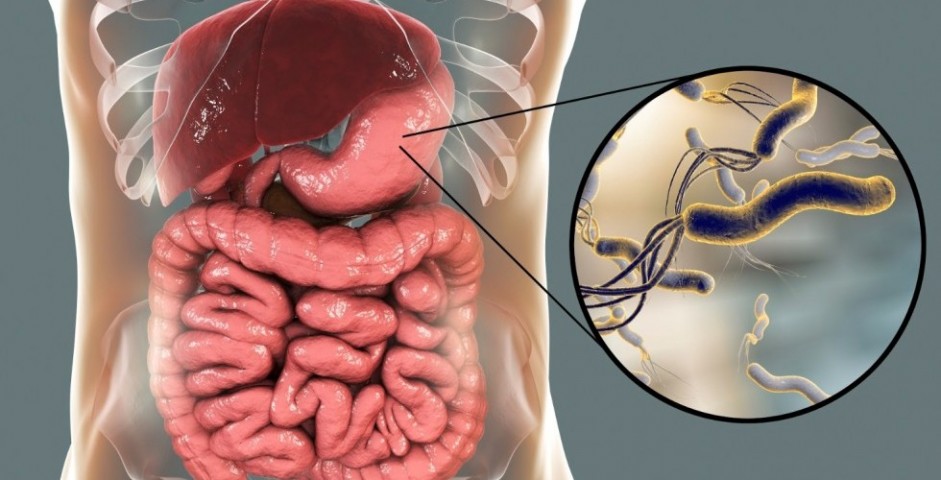
Helicobacter pylori (H. pylori) is a type of bacteria that has existed for at least two hundred thousand years. It is not uncommon for a person to have this bacterium and not even know it!
According to the CDC, approximately 66% of the world’s population is infected with Helicobacter pylori. In developing countries, the numbers are even worse, with up to 80% of adults and 10% of children likely having an H. pylori infection. If you have this infection, you are most likely asymptomatic. However, this bacterium living in your body can increase the risk of developing gastric cancer by up to six times. Additionally, H. pylori is often at the root of other major digestive issues, such as peptic ulcers and gastritis. So, not only can H. pylori cause gastric ulcers, but it can also cause ulcers in the esophagus or small intestine.
How is H. pylori infection transmitted?
Unfortunately, this bacterium is easily transmitted simply by sharing a glass or utensils with someone who is already infected. There are conventional treatments for this infection, but they are not without negative side effects. Antibiotics, for example, may kill or not kill the harmful bacteria causing an H. pylori infection, but they will also annihilate the good bacteria. Fortunately, there are natural ways to treat and prevent a Helicobacter pylori infection.
What is H. pylori?
So, what exactly is H. pylori? Helicobacter pylori (H. pylori) is a spiral-shaped bacterium. It causes chronic inflammation and infection in the stomach and duodenum (the first part of the small intestine just beyond the stomach). This type of bacteria is often referred to as ulcer-causing bacteria because it creates a cytotoxin (cytotoxin A or Vac-A that vacuolates) that can form an ulcer in the digestive system.
Where exactly can H. pylori be found in the body?
Helicobacter pylori bacteria are typically found in the mucous layer that covers and protects the tissues lining the stomach and small intestine. When this bacterium successfully inflames the inner lining of the stomach, an ulcer can form. It is said that H. pylori causes more than 90% of duodenal ulcers (upper small intestine) and up to 80% of gastric ulcers (stomach ulcers).
Is H. pylori contagious?
Yes, an H. pylori infection appears to be contagious, according to experts. Since H. pylori often appears in multiple family members and seems to be more common in crowded living conditions and unsanitary environments, all indications point to the contagious nature of H. pylori.
Signs and Symptoms
Most people with an H. pylori infection do not even know they have it, as it often has no symptoms.
Sometimes, the infection will manifest symptoms such as:
- Bloating
- Nausea
- Abdominal discomfort
- Vomiting
More severe infections can cause symptoms such as:
- Abdominal pain
- Fatigue
- Heartburn
- Nausea and vomiting
- Dark stools
- Diarrhea
- Bad breath
- Anemia (low red blood cell count)
- Loss of appetite or decreased appetite
- Peptic ulcers
9 Natural Treatments for H. pylori
If you are not interested in conventional antibiotic treatment, you have several options for treating H. pylori naturally. In general, it is very important for us (the global population) to find reliable natural treatments for this bacterium, as antibiotic resistance against H. pylori is on the rise and does not seem to be slowing down anytime soon.
Here are some of the best scientifically supported treatments to naturally combat this bacterial infection:
1. Probiotics
Since H. pylori is an unwanted or harmful bacterium in the intestines, it makes perfect sense that probiotics (good bacteria) can help naturally combat this type of infection.
A 2017 study highlighted an excellent point: common antibiotics used to get rid of H. pylori (including amoxicillin, clarithromycin, and metronidazole) often do not successfully eliminate H. pylori due to antibiotic resistance, which is becoming increasingly widespread.
Therefore, sometimes people take antibiotics for H. pylori and not only do they kill all the vital good bacteria that promote health, but they do not even kill the harmful H. pylori bacteria!
Lactobacillus fermentum, Lactobacillus casei, and Lactobacillus brevis are three specific strains of probiotics that have been highlighted in scientific research for their ability to fight against H. pylori bacteria.
2. Black Seed (Nigella Sativa)
Black seeds (black cumin) have many proven benefits, including successfully combating H. pylori infections. Research has found that daily administration of two grams of ground black seeds along with omeprazole (an acid blocker) was more effective in treating H. pylori than the standard triple therapy of an acid blocker plus two different antibiotics.
The study concludes that N. sativa seeds possess clinically useful anti-H. pylori activity, comparable to triple therapy. Black seeds also have acid-reducing and gastroprotective abilities.
3. Broccoli Sprouts
Broccoli sprouts contain extremely high levels of sulforaphane. Sulforaphane is known for its antioxidant and detoxifying benefits. These are used to make broccoli seed oil for external use, as well as supplements for internal use. Research published in Digestive Diseases and Sciences found that 78% (seven out of nine) of subjects who consumed broccoli sprouts (either 14, 28, or 56 grams) twice a day for a week tested negative for Helicobacter pylori.
The most recent study published in the journal Current Pharmaceutical Design demonstrates that sulforaphane from broccoli sprouts can not only fight against H. pylori and the gastritis it can cause, but also helps protect against gastrointestinal damage typically caused by dangerous anti-inflammatory medications.
4. Green Tea
Green tea is not just a popular beverage; it has been shown to inhibit the growth of Helicobacter pylori bacteria. In vitro studies have shown the strong effects of green tea against Helicobacter, and more importantly, it demonstrates that this tea can prevent inflammation of the gastric mucosa if ingested before exposure to Helicobacter infection. The study concludes that green tea is a natural substance that can be used both for prevention and for treating gastritis caused by Helicobacter pylori bacteria.
Other studies show that catechins, especially epigallocatechin gallate, from green tea have strong antibacterial powers when it comes to combating H. pylori bacteria. Green tea is an excellent source of catechins. Catechins have also been associated with antioxidant, antiviral, anti-platelet, and anti-cancer effects.
5. Garlic
Garlic is a natural anti-inflammatory and has natural antibiotic properties. Consuming both cooked and raw garlic can help kill Helicobacter pylori bacteria. A 2016 study found that individuals with Helicobacter pylori who consumed two medium-sized cloves of garlic (approximately 3 grams) at lunch and dinner had a significant reduction in Helicobacter pylori bacteria. This demonstrates that garlic has antibacterial effects, especially against H. pylori.
6. Propolis
Propolis is a resinous mixture collected by bees from various plant sources, used to maintain the solid structure of the hive. Scientists analyzing the exact chemical composition of propolis have discovered that it actually contains over 300 natural compounds. These compounds include amino acids, coumarins, phenolic aldehydes, polyphenols, quinones, sesquiterpenes, and steroids. Several studies have found that propolis extract, which is available as a supplement, is capable of inhibiting the growth of H. pylori bacteria due to its high content of phenolic compounds.
7. General H. pylori Diet
What to consume more:
- Foods rich in probiotics, such as kefir
- Wild-caught fish rich in omega-3 fatty acids
- Flaxseeds and chia seeds are rich in omega-3
- Raw honey, especially manuka honey, used in moderation in green/black tea
- Berries, especially raspberries, strawberries, blackberries, blueberries
- Cruciferous vegetables, especially broccoli and broccoli sprouts
What to avoid or at least reduce to combat Helicobacter pylori symptoms:
- Caffeine
- Carbonated beverages
- Spicy foods
- Refined grains with low fiber content
8. Herbs
Scientific research has shown that extracts from the following medicinal plants inhibit the growth of Helicobacter pylori bacteria:
- Agrimonia eupatoria (Common Agrimony)
- Hydrastis canadensis (Goldenseal)
- Filipendula ulmaria (Meadowsweet)
- Salvia officinalis (Sage)
9. Reduce Stress
If you have Helicobacter pylori, stress only exacerbates the symptoms. Additionally, individuals with anxiety and high levels of stress have shown weaker immune function, higher rates of H. pylori infections, and stomach inflammation/gastric ulcers. Make sure to include more stress-relief remedies in your daily life. Some great ideas include deep breathing, yoga, tai chi, acupuncture, and meditation.




