Henna is one of the oldest methods of hair care and coloring, used for thousands of years in India, the Middle East, and North Africa. Obtained from the dried leaves of the Lawsonia inermis plant, henna is a green powder with coloring, antimicrobial, and strengthening properties. Unlike synthetic dyes, henna penetrates the hair shaft without aggressive action, providing a healthy shine and protection against environmental factors. Additionally, many specialists in dermatology and natural cosmetics support the regular use of henna to combat dandruff, strengthen hair strands, and balance the scalp.
Benefits of Henna for Hair
1. Colors Hair Without Damaging It
Henna acts as a natural dye, adhering to the keratin in the hair strand without aggressively penetrating its cortex, as chemical dyes do. This means that hair is not dehydrated, burned, or weakened after coloring. Moreover, henna does not contain ammonia, peroxide, or other toxic additives, making it ideal for individuals with sensitive scalps or allergies. The shades obtained range from deep red to chestnut, depending on the natural color of the hair. Repeated application can gradually darken the hair, providing a uniform color and rich shine.
2. Strengthens Hair and Prevents Breakage
Henna has a protective coating effect on the hair strand, making it thicker and more resilient. Rich in tannins and flavonoids, it contributes to strengthening the protein structure of the hair. This helps reduce breakage and split ends, giving a healthy and well-groomed appearance. Additionally, hair strands become smoother to the touch and easier to style. When used regularly, henna can significantly improve the density and elasticity of the hair.
3. Balances the Scalp and Combats Dandruff
Henna has natural antimicrobial and antifungal properties that help reduce scalp irritation. By regulating sebum secretion, it can be beneficial for both oily and dry scalps. Used as a mask, henna gently cleanses the scalp and reduces the proliferation of fungi responsible for dandruff. It also alleviates itching and contributes to maintaining a healthy scalp. This beneficial action can be enhanced by combining henna with other plants, such as amla or neem.
4. Stimulates Hair Growth
By improving circulation at the scalp level and strengthening the roots, henna can support faster and more vigorous hair growth. The plant contains bioactive compounds that nourish the follicles and reduce premature hair loss. This effect is especially noticeable in individuals who use henna as a treatment mask, not just as a dye. The effects do not appear instantly, but regular applications lead to visible results within a few months. Thus, henna becomes an effective and natural treatment for thinning or damaged hair.
5. Protects Hair from External Aggressions
Henna forms a protective layer around each hair strand, acting as a shield against UV rays, pollution, and dry air. This natural film helps hair retain moisture and color for a longer time. Furthermore, it prevents the penetration of airborne impurities into the hair cuticle. Due to this protection, hair dyed with henna retains its shine and health in the face of aggressive environmental factors. This benefit is particularly useful in hot seasons or in large, polluted cities.
Studies and Research on Henna
A study published in the Journal of Ethnopharmacology (2015) highlighted the active compounds in the leaves of Lawsonia inermis, particularly lawsone, the substance responsible for natural coloring. The study showed that lawsone has antioxidant and antimicrobial activity, which can protect the skin and hair from bacteria and free radicals. The authors emphasized the potential of henna as a complementary treatment in dermatology, especially for scalp conditions, due to its ability to inhibit the growth of Gram-positive bacteria.
Another research published in the International Journal of Trichology (2021) compared the effects of henna with those of chemical dyes on hair using electron microscopy. The results showed that henna does not damage the cuticle; rather, it gently nourishes it by forming a uniform film. In contrast, ammonia-based dyes produced visible cracks in the hair structure, associated with loss of moisture and elasticity. Researchers concluded that henna could be an ideal alternative for individuals with fragile or damaged hair.
A study conducted in India (2020) on a sample of 60 women who used henna for 6 months reported a 45% reduction in dandruff and a 30% increase in hair density. Participants used henna once a month, combined with coconut oil. Researchers concluded that the positive effects were due to the synergy between the antifungal and astringent compounds of the plant and the emollient action of the oil. The study was published in the Asian Journal of Cosmetic Science.
In another paper published in Phytotherapy Research (2022), the authors analyzed the effects of henna on hair affected by oxidative stress induced by UV exposure. It was found that henna applied before UV exposure reduced hair protein degradation by 60% compared to uncolored hair. The results suggest that henna can be used not only for coloring but also as a protective barrier in pre-UV treatments. The authors recommended further research to develop henna-derived cosmetic products tailored for Western skin.
Contraindications
Although it is natural, henna can cause allergic reactions in some individuals, especially if mixed with additives such as PPD (paraphenylenediamine). These variants, known as black henna, can cause severe dermatitis and are not recommended. Individuals with sensitive skin should always perform a tolerance test on a small area of skin before application. Pregnant women should consult a doctor before use, especially if it involves complete scalp coloring. Additionally, henna may interact with certain dermatological treatments, such as those based on topical retinoids or corticosteroids.
Application Method
- Mix 100 g of henna powder with warm water until a thick paste is obtained.
- Let it activate for 8-12 hours, covered.
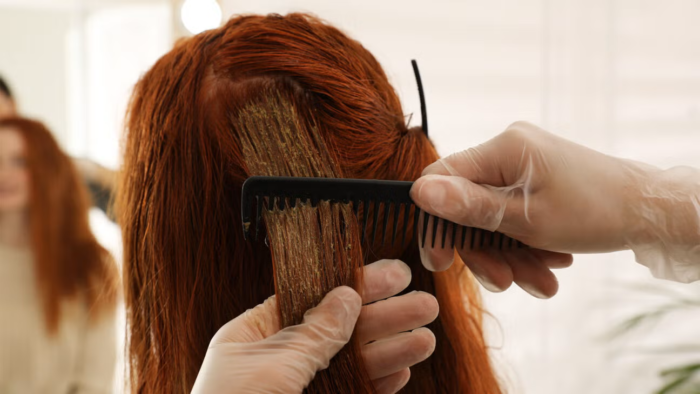
- Apply to clean, dry hair, from roots to tips.
- Cover the hair with plastic wrap and a towel and let it act for 24 hours.
- Rinse only with water, without shampoo, then let the hair dry naturally.
- The color will intensify in the next 48 hours, and the final result will last between 4 and 6 weeks.
Sources:
- Journal of Ethnopharmacology – Pharmacological properties of Lawsonia inermis
- International Journal of Trichology – Comparative damage in hair: henna vs. synthetic dyes
- Asian Journal of Cosmetic Science – Effectiveness of herbal hair dye on dandruff and hair growth
- Phytotherapy Research – UV-protection effects of Lawsonia inermis on human hair