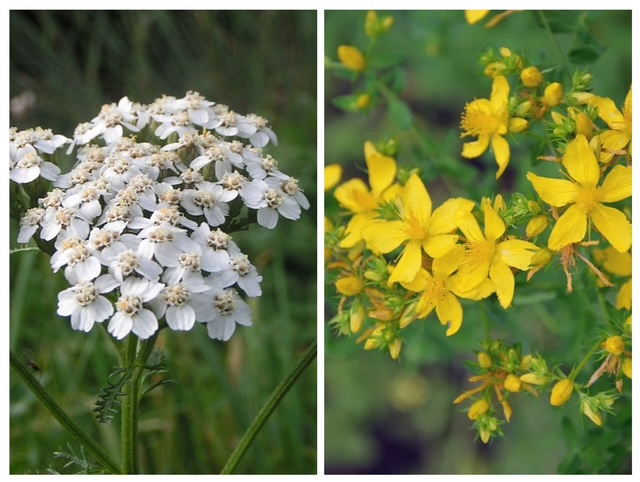
In the world of herbal remedies, plants like yarrow and St. John’s Wort are considered true treasures. Each has remarkable health benefits, but when combined, they can lead to unwanted interactions. Here is why the association of these two plants is NOT recommended!
Yarrow and St. John’s Wort: Two Valuable Plants, But Not Together
Yarrow (Achillea millefolium) is known for its anti-inflammatory, hemostatic, antispasmodic, and digestive effects. It is commonly used for gynecological issues, hemorrhoids, digestive problems, and liver imbalances.
St. John’s Wort (Hypericum perforatum) is a renowned natural antidepressant, indicated for anxiety, mild depression, insomnia, and nervous disorders. It also has antiviral, wound-healing, and anti-inflammatory properties.
However, although both plants may seem compatible at first glance, their combination can lead to adverse reactions if not used with caution.
Why Yarrow and St. John’s Wort Should NOT Be Combined
1. Estrogenic Potential and Hormonal Interference
Yarrow contains compounds with estrogenic potential (phytohormones), while St. John’s Wort can influence hormonal metabolism by stimulating certain liver enzymes (especially cytochrome P450). When combined, they can interfere with the hormonal balance of women, especially in those with hormone-dependent conditions (ovarian cysts, endometriosis, uterine fibroids, mastopathy, etc.).
A study published in Phytotherapy Research (2021) indicates that Hypericum perforatum can alter estrogen and progesterone levels in the body, which may lead to possible disruptions when combined with plants that have indirect hormonal effects.
2. Interactions on the Nervous System and Potentiation of Antidepressant Effects
St. John’s Wort has an antidepressant effect by inhibiting the reuptake of serotonin, dopamine, and norepinephrine. Yarrow also has mild calming effects on the nervous system. Together, they can lead to excessive drowsiness, dizziness, or emotional imbalances in sensitive individuals.
An article in Journal of Ethnopharmacology (2020) showed that the administration of St. John’s Wort along with other sedative plants can lead to unpredictable reactions, especially in individuals taking pharmacological treatments for mood disorders.
3. Increased Photosensitivity
St. John’s Wort is known for its photosensitizing effect, increasing skin sensitivity to UV radiation. Yarrow also contains sesquiterpene lactones that can exacerbate allergic reactions or photosensitivity. Combined, the two can increase the risk of skin rashes, sunburns, or dermatitis.
The study “Photosensitivity reactions with herbal medications,” published in American Journal of Clinical Dermatology (2019), confirms that St. John’s Wort can trigger photosensitive reactions in individuals exposed to sunlight, especially in combination with other potentially irritating plants.
4. Interactions with Medications
St. John’s Wort is a plant with a high risk of drug interactions because it induces the CYP3A4 enzyme, responsible for metabolizing numerous medications (anticoagulants, contraceptives, antidepressants, antivirals, etc.). Yarrow, in turn, can also influence liver metabolism. The combination can destabilize the action of chronic treatments.
According to a report from the European Medicines Agency (EMA), individuals undergoing treatment with anticoagulants, anticonvulsants, or immunomodulators should avoid St. John’s Wort and its combinations.
Specific Contraindications for the Combination
This combination is NOT recommended in the following cases:
- Individuals undergoing treatment with antidepressants, anticonvulsants, anticoagulants, or contraceptives
- Women with hormone-dependent gynecological conditions
- Individuals with sensitive skin or those frequently exposed to sunlight
- Individuals with liver conditions, due to liver overload
- Pregnant women and nursing mothers
Recommendation
If you wish to use these two plants for different conditions, do not take them simultaneously. They can be used alternatively, in separate courses, with breaks of 12 weeks in between and only under professional supervision.
Sources
- Phytotherapy Research Effects of Hypericum perforatum on hormonal balance in women
- Journal of Ethnopharmacology Herbal interactions with CNS-acting medications
- American Journal of Clinical Dermatology Photosensitivity reactions with herbal medications
- European Medicines Agency (EMA) Public statement on Hypericum perforatum and its interaction with medicinal products




