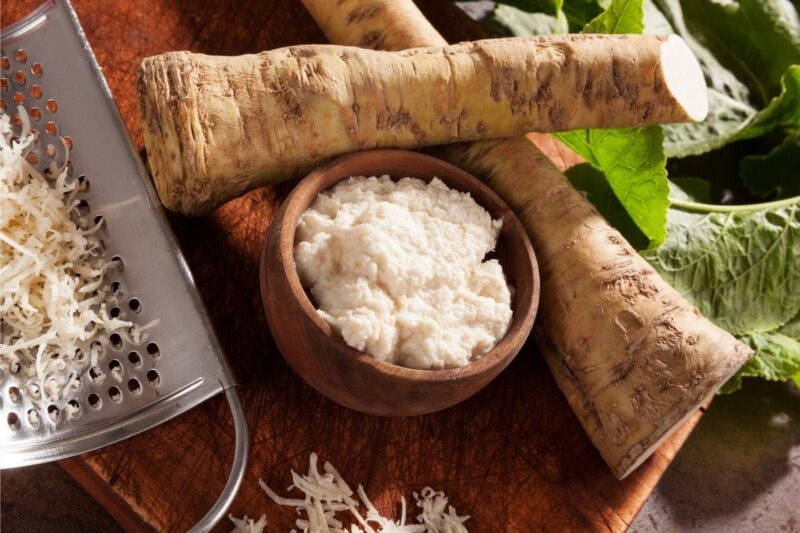
The horseradish poultice is an old remedy, passed down from generation to generation, known for its ability to combat pulmonary congestion, inflammation of the respiratory tract, and symptoms associated with colds. This remedy utilizes the thermogenic and expectorant action of horseradish, enhanced by the gentle texture of flour, which helps protect the skin from irritation.
Necessary Ingredients:
- 2 tablespoons of freshly grated horseradish
- 1 tablespoon of white or whole flour (to reduce skin irritation)
- 12 tablespoons of warm water (enough to create a thick paste)
- A piece of clean cheesecloth or cloth
- Thick towel
Preparation Method:
- Grate the fresh horseradish finely and mix it with the flour.
- Gradually add warm water, continuously mixing until you obtain a thick paste.
- Spread the obtained paste on a piece of cheesecloth or cloth, in a thin layer.
- Apply the poultice to the chest or between the shoulder blades (pulmonary area) for 5-15 minutes, depending on tolerance.
- Cover with a thick towel to maintain local warmth.
- Remove immediately if a strong burning sensation or severe irritation occurs.
It can be repeated once a day for 3-5 days, depending on the intensity of the symptoms.
Benefits of Horseradish Poultice
1. Decongesting the Respiratory Tract
Horseradish is rich in volatile oils (especially sinigrin), which penetrate the skin and stimulate local circulation. When applied externally, it produces a mild local irritation that causes dilation of capillaries and better oxygenation of tissues. This reaction helps to thin mucus in the bronchi and expel it through coughing.
A study published in Evidence-Based Complementary and Alternative Medicine (2015) showed that horseradish-based preparations have significant expectorant and mucolytic effects, comparable to some classic cold medications.
2. Reducing Sinus Inflammation and Nasal Congestion
The natural vaporization of active compounds in horseradish acts as a nasal and sinus decongestant, reducing local inflammation. By applying the poultice to the chest, patients often notice a rapid improvement in breathing.
In German medicine, horseradish preparations are included in complementary therapies for chronic sinusitis and allergic rhinitis.
3. Stimulating Local Immune System
Through hyperemia (increased local blood flow), the poultice activates the body’s local defense mechanisms. The skin and tissues in the thoracic area react by releasing cytokines and other immune molecules, which promote faster recovery.
Horseradish also contains vitamin C, glucosinolates, and sulfur compounds, which have antimicrobial effects against respiratory viruses.
4. Soothing Productive Cough
Through its thermal and revulsive action, the poultice activates the cough reflex while simultaneously promoting the elimination of dense secretions. This leads to a gradual reduction in cough frequency and a feeling of relief in the chest area.
The expectorant action has also been supported by clinical studies conducted in Germany, which combined horseradish and nasturtium extracts in the treatment of acute bronchitis, with significant results in 5-7 days.
5. Rapid Warming of the Thoracic Area – Antispasmodic Effect
The deep warming effect is beneficial for thoracic muscle spasms or intercostal pain associated with coughing. The warmth eases breathing and relaxes contracted muscles.
This type of external application is frequently used in Russian and Balkan medicine, where horseradish is employed to treat pleurisy and chronic bronchitis.
Important Contraindications:
- Sensitive or damaged skin: horseradish can cause chemical burns if left on too long or applied directly without cheesecloth.
- Children under 6 years: their skin is too thin and reactive for this type of poultice.
- Severe asthma or respiratory allergies: may worsen symptoms upon contact with volatile oils.
- Pregnancy: application on large areas is not recommended due to possible circulatory reactions.
- Hypersensitivity to plants in the Brassicaceae family: may trigger allergic reactions.
- High blood pressure: applying a spicy poultice to the chest may stimulate the sympathetic nervous system.




