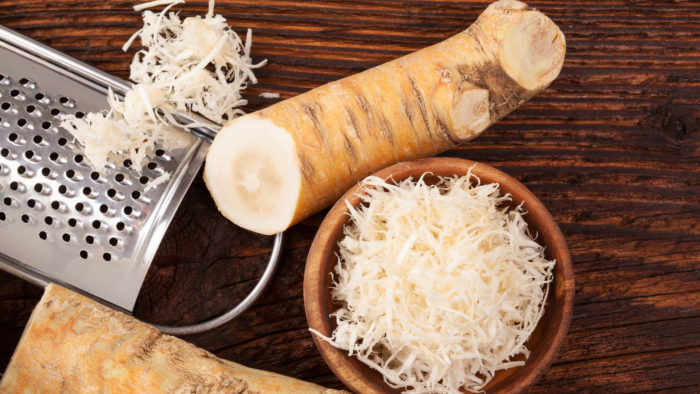
Horseradish has been known for centuries for its benefits in treating various ailments, including joint and muscle pain. Here’s how horseradish can be used to treat leg and knee pain and what beneficial effects it has on your body.
Therapeutic Properties of Horseradish
Horseradish contains active substances that can help reduce inflammation and alleviate pain, including:
- Glucosinolates (sulfur compounds) that have anti-inflammatory and analgesic effects.
- Vitamin C helps reduce inflammation and strengthens the immune system.
- Mucilages serve to protect and soothe inflamed areas of the skin.
- Essential oils that stimulate blood circulation and provide a local warming effect.
These substances, in combination, help reduce discomfort, improve circulation, and support the tissue regeneration process.
How to Use Horseradish for Leg and Knee Pain
Horseradish and Parsley Soak for Feet
- Chop a few horseradish roots and place them in a bowl with hot water. Let it steep for 10-15 minutes. Try soaking your feet in this mixture for 20-30 minutes, and through the warming effect and improved circulation, the pain may significantly reduce.
- You can also add a few parsley leaves to enhance the soothing effects due to its anti-inflammatory properties.
Horseradish Paste Applied Locally
- For a more direct treatment, you can use grated horseradish. Gently massage the affected area (knee or legs) with freshly grated horseradish, then cover the area with a bandage or plastic wrap to let it act.
- Leave it on for 15-20 minutes. Horseradish will create a warming sensation, which helps relax the muscles and improve blood circulation in the affected area. It is important not to leave the compress on for too long, as horseradish can cause irritation to sensitive skin.
Horseradish Tincture
- Horseradish tincture can be used to treat rheumatic pain or arthritis. You can make a horseradish tincture by mixing grated roots with alcohol (usually vodka) in a jar and letting it sit in a dark place for 2-3 weeks. Then, apply a few drops to the painful area to help reduce inflammation and pain.
Horseradish and Apple Cider Vinegar Compress
- An effective combination for pain relief is applying a compress with horseradish and apple cider vinegar. Mix grated horseradish with apple cider vinegar in a 1:1 ratio and apply the compress to the knees or legs.
- Leave the compress on the skin for 15-20 minutes, then remove it and moisturize the skin well, as vinegar can dry out the skin.
Benefits of Using Horseradish for Leg and Knee Pain
Reduction of Inflammation
The substances in horseradish have strong anti-inflammatory effects, which can help soothe joint and muscle pain. This is particularly beneficial in cases of arthritis, rheumatism, or gonarthrosis.
Improvement of Circulation
Horseradish stimulates local blood circulation, which helps reduce stagnation and improve blood flow in painful areas, thus contributing to better tissue regeneration.
Muscle Relaxation
Through its warming effect, horseradish helps relax the muscles and can alleviate muscle spasms in the legs or knees.
Natural Analgesic Effects
The analgesic properties of horseradish can provide quick relief in cases of acute or chronic knee and leg pain by reducing the sensation of pain.




