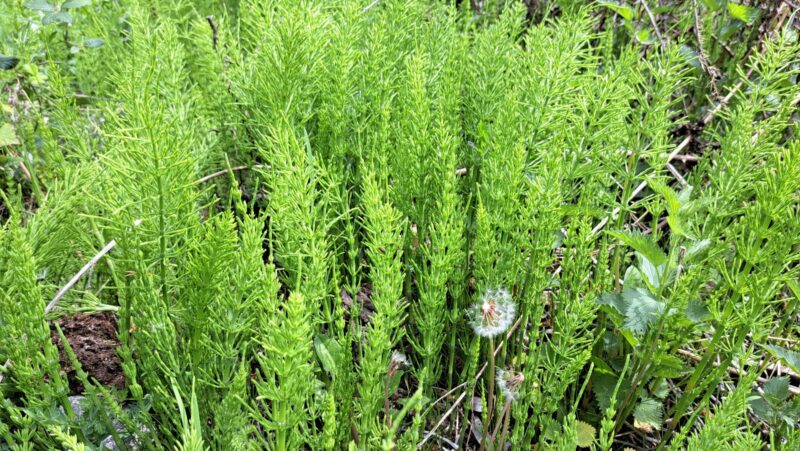
Recurrent urinary infections can become a real burden for many people, especially for women. Pain, the constant urge to urinate, burning sensations, and discomfort affect the quality of life and often respond poorly to conventional treatments. In this context, horsetail infusion (Equisetum arvense) offers a natural method for soothing and supporting the recovery of the urinary tract.
Why Horsetail?
Horsetail is a plant rich in silica, flavonoids, saponins, and organic acids, with the following actions:
- Mild diuretic, which supports the elimination of bacteria,
- Anti-inflammatory, reducing local discomfort and irritation,
- Antibacterial and astringent, useful in soothing affected tissues.
This combination makes it ideal for external use in cases of recurrent or mild urinary infections.
Benefits of Horsetail Infusion
Relieves Pain and Burning Sensation
A warm bath with horsetail infusion helps relax the pelvic muscles and reduces the sensation of tightness or burning during urination.
Supports the Fight Against Bacteria
The active substances in the plant have mild antimicrobial effects, which help reduce the recurrence of infections, especially when caused by E. coli.
Promotes Tissue Regeneration
Due to its high silica content, frequent baths with this plant help restore the epithelium of the bladder and urethra.
Stimulates Circulation in the Pelvic Area
The warmth and phytocompounds of the plant reactivate microcirculation, supporting natural healing.
Classic Recipe for Horsetail Infusion Bath
Ingredients:
- 5 tablespoons of dried plant (or 2 handfuls of fresh horsetail)
- 2 liters of water
- Optional: 1 tablespoon of non-iodized salt or magnesium bath salt
Preparation Method:
- Boil the water and add the plant.
- Cover the pot and let it steep for 15-20 minutes.
- Strain and pour into a basin or tub for bathing.
- Wait for it to cool down (ideal temperature: 37-39°C).
- Soak in the bath for 15-20 minutes, covering the lower back with a warm towel.
It is recommended to take 1-2 baths per day for 7 consecutive days during an active episode, or preventively 2-3 times a week.
What Do Studies Say?
Horsetail (Equisetum arvense) extract exhibits antimicrobial activity against urinary tract pathogens Journal of Ethnopharmacology (2020)
The study highlighted the effectiveness of horsetail extracts against bacteria frequently involved in urinary infections.
Herbal remedies in urinary tract infections Phytotherapy Research (2018)
Horsetail was mentioned as one of the plants with diuretic, anti-inflammatory, and healing potential useful in the natural treatment of UTIs.
The role of silica in tissue regeneration Nutrients (2021)
The silica in horsetail plays a key role in supporting the regeneration of irritated or inflamed epithelial tissues.
Contraindications and Precautions
- Do not use horsetail baths in case of acute severe infection, fever, or lower back pain (indicating upper urinary tract infection or pyelonephritis).
- Not recommended for pregnant women without medical advice.
- Avoid contact of the plant with broken or bleeding skin.
- Excessive internal use of horsetail (in the form of tea) can cause electrolyte loss.
Additional Recommendations for Prevention
- Drink 1.5-2 liters of water daily with light infusions of diuretic herbs.
- Avoid synthetic underwear and very tight clothing.
- Use probiotics to restore urinary flora.
Sources:
- Journal of Ethnopharmacology Horsetail extract antimicrobial activity against UTI pathogens
- Phytotherapy Research Herbal medicine in urinary tract infections
- Nutrients Silicon and tissue regeneration
- Plants used in urinary disorders A review International Journal of Research in Ayurveda and Pharmacy




