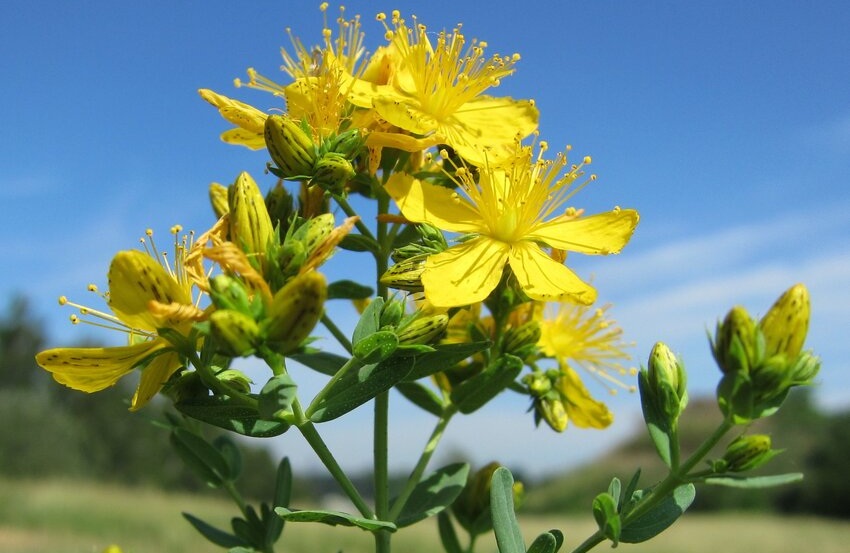
St. John’s Wort (Hypericum perforatum) is one of the most studied medicinal plants for its effects on mental states. For centuries, it has been used to combat anxiety and depressive states, but recent research has revealed something entirely unexpected: this plant directly influences brain frequencies, modifying brain wave activity. These findings open new perspectives on how plants can modulate our mental state, profoundly affecting consciousness and neurochemical balance.
Effects on Brain Frequencies:
1. Increased Alpha Waves: Deep Mental Relaxation
Studies have shown that St. John’s Wort stimulates the production of alpha waves, associated with a state of calm alertness, similar to that experienced during meditation. This effect may explain why many people feel more centered and balanced after regular administration of St. John’s Wort extract. Alpha waves facilitate creativity, introspection, and states of mental tranquility, while simultaneously reducing cognitive hyperactivity. By balancing alpha waves, St. John’s Wort helps calm excessive thoughts, anxiety, and mental tension. This benefit is essential in the context of the modern world, dominated by chronic stress.
2. Decreased Beta Waves: Reduction of Cognitive Hyperactivity
Beta waves are linked to alertness and rational thinking, but their excess can lead to anxiety, stress, and insomnia. By decreasing activity in this frequency band, St. John’s Wort induces a state of calm and reduces excessive reactivity to stimuli. This regulation of beta waves is particularly useful in cases of anxiety disorders or obsessive thinking. Additionally, reducing intense beta waves promotes relaxation of the sympathetic nervous system, contributing to normalizing heart rate and reducing blood pressure. Thus, the plant not only calms the mind but also regulates the physiology associated with stress.
3. Regulation of Theta Waves: Promotion of Dreams and Introspective States
St. John’s Wort supports the emergence of theta waves, associated with dreaming, deep wakefulness, and access to the subconscious. This characteristic is linked to better emotional processing and the ability to digest emotional traumas during sleep. By balancing these waves, the plant improves dream quality and fosters a state of inner peace. Additionally, theta waves are essential in subconscious learning and memory processes, which explains why St. John’s Wort is beneficial in cases of mental overload. Regulating these waves can reduce the risk of nightmares and sleep fragmentation.
Recent Scientific Research:
EEG Study Published in Phytomedicine (2016)
A study conducted by researchers at the University of Zurich, published in Phytomedicine, analyzed the effects of standardized St. John’s Wort extract on EEG (electroencephalogram) activity in healthy individuals. Participants received a dose of 900 mg/day of St. John’s Wort for 14 days, and brain activity was monitored with high-resolution EEG.
The results showed a significant increase in alpha waves in the frontal and occipital regions of the brain, associated with relaxation and concentration. Concurrently, there was a decrease in excessive beta waves, particularly in the temporal regions, suggesting a clear anxiolytic effect. These EEG changes were similar to those observed in guided meditation or deep breathing techniques.
The researchers concluded that St. John’s Wort has a neuroelectric impact comparable to that of certain SSRIs, but without their adverse effects. Furthermore, changes in brain frequencies were correlated with subjective improvements in well-being and sleep. The study was considered one of the most rigorous in the field of neurocognitive phytotherapy.
Study from the University of Northumbria
Another remarkable study conducted in the UK involved real-time EEG monitoring of subjects who consumed small doses of St. John’s Wort extract (300 mg). The aim of the research was to identify acute changes in brain waves within 2 hours after ingestion.
The results confirmed a rapid increase in alpha and theta waves, accompanied by a slight reduction in gamma waves, which are involved in mental overstimulation. These changes were associated with a significant decrease in anxiety scores (STAI), even in participants with moderate stress levels.
The researchers noted that the effects appeared more quickly than previously thought, within just 45 minutes after administration. Additionally, salivary cortisol levels (the stress hormone) decreased in parallel with EEG changes, suggesting a direct link between cerebral electrical activity and physiological response to stress.
Contraindications and Precautions
- St. John’s Wort interacts with numerous medications, including antidepressants, contraceptives, anticoagulants, HIV medications, immunosuppressants, and some cytostatics.
- It may reduce the effectiveness of contraceptive pills and hormonal treatments.
- It is not recommended in combination with alcohol, SSRIs, or MAOIs, as it may cause serotonin syndrome.
- It may cause photosensitivity reactions (sensitive skin to sunlight), especially at high doses.
- Pregnant or breastfeeding women should consult a doctor before administration.
Sources:
- Phytomedicine – Hypericum perforatum L. extract modulates brain activity in healthy volunteers: A double-blind EEG study
- Northumbria University Research – Acute cognitive and EEG effects of Hypericum perforatum: A placebo-controlled study
- Healthline – How St. John’s Wort Affects Brain Chemistry and Mood
- University of Zurich – EEG mapping of phytotherapeutic agents in mood regulation




