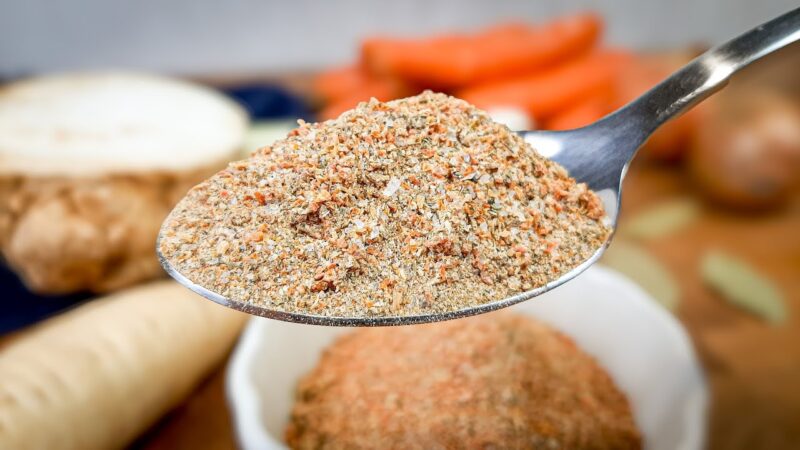
In an increasingly aware world regarding the ingredients in food, many of us are looking for healthy alternatives to store-bought products. Vegeta powder is a classic example of a seasoning used daily in meals, but commercial variants often contain additives, flavor enhancers (such as monosodium glutamate), and preservatives. Fortunately, there is a simple and 100% natural version that you can make right at home, without E-numbers, without excessive salt, but with an authentic taste and rich in nutrients.
Benefits of Natural Vegeta Powder: Why You Should Make It at Home
1. No synthetic additives, only natural ingredients
Homemade Vegeta powder does not contain E-numbers, artificial colorants, or preservatives. This reduces the risk of allergic reactions, migraines, or digestive issues associated with the consumption of artificial additives. By making it yourself, you can control each ingredient, thus avoiding harmful additives like monosodium glutamate, which is associated with MSG syndrome and other adverse effects.
2. Contributes to daily vegetable intake
Even in dehydrated form, vegetables retain a good portion of their vitamin and mineral content. Thus, this mix can help meet daily nutritional needs, providing antioxidants, beta-carotene, vitamin C, and other essential substances, especially in the cold season when vegetable consumption decreases.
3. Ideal for low-sodium diets
The homemade version of Vegeta can be completely salt-free or contain a very small amount, according to your taste. This is ideal for individuals with high blood pressure, kidney diseases, or other conditions that require controlled sodium intake. The seasoning retains its intense flavor even without salt, due to proper dehydration and the combination of vegetables.
4. Authentic taste, customizable to your preferences
Making it at home allows you to adjust the recipe: you can add more parsley for a fresh taste, more celery for an intense aroma, or tomatoes for a slightly sweet-sour note. Unlike industrial variants, the final taste is much richer, more natural, and can be customized based on recipes and culinary preferences.
5. Natural preservation, without chemicals
Through proper dehydration (in the oven or dehydrator), the resulting powder has a long shelf life without the need for preservatives. The dry air and low temperature protect the volatile compounds and nutrients in the vegetables. Thus, it retains an intense and fresh aroma for months.
Recipe: How to Make Natural Vegeta Powder at Home
Ingredients (approximate proportions):
- 3 medium carrots
- 1 parsnip
- 1 small root of parsley
- 1 slice of celery (about 100 g)
- 1 medium onion
- 3 cloves of garlic
- 1 red bell pepper (for sweetness and color)
- 2 ripe tomatoes (optional)
- 1 bunch of fresh parsley
- 1 tablespoon of turmeric (for color and anti-inflammatory effect)
- Salt (optional) up to 1 tablespoon for the entire quantity
Preparation Method:
- Wash the vegetables well and peel them. Cut them into small pieces for even dehydration.
- Arrange them in a dehydrator or on a baking tray, on baking paper. Dehydrate at 60-70°C for 6-8 hours, with the oven door slightly open.
- After complete cooling, put the vegetables in a blender or food processor and blend until you obtain a fine powder.
- Add turmeric, salt (if desired), and mix well.
- Store the powder in an airtight glass jar, in a dry and dark place, for up to 6 months.
Contraindications
- Individuals allergic to celery, carrots, or other vegetables in the recipe should avoid this mix.
- In the case of severe digestive conditions (such as erosive gastritis or ulcers), intense spices (including dehydrated garlic or onion) may irritate the gastric mucosa.
- If you add salt, be cautious with individuals with high blood pressure or kidney insufficiency; the salt-free version is recommended.
- Not recommended for children under 1 year, especially if it includes salt or garlic.
- Avoid storing in plastic containers, especially at high temperatures, to prevent contamination with toxic compounds.
Relevant Studies on Natural Spices and Dehydration
1. Effects of dehydration on bioactive compounds in vegetables and fruits Journal of Food Composition and Analysis, 2022
This study evaluated the effects of dehydration at low temperatures on active compounds in vegetables. It was found that through slow drying (below 70°C), vitamins, polyphenols, and antioxidants are preserved in over 70%. Dehydration is considered one of the most effective preservation methods without significant loss of nutritional quality. The results show that dried vegetables retain antioxidant capacity, having a positive impact on cardiovascular health and immunity.
Sources:
- Journal of Food Composition and Analysis Effects of dehydration on bioactive compounds in vegetables and fruits




