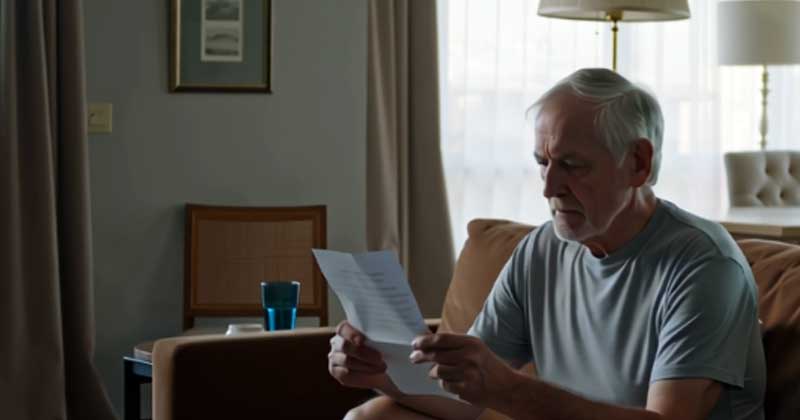
…terminally ill.
Diagnosis: advanced pancreatic carcinoma, stage IV. The letter was from his oncologist, explaining the severity of the illness and the slim chances of survival. It had been written two weeks prior.
I collapsed on the floor with the letter in my hands. My eyes filled with tears, but I kept trying to read to the end. Palliative medication. Referral for hospice. A phone number for psychological counseling. Medical names and clinical terms, but all I understood was: death. Imminent.
All those signs that had made me think — the frequent outings, the lies about money, the hidden phone calls — had nothing to do with another woman. They had to do with suffering. With fear. With the desperation to hide the truth from me to avoid hurting me.
I began to remember: the evenings when he said he was going for a walk to clear his mind… were actually trips to the hospital. The money “spent on nonsense” was probably going towards treatments, consultations, vitamins, or supplements he thought could save him. The phone? Full, perhaps, of messages from doctors or notes about the latest tests.
I felt so small, so guilty.
And yet, he hadn’t told me anything. For two weeks — or maybe more — he had carried this nightmare alone. Why?
I found the answer in a black notebook, which I discovered in his closet, among his shirts. It was a journal. Pages filled with handwriting, full of fears, plans, and bitter thoughts.
“I can’t tell her. She will fall apart. She has always seen me as her rock. How can I show her that I’m falling apart?”
“I don’t want her last months with me to be about hospitals and treatments. I want us to laugh, to cook together, to dance in the kitchen.”
“If she sees me crying, she will only remember the tears. I don’t want that to be the memory she holds onto.”
I closed the journal with trembling hands.
Three hours later, my husband walked through the door. He looked exhausted. He had deep dark circles and red eyes.
I went to him and, without saying a word, I held him in my arms. I felt his body soften. He began to cry. No longer hiding anything.
“I know,” I whispered.
He looked at me scared. Then, like a child who can no longer wear a mask, he fell to his knees and said, “I’m sorry. I just wanted to protect you…”
I held his hand, there on the floor, and promised him he would never be alone again.
The following months were hard. Hospital visits, exhausting treatments, sleepless nights. But we were together. We laughed and cried, shared stories, sat in silence watching sunsets, holding hands.
And one autumn morning, with his favorite music in the background, he passed away. In my arms. Without fear. Without pain.
The hidden camera, which I had installed to catch a betrayal, actually showed me the deepest proof of love. A man who bore his suffering alone, just to protect my heart.
I never betrayed him, but I will forever feel guilty for suspecting love of deceit.
This work is inspired by real events and people, but has been fictionalized for creative purposes. Names, characters, and details have been changed to protect privacy and enhance the narrative. Any resemblance to real persons, living or dead, or actual events is purely coincidental and not intended by the author.
The author and publisher do not assume responsibility for the accuracy of events or for how characters are portrayed and are not liable for any misinterpretations. This story is provided “as is,” and any opinions expressed belong to the characters and do not reflect the views of the author or publisher.


