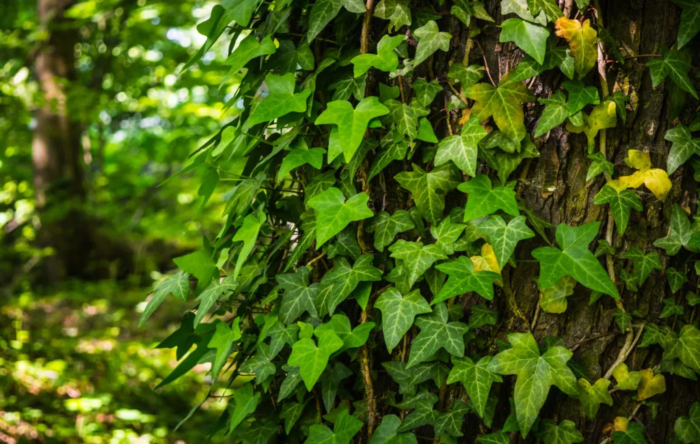
Ivy (Hedera helix) is a perennial climbing plant, often found on walls, trees, and shaded rocks. Beyond its decorative appearance, its leaves have been used since ancient times in European folk medicine to treat coughs, rheumatic pains, and skin problems. Recent scientific research has confirmed some of these uses, especially regarding respiratory health.
Benefits of Ivy: How It Works and How to Use It
Helps with Respiratory Conditions (Bronchitis, Cough, Asthma)
Ivy is an excellent natural mucolytic. It contains triterpenoid saponins (especially hederacoside C) that help to thin bronchial secretions and relax the muscles of the respiratory tract. Clinical studies have shown that standardized extracts of Hedera helix reduce cough and facilitate breathing in cases of acute or chronic bronchitis.
Relieves Rheumatic and Muscular Pain
When applied externally, ivy has anti-inflammatory and analgesic effects due to its coumarin and flavonoid compounds. Fresh leaves or poultices made with ivy are used in massages for areas affected by rheumatism, arthritis, or sciatica.
Treats Skin Conditions (Eczema, Boils, Cellulite)
Ivy extracts have antiseptic, toning, and muscle-relaxing properties. Poultices made with ivy leaves are used to soothe irritations and reduce skin inflammation. It is also used in some anti-cellulite creams.
Recent Studies and Research
- Efficacy of Ivy Leaf Extract in the Treatment of Cough Phytomedicine Journal, 2017
The study demonstrated the effectiveness of Hedera helix extract in reducing cough and bronchial secretions in patients with acute bronchitis, proving to be a safe alternative to traditional syrups. - Anti-inflammatory Activity of Hedera helix Extract Journal of Ethnopharmacology, 2021
This study highlighted the anti-inflammatory and analgesic effects of the extract when applied locally in experimental models of joint inflammation.
Recipes and Usage
Cough and Bronchitis Tea
- Ingredients: 1 tablespoon of dried ivy leaves (no more!)
- Preparation method: Infuse for 5 minutes in 250 ml of hot water, then strain.
- Administration: 1 cup/day, maximum for 7 consecutive days.
Important: Do not exceed the dose; the leaves can become toxic in large quantities!
Poultice for Joints or Inflamed Skin
- Fresh leaves are crushed and applied directly to the painful or inflamed area, covered with gauze.
- Leave for 30 minutes, then rinse the skin. Repeat 2-3 times a week.
Macerate for Rheumatic Massages
- 10 fresh leaves are macerated in 100 ml of olive oil for 10 days.
- Massage the painful areas 1-2 times/day.
Contraindications
- Not to be administered internally to children under 12 years old.
- Contraindicated during pregnancy and breastfeeding.
- May cause digestive or allergic irritations if taken in excess.
- Avoid contact with mucous membranes or open wounds as it may cause irritating reactions.
- The fruits (berries) should not be used as they are toxic!
Ivy is a plant with powerful medicinal properties, but it should be used with caution, in controlled doses. Effective in soothing coughs, joint pains, and skin inflammations, it stands out both for its tradition and modern research. However, its potential toxicity necessitates careful use.




