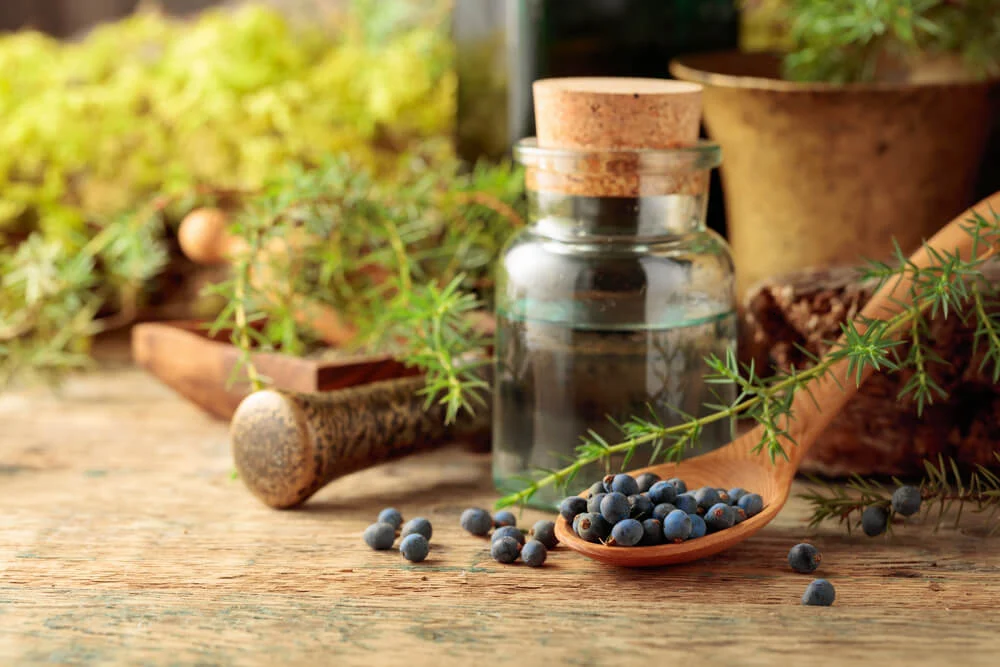
In the tranquility of the monasteries at the foot of the Apuseni Mountains, the monks from Transylvania preserved with care recipes for herbal remedies. Among the most cherished is juniper tincture, an elixir recognized for its purifying, detoxifying, and tonic properties. Prepared with diligence and prayer, this tincture was used to strengthen the kidneys, cleanse the blood, and balance digestion.
Traditional Ingredients
- Fresh or dried juniper berries – 50 g
- High-proof alcohol or natural spirit (40-50%) – 250 ml
- Dark glass jar
The monks insisted that the berries be harvested in late autumn, after the first frost, when the content of volatile oils is at its peak. They were carefully washed and gently crushed with the back of a wooden spoon to release the active substances.
Preparation Method
- Place the crushed berries in a glass jar.
- Pour the alcohol over them, completely covering the fruits.
- Seal the jar tightly and let it macerate for 10-14 days in a dark place, shaking daily.
- After this period, strain through a cheesecloth and store the tincture in small, dark glass bottles.
Detailed Benefits
1. Detoxification of the kidneys and urinary tract
The essential oils from juniper have diuretic and antiseptic effects, promoting the elimination of toxins through urine. Modern studies confirm the ability of juniper extract to inhibit the growth of bacteria involved in urinary infections.
2. Support for the liver and slow digestion
The monks recommended it during fasting periods to stimulate bile secretion and ease digestion. The bitter substances in juniper increase gastric secretion and reduce bloating.
3. Stimulation of blood circulation
Due to its mild vasodilatory action, the tincture can help improve peripheral circulation and is used externally in rubs for rheumatic pain.
4. Emotional balance and energetic purification
In monastic medicine, juniper was considered a plant of spiritual protection. It was also used in candles for purifying spaces, and the tincture was administered for mental fatigue or melancholy.
Administration Method
- Internally: 20-30 drops, twice a day, diluted in a little water, before meals. The treatment should not exceed 3 consecutive weeks.
- Externally: in the form of rubs for painful joints, 1-2 times a day.
Contraindications
- Contraindicated in severe kidney conditions (nephritis, kidney failure), pregnancy, breastfeeding, and in children under 12 years old.
- May irritate the stomach if taken long-term or in excessive doses.
- Individuals sensitive to volatile oils (allergies) should avoid this remedy.
Sources:
- Plants: Pharmacological Properties of Juniperus communis L. (Common Juniper), MDPI, 2020
- Journal of Ethnopharmacology: Traditional herbal remedies in Transylvanian monastic medicine, Elsevier, 2019
- HerbalGram: Juniper Berry: An Overview of Constituents and Clinical Uses, American Botanical Council
- Etnobotanical Research in the Carpathians, Ioan Muntean, Ed. Dacia, 1998




