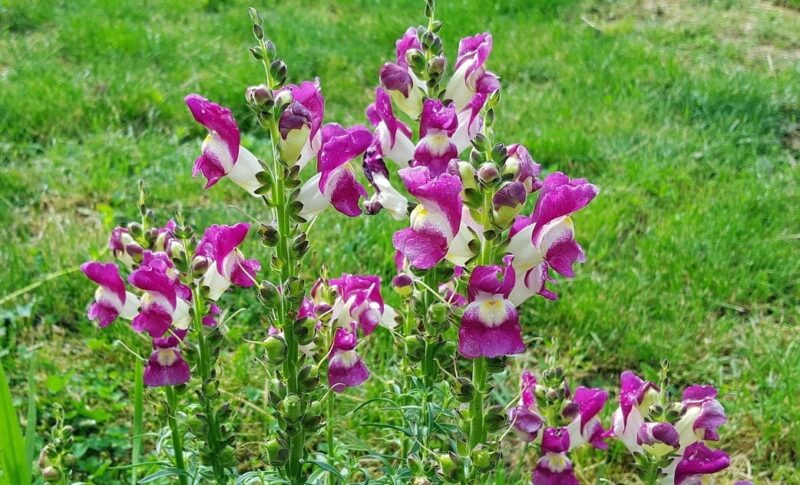
Known primarily for its decorative appearance, Lion’s Mouth is a plant with multiple therapeutic properties, used for centuries in European folk medicine. Today, scientific studies are beginning to confirm its medicinal value.
Valuable Chemical Composition
Lion’s Mouth contains a rich array of active compounds:
- Flavonoids: quercetin, luteolin, apigenin with antioxidant and anti-inflammatory effects.
- Iridoids: aucubin known for its hepatoprotective and anti-inflammatory effects.
- Tannins: have an astringent action, useful in combating skin inflammations.
- Saponins: help to thin bronchial secretions.
- Phenolic acids: caffeic acid, ferulic acid with antioxidant effects.
- Anthocyanins and carotenoids (especially in brightly colored flowers): have a protective role on cells, with potential antitumor effects.
Therapeutic Benefits
1. Natural Anti-inflammatory (internal and external)
Extracts from leaves and flowers have traditionally been used to reduce inflammation of the throat, mucous membranes, and skin. Recent studies have shown that the iridoids in the plant inhibit the production of inflammatory prostaglandins.
Relevant Study:
- Anti-inflammatory activity of Antirrhinum majus flower extract – International Journal of Herbal Medicine, 2021 – the study showed that local application of the extract reduces edema by up to 43% in experimental models.
2. Mild Nervous Calming
The infusion from leaves or flowers has a moderate sedative effect, being useful in:
- mild insomnia
- irritability
- nervous agitation
Usage: 1 cup of infusion in the evening, for 7-10 days.
Combines well with: lime flowers, or valerian.
3. Stimulating Skin Regeneration and Wound Treatment
External applications are used for:
- minor burns
- insect bites
- acne
- eczema
Flavonoids and tannins help in the regeneration of the epidermis and in reducing local infections.
4. Liver Protection and Mild Detoxification
Due to its content of iridoids and antioxidants, the plant has a protective effect on the liver. Aucubin has the ability to reduce hepatic oxidative stress.
Study:
- Hepatoprotective effect of aucubin extracted from Antirrhinum majus in rats – Phytotherapy Research, 2020 – a decrease in transaminases and improvement in liver histology was observed after administration of the extract.
5. Soothing Cough and Bronchial Decongestion
The saponins in the plant help to eliminate mucus from the respiratory tract, having a mild expectorant effect.
Recommendation:
- Tea from dried flowers – 2 cups a day in case of productive cough.
6. Antimicrobial Activity
Alcoholic extracts of Lion’s Mouth have been shown to be effective against certain strains of:
- Staphylococcus aureus
- Escherichia coli
- Candida albicans
Study:
- Antimicrobial activity of Antirrhinum majus extracts – Journal of Applied Microbiology, 2019
7. Promising Antitumor Effects (in research phase)
Certain anthocyanin compounds extracted from brightly colored flowers have shown cytotoxic effects on tumor cells in laboratory cultures.
Study:
- Cytotoxic activity of flower pigments from Antirrhinum majus on human cancer cell lines – Oncology Letters, 2022
Methods of Use
Internally:
- Infusion (tea): 1 teaspoon per 250 ml of water, 1-2 times/day
- Tincture: 10-20 drops in water, 2 times a day
- Powder from dried plant: 1 teaspoon 2 times/day
Externally:
- Compress from crushed leaves on inflamed or wounded areas
- Compresses with concentrated infusion for acne, minor burns
- Ointment with Lion’s Mouth extract can be prepared with coconut oil or beeswax
Contraindications and Precautions
It is essential not to underestimate the effects of this plant. Although its action is mild, there are situations in which it is contraindicated:
Contraindications:
- Pregnancy and breastfeeding: there are not enough studies regarding the safety of administration.
- Children under 6 years: internal administration is not recommended.
- Allergies to plants from the Plantaginaceae family: possible skin or digestive reactions.
- Severe kidney disorders: iridoids may affect kidney function in high doses.
- Immunosuppressive treatments: caution is recommended, as antioxidant compounds may interact with certain medications.
- Long-term administration: internal use is not recommended for more than 3-4 weeks without a break.
Statements from Doctors and Phytotherapists
Dr. Luminia Cristea, primary care physician:
Extracts from Antirrhinum majus have demonstrated therapeutic actions useful in dermatology and digestive disorders. However, it is not a self-medication plant – dosage and form of administration must be adapted to each case.
Mirela Sasu, phytotherapist:
I have used Lion’s Mouth tincture with good results in cases of persistent cough and dermatitis. It is a plant with a gentle but consistent action when used correctly.
Sources and Bibliography:
- Anti-inflammatory activity of Antirrhinum majus flower extract – International Journal of Herbal Medicine, 2021
- Hepatoprotective effect of aucubin extracted from Antirrhinum majus in rats – Phytotherapy Research, 2020
- Antimicrobial activity of Antirrhinum majus extracts – Journal of Applied Microbiology, 2019
- Cytotoxic activity of flower pigments from Antirrhinum majus on human cancer cell lines – Oncology Letters, 2022
- The role of iridoids in anti-inflammatory plant medicines – Frontiers in Pharmacology, 2020
- Phytochemical composition and antioxidant potential of Antirrhinum majus – Journal of Ethnopharmacology, 2018




