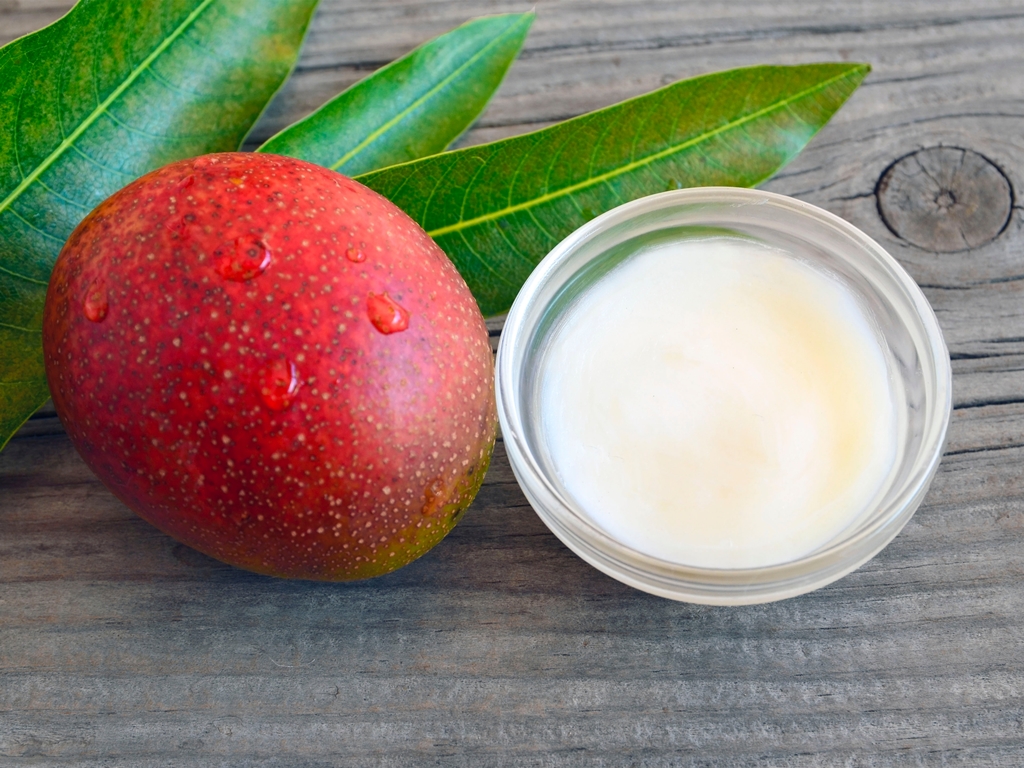
When you think of mango, the first thing that probably comes to mind is the sweet, yellow-orange flesh of the fruit that instantly transports you to the tropics. You might be surprised to learn that mango is more than just that. The woody pit at the center of the fruit is packed with healthy fats and nutrients that are extracted to make creamy mango butter.
Like shea butter, mango butter can be used on skin and hair for its moisturizing effects. It has a creamy consistency at cooler temperatures and turns into a light, odorless oil when rubbed onto the skin.
Once you learn a bit more about this ingredient for body and hair care, it will become one of your favorite ingredients for DIY recipes.
What is Mango Butter?
Mango butter is what you get after cold-pressing the fats from the mango pit, creating a creamy butter that can be used on skin and hair. It has almost no scent, making it easy to use as a base in DIY body care recipes or on its own.
What truly makes mango butter special is its nutrient content. It boasts natural antioxidants, vitamins A and E, and essential fatty acids.
It is known for its lightweight texture that does not leave skin or hair feeling greasy.
At cooler temperatures, mango butter remains solid, but when heated or rubbed onto the skin, it becomes a protective oil that is often used as an alternative to cocoa butter.
Benefits
The benefits of mango butter for skin and hair come from its nutrient profile and nourishing effects.
1. Hydrates Skin and Hair
Mango butter has a semi-solid consistency but melts quickly into a rich oil when it touches the skin. It has a lighter texture than many other oils or plant butters, so it won’t leave the skin greasy.
However, it hydrates both skin and hair, soothing dry areas. It provides a protective barrier, preventing bacteria and environmental chemicals from entering your pores.
2. Aids in Skin Repair
The nutrients in mango butter have healing properties, making it useful for promoting skin repair and providing skin protection.
A study published in the Indian Journal of Pharmaceutical Sciences found that a foot cream made with mango butter was able to completely repair worn and cracked skin in human volunteers. Researchers discovered that the ingredient works as an effective emollient that provides skin protection.
3. Antioxidants
The antioxidants found in mango butter help reduce damage from free radicals that can lead to premature aging. Research indicates that the oil extracted from the mango pit has a higher phenolic content than many commercial plant oils.
Applying it to the skin helps minimize the impact of environmental stressors, such as UV rays and exposure to pollution, which can cause fine lines, wrinkles, and other signs of skin aging.
4. Non-Comedogenic
Mango butter acts as an emollient that provides a protective barrier on the skin but will not clog your pores, so you don’t have to worry about breakouts. In fact, the butter melts into a light oil that does not leave the skin greasy.
It is considered non-comedogenic, so it won’t block pores and can be used on all skin types. It also has a very mild, even undetectable scent, making it preferable for those sensitive to certain fragrances.
5. Reduces Hair Breakage
The nourishing fatty acids in mango butter help reduce hair breakage that naturally occurs over time and when hair becomes dry. The fats in mango oil seal hair strands and protect them from environmental damage.
It also protects hair from damage caused by using hot air hair dryers or flat irons.
You can also massage it into the scalp to prevent dryness, flaking, and irritation.
How to Use
Use mango butter just like shea or cocoa butter. Simply scoop out a pea-sized amount, rub it between your hands, and apply it to your skin.
Rub it into dry or damaged areas using circular motions, especially after bathing or using a cleanser. You can apply other skin products, such as makeup, once the butter has been absorbed.
When using mango butter for hair, rub the butter between your hands and massage it into the ends of your hair. If you have a dry, flaky scalp, rub a small amount into the area.
You can also use it for pre-shampoo treatments. A pre-shampoo treatment involves applying moisturizing oils or butters to your hair and letting it sit for 30 minutes before shampooing. This will help keep your hair healthy and shiny.
Other skin and hair care ingredients that blend well with mango butter:
Coconut oil
Jojoba oil
Apricot oil
Argan oil
Olive oil
Aloe vera gel
Beeswax
Vitamin E oil
Gentle essential oils (such as lavender and chamomile)
Risks and Side Effects
Mango butter is generally safe for topical use. Although it is sometimes consumed, the extraction process can be done at high temperatures that alter the chemical composition of the oil, so it is recommended to use it only topically (applied locally, externally).
If you experience redness, irritation, burns, or rashes after using mango oil, discontinue use immediately. People allergic to mango should not use the butter, as it is extracted directly from the fruit’s pit.
Conclusion
Mango butter is obtained by cold-pressing the oil from the fruit’s pit. It becomes a firm, creamy consistency at cooler temperatures and transforms into a light oil when heated.
The butter or oil is used to promote skin repair, hydrate dry areas, or nourish hair strands. It can also help reduce scalp flaking and serves as a protective barrier, preventing damage to hair and skin.
Using mango butter is easy. It can be applied directly to skin or hair or combined with other nourishing ingredients, such as coconut oil and lavender essential oil.