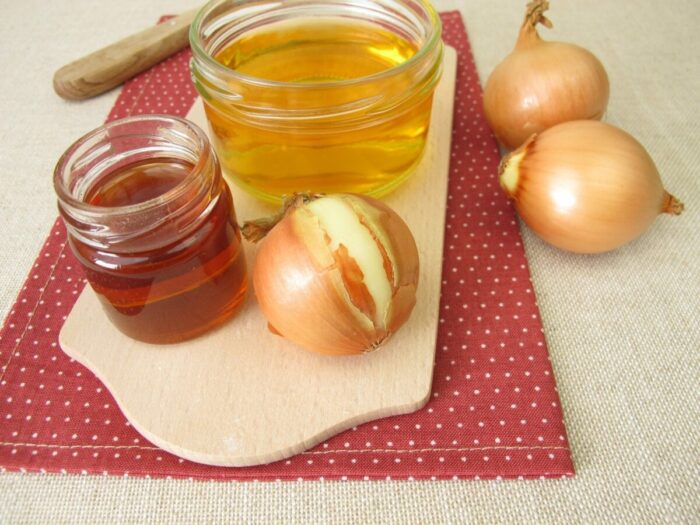
In folk medicine, few remedies have stood the test of time as well as the simple combination of onion and honey. This natural syrup, quickly prepared at home, has been used for generations to treat coughs, mild colds, throat pain, and bronchial secretions. Red onion is recognized for its rich antioxidant content, especially quercetin, while raw honey has antimicrobial and emollient properties. Together, they form a syrup with anti-inflammatory, expectorant, and soothing effects on the respiratory mucosa.
What Studies Say
A study published in Journal of Food Science and Technology (2017) analyzed the biochemical profile of red onion and highlighted its high flavonoid content, particularly quercetin, which plays an essential role in reducing respiratory inflammation. Researchers observed that these substances inhibit pro-inflammatory enzymes and support the immune system in combating infections.
Another study, conducted by the Iranian Journal of Basic Medical Sciences (2013), evaluated the effects of raw honey on pathogenic bacteria. The results showed that honey can inhibit the growth of streptococci and staphylococci, bacteria frequently involved in throat infections. Furthermore, honey contributes to the regeneration of damaged tissue in the pharynx, reducing pain and irritation.
Research conducted by the University of Auckland (New Zealand, 2012) demonstrated the effectiveness of honey in treating nocturnal cough in children. The study included 300 children with mild respiratory infections and found that honey was more effective than pharmaceutical syrups in soothing cough and improving sleep.
Another interesting study was published in Evidence-Based Complementary and Alternative Medicine (2020), where researchers tested the effectiveness of an onion and honey syrup on 100 patients with acute bronchitis. After 3 days of administration, 78% of patients showed significant reduction in cough and improvement in breathing.
All these studies support the scientific validity of this simple yet effective remedy, demonstrating that its beneficial effects are not just folklore but also medically confirmed.
Benefits
1. Soothes Irritative and Dry Cough
The quercetin in red onion acts as a natural bronchodilator, reducing spasms in the respiratory tract. It inhibits the receptors that trigger the cough reflex, providing rapid relief. Honey contributes with its emollient effect, forming a protective layer over the throat mucosa. Together, these effects reduce both the frequency and intensity of coughing fits. This benefit is especially relevant in the early stages of infection.
2. Reduces Inflammation of the Throat and Pharynx
The anti-inflammatory components in onion (quercetin, sulfur compounds) help soothe irritated tissues in the throat. Honey, on the other hand, supports the regeneration of the affected mucosa and alleviates the burning sensation. Through their combined action, throat pain is significantly diminished, and the healing process is accelerated. It is ideal for mild pharyngitis, laryngitis, and tonsillitis. The effectiveness is maximized when administered at the first signs of symptoms.
3. Has a Mild Expectorant Effect
Onion stimulates the production of fluid mucus, which can be more easily expelled from the bronchi. This process helps clear the airways and reduce congestion. Honey adds a mild laxative effect on the mucus, making it less viscous and easier to eliminate. The result is easier breathing and reduced chest pressure. This effect is particularly noticeable in cases of productive cough and mild bronchitis.
4. Supports the Immune System
Quercetin is recognized as a natural immunomodulator, helping the body respond more effectively to infectious agents. On the other hand, honey provides antioxidants and enzymes that support the normal functioning of immune cells. This duo strengthens the body’s natural defense against viruses and bacteria. When taken preventively, the syrup can reduce the incidence of seasonal respiratory infections. It is also useful during periods of fatigue or physical exhaustion.
5. Helps Hydrate the Throat Mucosa
Honey has a hygroscopic action, meaning it attracts and retains moisture. When applied to the throat mucosa, it maintains an optimal level of hydration, essential for soothing the feeling of dryness. Onion also contributes a significant liquid content in the syrup. This effect is particularly important in cases where the air is dry (winter, heated indoor environments). Hydrating the mucosa helps reduce irritation and accelerates healing.
6. Fights Bacteria and Viruses
Studies have shown that allicin in onion has antimicrobial action, while honey has antibacterial properties due to its hydrogen peroxide content and acidic pH. These two ingredients combat the pathogens responsible for colds and infections. They can also act against antibiotic-resistant bacteria without affecting intestinal flora. Thus, the syrup has both preventive and curative effects, without significant adverse reactions.
7. A Safe Remedy for Children Over 2 Years
Unlike classic cough syrups, which may contain alcohol, preservatives, or colorants, this natural remedy is gentle and well-tolerated. Its sweet taste and mild aroma make it easy for children to accept. It can be administered as is or mixed into warm tea. It is an excellent option for parents seeking natural solutions for their children’s respiratory issues. However, it is recommended to consult a doctor before use.
8. May Reduce the Risk of Complications in Colds
Through its anti-inflammatory and antimicrobial effects, this syrup helps the body fight infections more effectively, reducing the risk of worsening. When used in a timely manner, it can prevent complications such as sinusitis, otitis, or severe bronchitis. Additionally, it supports the rapid recovery of mucosa and prevents superinfection. It is important that administration begins as early as possible, immediately at the first signs of a cold.
Recipe
Ingredients:
- 1 large onion (red or yellow), sliced thinly
- 2-3 tablespoons of raw honey, preferably linden or polyfloral
- (Optional) a few drops of lemon juice
Preparation Method:
- Place a layer of onion in a clean jar.
- Cover with a tablespoon of honey.
- Repeat until you finish the onion and honey.
- Gently press the mixture, cover the jar, and let it sit at room temperature for 8-12 hours.
- After the onion has released enough juice, strain the obtained liquid.
- Store the syrup in an airtight jar in the refrigerator for a maximum of 7 days.
Administration:
- Adults: 1 tablespoon, 2-3 times a day
- Children over 2 years: 1 teaspoon, 2-3 times a day
Contraindications
- Children under 1 year should not consume honey due to the risk of infant botulism.
- Individuals allergic to honey or onion should avoid this remedy.
- Diabetics should consult a doctor before use due to the sugar content.
- Individuals with gastric reflux may experience discomfort after consuming raw onion.
- Should not be administered in combination with anticoagulants without medical advice.
Sources:
- Journal of Food Science and Technology – Biochemical profile of red onion and its role in inflammation control
- Iranian Journal of Basic Medical Sciences – Antibacterial properties of natural honey against upper respiratory tract bacteria
- University of Auckland – Honey for treatment of nocturnal cough in children
- Evidence-Based Complementary and Alternative Medicine – Efficacy of honey-onion syrup in acute bronchitis treatment




