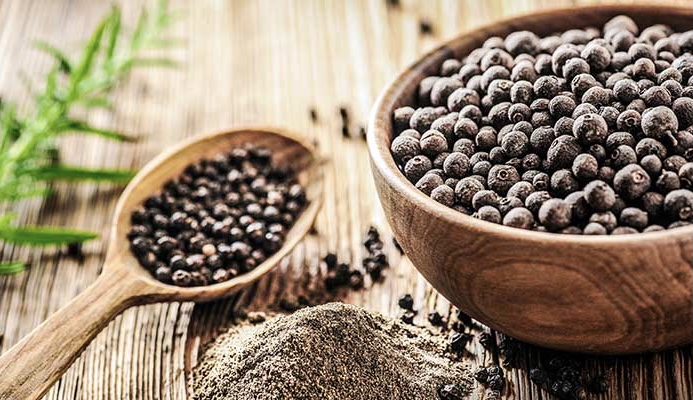
While salt is the most commonly used spice, pepper is the most commercially traded spice in the world. Known as the king of spices, it is actually a fruit. Yes, a fruit. From the Piperaceae family, black pepper produces peppercorns, which are the dried fruits of the pepper plant.
There are three types of peppercorns:
Green peppercorns are the unripe version of the dried fruits.
White peppercorns are derived from nearly ripe pepper berries with the outer skin removed.
Black peppercorns, which have been cooked and then dried, are the most common.
What makes peppercorns so popular? Well, they pair well with a wide range of food options and also offer a number of health benefits you may not be aware of. For example, did you know that peppercorns can benefit those with diabetes and even exhibit anticancer activity, just like black pepper essential oil? It’s true, but that’s not all.
Health Benefits
1. May Help Prevent Cancer
Turmeric has become very popular due to its amazing healing properties, but researchers show that it is most effective when combined with black pepper. Why? Because piperine in black pepper helps the body absorb the amazing benefits of turmeric.
Recent studies provide information on the positive effects of various spices, such as black pepper and turmeric, and how they can help reduce the risk of cancer. Black pepper contains a bioactive compound similar to capsaicin called piperine. This compound helps induce apoptosis, which can keep tumors at bay. This, combined with the anticancer effects of turmeric, makes for a great combination.
Peppercorns are cancer-fighting foods, says research conducted at Dalhousie University in Halifax, Nova Scotia. It was found that piperine inhibits the growth of cancer cells, although the mechanism of action is not well understood. Piperine inhibited both the growth of colon cancer cells and even induced apoptosis in some cells, providing the first evidence that piperine may be useful in the treatment of colon cancer.
2. Aids Digestion
Black pepper sends a message to the stomach to release hydrochloric acid. This acid helps improve digestion. Through this process, it can help alleviate heartburn, indigestion, and even gas.
Gastric acid is the component of hydrochloric acid in gastric juices that forms in the stomach to prepare food for digestion and absorption by the intestines.
It is believed that piperine found in peppercorns can help produce the necessary gastric acid, ensuring healthy digestion.
3. May Help Diabetics
Black pepper, including in essential oil form, has been shown to have impressive antioxidant and antibacterial effects, promoting digestive tract health. These beneficial antioxidants can help stabilize blood sugar levels. Regulating hyperglycemia is an activity provided by peppercorns and their extracts, contributing to reducing damage from free radicals.
Recent research published in the Proceedings of the National Academy of Sciences studied the effect of piperine on obesity and diabetes. What researchers found was that piperine helps regulate the increased metabolic rate of muscles at rest, which, in turn, can alleviate obesity and diabetes, making it effective in combating obesity and excellent for any diabetic diet plan.
4. Helps Reduce Weight
Many researchers believe that peppercorns can help burn fat due to the piperine they contain. For example, a study published in the Indian Journal of Pharmacology was conducted on rats, feeding them high-fat diets to develop obesity-induced dyslipidemia. The rats were administered piperine and sibutramine for three weeks.
What researchers discovered was that piperine supplementation with HFD significantly reduced not only body weight, triglycerides, total cholesterol, LDL, VLDL, and fat mass, but also increased HDL levels, without any change in food intake. This led them to conclude that piperine can help reduce fats and lipids, which can help you lose weight.
However, more studies are needed to support this claim. Nevertheless, this does not eliminate the ability of pepper to help you lose weight. Why? Well, pepper is a spice that can replace calorie-rich sauces in cooking. Simply put, pepper has very few calories compared to heavy sauces, so choosing pepper can be an excellent way to help you shed a few pounds.
5. Reduces High Blood Pressure
Since black pepper is nearly salt-free, using it instead of salt can help reduce overall salt intake, thereby lowering high blood pressure. Less salt can help reduce fluid retention and uncomfortable bloating. Adding spices like black pepper and even ginger, garlic, coriander, and bay leaves to food instead of salt can help keep blood pressure under control without feeling like you’re missing out on something.
A study conducted at Comenius University in Slovakia on rats found that oral administration of piperine, present in peppercorns, could partially prevent increases in blood pressure, while another study published in the Journal of Cardiovascular Pharmacology confirmed blood pressure-lowering effects in rats.
6. Fights Bacteria
Piperine found in black pepper is a phytochemical or phytonutrient that contains numerous anti-inflammatory effects and has therapeutic benefits against bacterial development in certain cases. Researchers investigated the effects of piperine on pyroptosis in phagocytic blood cells of rodents and found that piperine can suppress the development of bacteria that cause diseases.
Nutritional Information
One teaspoon (6 grams) of ground/whole black pepper contains approximately:
16 calories
4.1 grams of carbohydrates
0.7 grams of protein
0.2 grams of fat
1.7 grams of fiber
0.4 milligrams of manganese (18% DV)
10.2 micrograms of vitamin K (13% DV)
1.8 milligrams of iron (10% DV)
0.1 milligrams of copper (4% DV)
27.3 milligrams of calcium (3% DV)
12.1 milligrams of magnesium (3% DV)
How to Use
When buying peppercorns, try to find a source that offers fresh peppercorns compared to those that may have been sitting for a while. With a pungent aroma, freshly ground is the way to go, and you can find a range of pepper that offers different sizes from fine to coarse.
If you want to use very coarse ground pepper, a mortar and pestle works best. As with all spices, store them in a dark place away from light. In terms of flavor, some are hot and complex in aroma, while others are mild. Try different varieties and quantities until you find the one that best suits your recipes.
Pepper and Turmeric Tea
INGREDIENTS:
1 cup water
1 cup almond or cashew milk
2 drops of wild orange essential oil (or a piece of orange peel)
2 whole cloves
1 drop of cinnamon essential oil (or a cinnamon stick)
3 whole black peppercorns
1 tablespoon freshly ground turmeric
1 tablespoon freshly ground ginger
1 tablespoon honey
2 tablespoons black tea leaves
1 pinch of ground nutmeg
METHOD:
Heat the milk and water in a saucepan.
Add to the saucepan the essential oil of orange, cloves, essential oil of cinnamon, black peppercorns, nutmeg, ginger, turmeric, and tea leaves.
Bring the mixture to a boil, then reduce the heat to low and simmer for 2 minutes.
Strain, then pour into cups.
Add honey to taste.




