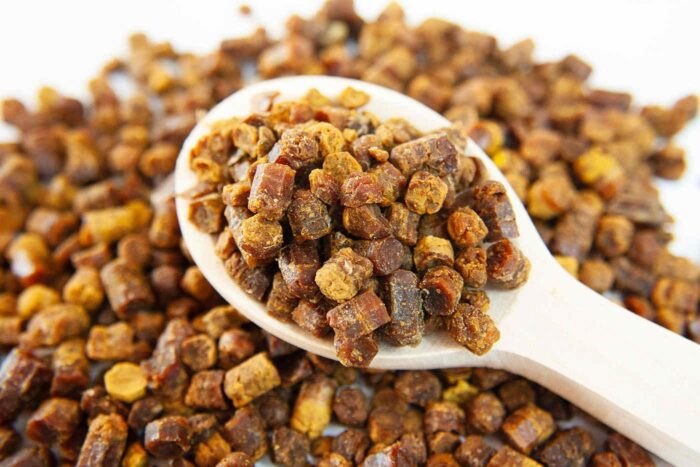
Pollen is one of the most valuable products of the hive. It is made from fermented pollen granules that bees mix with saliva and floral nectar in the hive cells.
It contains about 300 nutrients, such as amino acids, fatty acids, minerals, vitamins, organic acids, and polyphenols.
Scientists consider pollen a functional product due to its bioactive molecules with preventive and curative effects.
This bee product has demonstrated strong antioxidant, antifungal, antibacterial, and antitumor activities.
Studies conducted in vivo have shown that pollen is beneficial in hyperglycemia, hyperlipidemia, inflammation, and oxidative stress.
It has a revitalizing and repairing effect on the body. Pollen is a general fortifier of the body, particularly aiding in the recovery and stimulation of nerve channels.
It has a disinfectant role on liver cells, being considered an exceptional remedy for liver healing.
A study showed that pollen protects the fatty liver, preventing its progression to fibrosis. These effects are due to the antioxidant, anti-inflammatory, and antifibrotic properties of pollen.
How to Make Pollen Milk – Recipe
Ingredients
300 g of pollen
1 liter of warm water
Preparation Method
The pollen combs are left overnight in the freezer. The next day, they are taken out and crushed by hand or grated.
They are placed in a bowl. Water is poured in, and the mixture is kneaded well for about a quarter of an hour. The mixture is then passed through a fine cheesecloth and strained. The resulting liquid is the pollen milk. It is stored in a glass bottle.
Pollen milk is consumed three times a day in small doses. The treatment lasts for a period of 30 days.
The milk can be consumed as is or transformed into a syrup with vitaminizing effects. Mix 1.4 kg of honey until homogeneous. In this form, it will be consumed in moderation.
Pollen milk should not be administered excessively, as it may overload the body.




