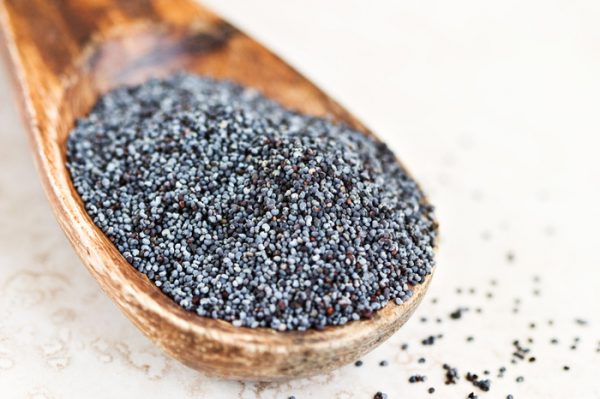
Poppy seeds have been cultivated for over 3000 years. During the 2nd century, women commonly grew these flowers for their medicinal properties. Muslim and Arab cultures used these substances as drugs and narcotics during the 6th century. Today, poppy seeds are cultivated in European countries, Australia, India, and Turkey.
The unique aroma of poppy seeds is due to the fatty acids and essential volatile oils, which make up about 50% of their net weight. The seeds are particularly rich in oleic and linoleic acids. Oleic acid, a monounsaturated fatty acid, helps lower LDL cholesterol and increases HDL cholesterol levels in the blood. Research studies suggest that a Mediterranean diet rich in monounsaturated fatty acids helps prevent coronary diseases and strokes, promoting a healthy blood lipid profile.
They are a good source of dietary fiber. 100g of raw seeds provides 19.5g or 51% of the recommended daily fiber intake. A large portion of this fiber has an inert metabolic content, which helps increase food mass by absorbing water in the digestive tract and, therefore, helps reduce constipation. They are also effective in reducing fever, inflammation, and stomach irritation.
Poppy seeds are rich in B-complex vitamins, such as thiamine, pantothenic acid, pyridoxine, riboflavin, niacin, and folic acid. They also contain minerals such as iron, copper, calcium, potassium, manganese, zinc, and magnesium. Copper is used in the production of red blood cells. Zinc is a co-factor in numerous enzymes that regulate growth and development, sperm generation, digestion, and nucleic acid synthesis. Potassium is an important component of cellular fluids and the body, helping to control heart rhythm and blood pressure. The human body uses manganese as a factor for antioxidant enzymes.
Poppy seeds contain very low levels of opiate alkaloids, such as morphine, thebaine, codeine, and papaverine. When consumed in food, these compounds produce minimal effects on the human nervous system. These chemicals have certain beneficial effects on the human body: they reduce nervous irritability and act as analgesics. Extracts from poppy seeds have been useful in pharmacy and in many traditional medicines for preparing mixtures for coughs, expectorants, etc.




