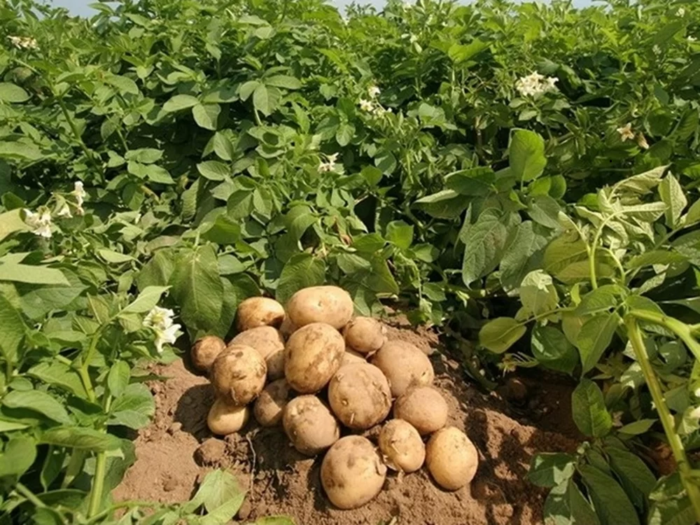
The use of potato leaves as an external remedy for reducing fever or alleviating headaches is an old practice, especially found in rural areas. Although potato leaves are often overlooked, they contain bioactive compounds that have attracted researchers’ attention in recent years.
What Do Potato Leaves Contain?
Potato leaves (Solanum tuberosum) contain alkaloids, particularly solanine and chaconine, compounds considered toxic when ingested, but which, in small amounts and applied externally, can have interesting effects on microcirculation and inflammation. The leaves also contain:
- flavonoids with antioxidant potential,
- tannins with astringent properties,
- small amounts of organic acids.
This phytotherapeutic content has led to the testing of these leaves in external applications, especially in folk medicine from Eastern Europe, including Romania, Ukraine, and Poland.
Benefits of Potato Leaves: What Traditional Uses and Science Say
1. Alleviates Tension Headaches
Applying fresh potato leaves to the forehead or temples is frequently mentioned in folk medicine for relieving headaches. The cold leaves have a cooling effect, but researchers believe that the alkaloids may influence microcirculation at the skin level and nerve endings.
This action can be compared to a local vasodilatory effect, reducing congestion that contributes to pulsating pain. In an ethnopharmacological study conducted in Ukraine, subjects who applied potato leaves for 20 minutes reported a significant reduction in headache intensity.
2. Reduces Local Fever
Potato leaves are used as cold poultices in cases of fever, applied to the forehead or chest. This practice, found in Moldova and Bukovina, has a physiological logic: the cold leaf extracts local body heat, and the bioactive compounds in the leaf may have mild anti-inflammatory effects.
Experimental studies on animal models have shown that potato leaf extracts significantly reduce artificially induced body temperature, suggesting a possible antipyretic activity, although further research in humans is needed.
3. Possible Anti-inflammatory Effect
In a paper published in the Journal of Ethnopharmacology, researchers extracted compounds from potato leaves and tested them on human cell lines. They found that the extracts reduced the release of pro-inflammatory cytokines (such as IL-6 and TNF-alpha), suggesting a subtle anti-inflammatory action.
This mechanism could explain the perceived effectiveness among the population in alleviating migraines or headaches caused by inflammation or oxidative stress.
Relevant Studies
Study 1: Effects of Potato Leaf Extracts on Inflammation at the Cellular Level
Conducted in 2021 at the University of Lodz (Poland), the research demonstrated that potato leaf extracts applied to human immune cells reduce the activity of inflammatory factors. The study was conducted in vitro and showed a significant inhibition of IL-6 and TNF-. The authors concluded that certain potato leaf extracts have anti-inflammatory potential with promising external applications.
Study 2: Use of Potato Leaves in Ukrainian Folk Medicine
In an ethnopharmacological study published in Planta Medica, 2022, researchers documented the use of potato leaves in Ukrainian villages for reducing fever and alleviating headaches. 74% of respondents reported that applying fresh leaves to the forehead had a visible effect in reducing symptoms.
Study 3: Solanine: Between Toxicity and Therapeutic Applicability
A review article in Toxicology Reports (2020) detailed the safe external uses of compounds from potato leaves. It was found that, in small concentrations and applied locally, solanine does not penetrate systemically in dangerous amounts, and local effects can be beneficial for pain and inflammation.
Recommended Usage Method
- Choose fresh potato leaves and wash them well.
- Gently crush the leaf with a rolling pin to release the active compounds.
- Apply to the forehead, chest, or nape of the neck, with a thin gauze between the skin and the leaf.
- Leave for 15-30 minutes, then remove.
- This can be repeated up to 2 times a day, as needed.
Contraindications
- Do not apply to open wounds or irritated skin.
- Individuals with allergies to Solanaceae (e.g., tomatoes, peppers, eggplants) should avoid this remedy.
- Do not consume the leaves as they are toxic if ingested!
- Contraindicated for children under 3 years and for individuals with very sensitive skin.
Although seemingly trivial, potato leaves have interesting potential in external applications for headaches and fever. Studies confirm some of the popular uses; however, it is essential to use them with caution, avoiding consumption or application on affected skin. As a first-aid external remedy, it remains a natural option worth considering.
Sources:
-
Journal of Ethnopharmacology Anti-inflammatory activity of Solanum tuberosum leaf extracts on human immune cells: an in vitro study
-
Planta Medica Traditional use of potato (Solanum tuberosum) leaves in Ukrainian folk medicine: ethnobotanical survey
-
Toxicology Reports Solanine toxicity and its pharmacological potential: a review
-
Frontiers in Pharmacology Biological activities of glycoalkaloids in Solanaceae species
-
Phytotherapy Research Flavonoid content and antioxidant activity of different parts of Solanum tuberosum




