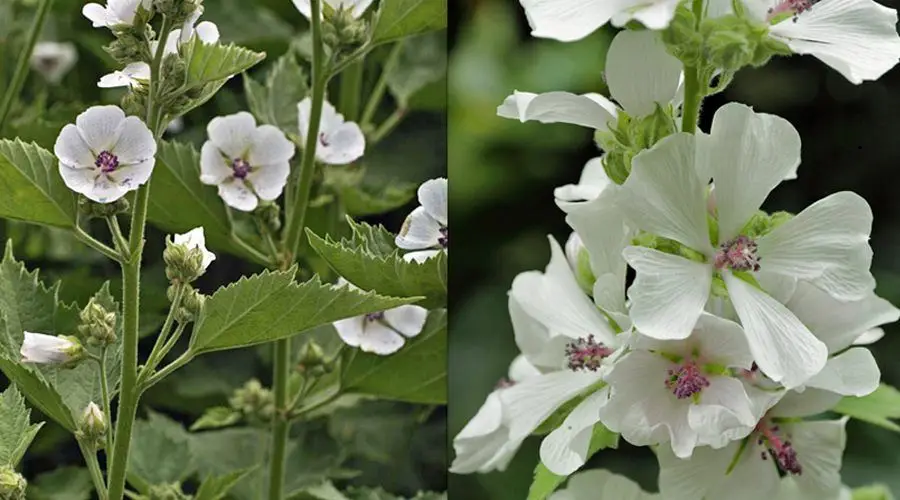
Marshmallow (Althaea officinalis) is one of the most valuable plants in Romanian and European phytotherapy. With leaves, flowers, and roots rich in mucilage, marshmallow is recommended for soothing dry cough, throat irritations, digestive issues, and even for caring for sensitive skin.
What does marshmallow contain?
- Vegetable mucilages (10-20%) that soothe and protect mucous membranes
- Flavonoids and polysaccharides with anti-inflammatory and antioxidant effects
- Tannins and phenolic acids with antimicrobial and astringent roles
- Vitamin C, zinc, and calcium that support immunity and tissue repair
Recipe with Marshmallow Cold Maceration
This preparation method preserves the mucilages intact, making it ideal for respiratory, gastric, and urinary conditions.
Ingredients:
- 2 tablespoons of dried marshmallow root (grated)
- 500 ml cold water
Preparation method:
- Place the root in a glass container.
- Pour cold water over it and let it macerate for 6-8 hours (ideally overnight).
- Strain the resulting liquid.
- Drink warm, unsweetened, 2-3 times a day.
Honey can be added after slight warming (not boiling!), if desired.
Benefits
1. Soothes dry cough and throat irritations
The mucilages contained in the roots and leaves of marshmallow have emollient properties, meaning they form a protective layer on the irritated mucous membranes of the throat. This layer reduces the burning sensation, helps soothe dry cough, and protects against worsening inflammation.
It is recommended to use cold maceration to preserve the mucilages. Administer 100-150 ml 2-3 times a day, preferably between meals.
2. Helps with gastritis, gastric ulcer, and acid reflux
The vegetable mucilages also act on the gastric mucosa, covering it with a fine film that protects it from gastric acids. Thus, irritation and pain are reduced, and the worsening of inflammation is prevented. It is a valuable aid for people with sensitive stomachs or frequent heartburn.
Drink the cold maceration (not hot!), 30 minutes before meals. It can be combined with other digestive plants, such as calendula or angelica.
3. Soothes urinary infections and bladder irritations
Due to its mild diuretic and soothing effect on mucous membranes, marshmallow is useful in urinary infections accompanied by burning or discomfort. The mucilages reduce the feeling of irritation and can support the elimination of bacteria through a gentle washing effect.
Consume in the form of cold maceration, 2 cups a day. It can be associated with plantain, birch leaves, or nettle.
4. For sensitive, dry, or irritated skin
External preparations made from marshmallow (maceration, infusion, or poultices with crushed leaves) have a soothing effect on irritated, inflamed, or flaky skin. They are recommended for atopic dermatitis, eczema, mild burns, dry skin, or skin affected by wind and cold.
Apply compresses with warm maceration to the affected areas, 1-2 times a day.
It can also be added to bath water for children or adults with sensitive skin.
5. High tolerance, useful for both children and the elderly
Being a gentle and well-tolerated plant, marshmallow can also be used by people with allergic tendencies, sensitive stomachs, or children. It does not cause irritation and has no notable side effects when used correctly.
For children, it is administered in small doses (50-100 ml/day), preferably with the advice of a doctor or herbalist.
Contraindications
- Do not administer simultaneously with medications as it may reduce their absorption.
- Avoid thermal preparation for internal use as it destroys the mucilages.
- Not recommended for individuals allergic to plants in the Malvaceae family.
Usage Variants:
- For skin: maceration applied with sterile pads
- For throat: gargle with warm maceration 2 times a day
- For children: administered in small amounts (max. 100 ml/day), with medical advice
Sources:
- Althaea officinalis L. – A review on its phytochemistry and pharmacological profile, Pharmacognosy Reviews, 2020
- Phytotherapy in respiratory conditions, Dr. D. Punescu, Medical Publishing, 2017
- Medicinal plants from the flora of Romania, Prof. Dr. C. Milic, 2016
- The role of mucilages in traditional herbal medicine, Journal of Ethnopharmacology, 2022




