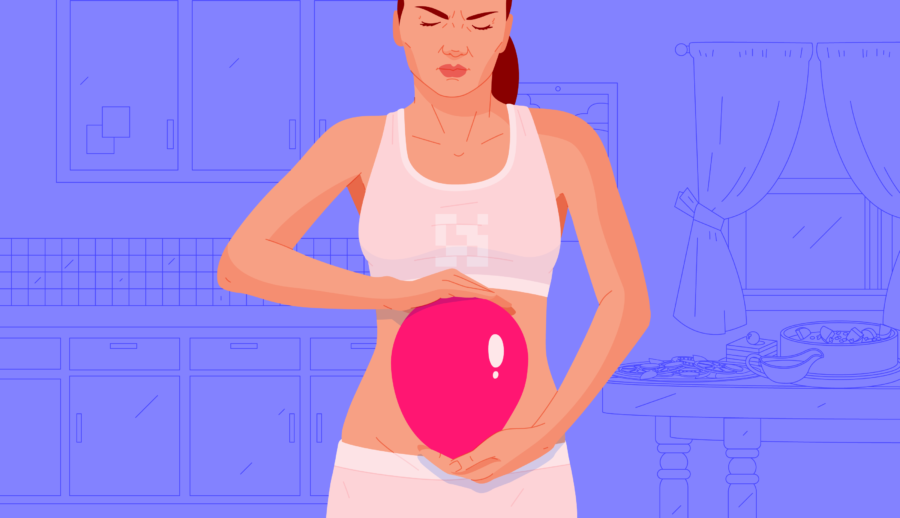
Bloating and flatulence are two common digestive symptoms that can cause discomfort and a feeling of fullness in the upper abdomen. These may be accompanied by swelling and excessive intestinal gas production.
Bloating, also known as meteorism, refers to the sensation of abdominal distension or swelling. It can be accompanied by a feeling of pressure or fullness, and the abdomen may appear enlarged. Bloating can be caused by the accumulation of gas in the gastrointestinal tract, fluid retention in the abdomen, or a combination of both.
Flatulence, on the other hand, refers to the excessive release of intestinal gas. This gas can be produced during the digestion process, through the fermentation of food in the large intestine, or by swallowing air while eating and drinking.
There are several possible causes of bloating and flatulence, including:
Swallowing air: Swallowing air during meals and drinking, excessive talking, or unhealthy eating habits (for example, eating quickly).
Consumption of gas-producing foods: Carbonated drinks, beer, and other fizzy beverages can lead to gas accumulation in the stomach and intestines.
Diet: Certain foods, such as cruciferous vegetables (broccoli, cauliflower, Brussels sprouts), beans, lentils, onions, garlic, fruits containing sorbitol (apples, pears), dairy products, and fatty or fried foods can be hard to digest and may cause excessive gas production.
Food intolerances: Some individuals may have food allergies to lactose (sugar in milk) or gluten (protein in wheat, rye, and barley), which can cause bloating and flatulence.
Irritable bowel syndrome: A chronic condition of the digestive tract that can cause bloating, flatulence, abdominal cramps, and changes in bowel habits.
Constipation: Slow bowel transit can lead to food fermentation in the intestines and excessive gas production.
If bloating and flatulence become persistent, severe, or are accompanied by other symptoms such as intense abdominal pain, changes in bowel habits, or unexplained weight loss, it is advisable to consult a doctor for evaluation and diagnosis.
There are several remedies and strategies that can help reduce bloating and flatulence. Here are some options you can try:
1. Avoid foods that promote excessive gas formation:
Some foods such as beans, lentils, onions, cabbage, broccoli, chocolate, carbonated drinks, and fatty foods can lead to excessive gas production. Try to identify the foods that trigger your symptoms and limit their consumption.
2. Eat slowly and chew well:
Rapid swallowing of food can contribute to bloating. Chew your food well and take your time while eating.
3. Avoid chewing gum and using straws:
Chewing gum and using straws can lead to excessive air swallowing, thus contributing to bloating. Try to avoid these habits.
4. Consume smaller, more frequent meals:
Large meals can put pressure on the digestive system, promoting bloating. Try to consume smaller, more frequent meals to ease digestion.
5. Pay attention to your diet:
Keep a food diary to identify the foods that trigger your symptoms and try to avoid or consume them in smaller quantities.
6. Drink liquids between meals:
Excessive liquid consumption during meals can dilute digestive juices and lead to inadequate digestion. Try to drink liquids between meals.
7. Regular physical exercise:
Physical exercise can stimulate intestinal movement and help reduce bloating.
8. Natural remedies:
Some medicinal herbs such as mint, anise, and cumin may have carminative properties and can help reduce flatulence. You can try making an infusion from these herbs and consuming it after meals.
There are certain teas that can help reduce bloating and flatulence. These teas often contain herbs with carminative properties that help soothe the digestive system and reduce intestinal gas. Here are some examples of teas that may be useful:
1. Peppermint tea:
Peppermint has antispasmodic and carminative properties, which means it can help relax the muscles in the digestive tract and reduce intestinal gas. You can consume peppermint tea several times a day after meals.
2. Anise tea:
Anise has carminative properties and can help reduce bloating and flatulence. You can prepare anise tea by infusing anise seeds in hot water.
3. Cumin tea:
Cumin contains essential oils that have carminative and antispasmodic properties. You can prepare cumin tea by infusing cumin seeds in hot water.
4. Chamomile tea:
Chamomile has anti-inflammatory and soothing properties, which can help reduce abdominal discomfort and inflammation. You can consume chamomile tea several times a day.
It is important to keep in mind that each person may react differently to teas and medicinal herbs, and the effects may vary. If you have medical conditions or are taking medications, it is advisable to consult a doctor or pharmacist before consuming teas or medicinal herbs to avoid unwanted interactions.