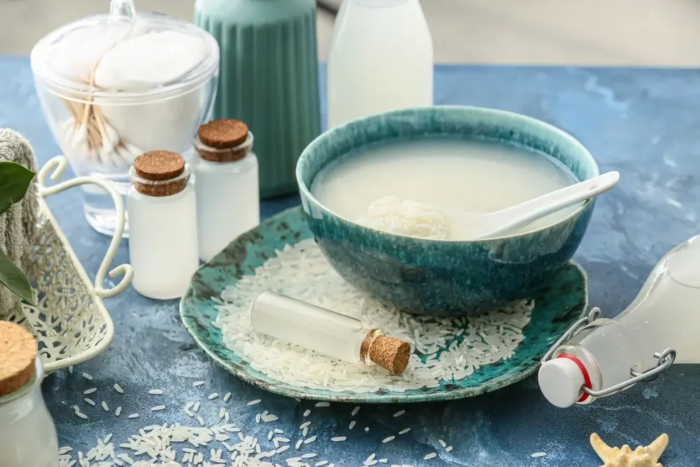
Rice water, the milky liquid left after boiling rice, has been used for generations as a natural remedy in traditional households. Far from being just a residue, this water is a true elixir for health and beauty. Our grandparents knew well the power hidden in this simple brew and used it in various ways, from soothing digestive issues to treatments for skin and hair.
Nutritional Composition and Properties
Rice water contains complex carbohydrates (especially starch), B vitamins (B1, B2, B3, B6), folic acid, potassium, magnesium, zinc, iron, and antioxidants. During boiling, some of these nutrients transfer into the liquid, especially when the rice is not excessively rinsed beforehand and is cooked without salt.
This water has a slightly acidic pH, similar to that of the skin, making it suitable for external applications. It contains inositol, a compound that supports cellular regeneration and slows down skin and hair aging.
How Grandparents Used It: Tradition and Efficacy
1. For Diarrhea and Digestive Disorders
Grandparents used rice water as an immediate remedy for diarrhea, especially in children. It has a gentle rehydrating effect and soothes the intestinal mucosa.
- The starch in rice forms a protective film in the intestines, reducing irritation.
- The liquid helps restore intestinal flora and prevent dehydration.
- It was administered warm, in small sips, several times a day.
- Sometimes, it was mixed with a little salt and sugar to accelerate rehydration (similar to modern oral rehydration solutions).
2. For Fever and Convalescence
After febrile illnesses or during recovery, rice water was one of the first soups offered to the weak.
- It is easy to digest and provides quick energy due to the glucose content derived from starch.
- It was recommended in combination with a bit of honey or syrup.
- It was ideal for those with temporary intolerance to heavier foods.
3. For Skin Beauty
Women in households applied rice water to their faces or used it to wash their skin.
- Warm rice water reduced irritations, redness, and helped soothe sensitive skin.
- It was applied with a cotton pad as a calming lotion for dry or sun-damaged skin.
- When used regularly, it had brightening and softening effects.
4. For Hair Nourishment
Rice water was used to rinse hair after washing, to restore shine and prevent hair breakage.
- Inositol penetrates the hair strand and repairs damaged structure.
- The result was smoother, more elastic hair that was easier to comb.
- Fermented rice water was often used for a more pronounced effect.
5. To Stimulate Lactation
In some areas of Moldova and Transylvania, breastfeeding women were advised to drink warm, slightly sweetened rice water.
- It was believed to support the production of breast milk and provide energy to the new mother.
- It was often consumed in the morning on an empty stomach.
What Do Modern Studies Say?
A study published in The Lancet showed that rice water is comparable in effectiveness to oral rehydration solutions in treating diarrhea in children, helping to reduce the frequency of stools and the duration of the illness. The authors explained that starch supports the absorption of water and electrolytes in the intestines.
Another study published in the International Journal of Cosmetic Science (2010) demonstrated that inositol in rice water protects skin cells from oxidative stress and improves the skin barrier. Participants observed a reduction in irritations and improved hydration after 28 days of use.
An article in the Journal of Ethnopharmacology (2017) investigated the traditional use of rice water in Asian medicine, highlighting its beneficial effects on digestion and energy balance. The conclusion: this inexpensive remedy has solid scientific foundations and deserves to be reintroduced into care and dietary routines.
Contraindications and Precautions
- Rice water should be consumed fresh (within 24 hours) to avoid unwanted fermentation.
- People with diabetes should avoid adding sugar and consult a doctor, as the liquid has a moderate glycemic index.
- For external use, it is recommended to test on a small area of skin, especially for those with dermatitis or allergies.
- It is not recommended to completely replace meals with this liquid; it is a supplement, not a food substitute.
How to Prepare It
Ingredients:
- 1 cup of rice (preferably brown or white, unpolished)
- 4 cups of water
Preparation Method:
- Boil the rice on low heat for 20-25 minutes.
- Strain the liquid and let it cool.
- Store it in the refrigerator for a maximum of 24 hours.
- It can be consumed as is or applied externally.
For cosmetic use, rice water can be left to ferment for 24 hours, then used to rinse the face or hair. Fermentation increases the antioxidant content and acidity but also the risk of irritation, so caution is recommended.
Sources:
- The Lancet – Rice-based oral rehydration therapy
- International Journal of Cosmetic Science – Effect of rice extract and inositol on skin hydration
- Journal of Ethnopharmacology – Traditional use of rice water for gastrointestinal and dermatological applications




