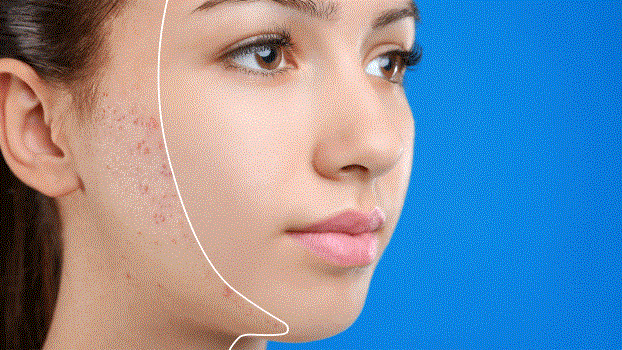
Oily skin is often associated with enlarged pores, excessive shine, and a tendency towards acne. Nature offers effective solutions for regulating sebum secretion and calming inflammation. Among the most effective is the combined infusion of sage and bay leaf, two plants with strong antibacterial and astringent properties.
Why Sage and Bay Leaves?
Sage (Salvia officinalis)
- Contains volatile oils (thujone, cineole), flavonoids, tannins with astringent, antibacterial, and anti-inflammatory effects.
- Reduces sebum secretion, tightens pores, and soothes irritations.
Bay Leaves (Laurus nobilis)
- Rich in eugenol, linalool, and compounds with antiseptic effects.
- Deeply cleanses the skin, regulates pH, and reduces redness.
Recipe for Infusion
Ingredients:
- 1 tablespoon of dried sage leaves
- 2 bay leaves
- 200 ml boiling water
Preparation:
- Pour boiling water over the plants.
- Cover and let steep for 10-15 minutes.
- Strain and allow to cool.
How to Use
- Apply to the face with a cotton pad or spray, 1-2 times a day.
- Can be used as a tonic lotion after cleansing the skin.
- Store in the refrigerator for a maximum of 2 days.
Detailed Benefits
1. Regulation of Sebum
The astringent substances in sage (tannins) contract pores and reduce excessive sebum secretion, leaving the skin more balanced.
2. Soothing and Anti-inflammatory Effect
Bay leaves reduce local inflammation, including redness associated with acne. They act gently, without aggressively drying the skin.
3. Prevention of Blemishes and Cleansing Pores
Both plants have antimicrobial action, destroying skin bacteria that can lead to the appearance of blemishes and blackheads.
4. Improvement of Skin Texture
Through deep cleansing and toning action, the skin becomes smoother, less shiny, and has a more even appearance.
Contraindications
- Avoid use on very dry or sensitive skin.
- Test on a small area before application (wrist).
- Do not use on open wounds or severely irritated skin.
Relevant Studies
Salvia officinalis L. in dermatology Journal of Ethnopharmacology, 2006
The study demonstrates the antimicrobial and anti-inflammatory properties of sage in topical treatments for oily and acne-prone skin.
Essential oil composition and antimicrobial activity of Laurus nobilis Natural Product Communications, 2013
Confirms the antibacterial activity of bay leaf oil against bacteria involved in inflammatory acne.
Sources:
- Salvia officinalis L. in dermatology Journal of Ethnopharmacology, 2006
- Essential oil composition and antimicrobial activity of Laurus nobilis Natural Product Communications, 2013
- Astringent effect of herbal compounds on oily skin Phytotherapy Research, 2012