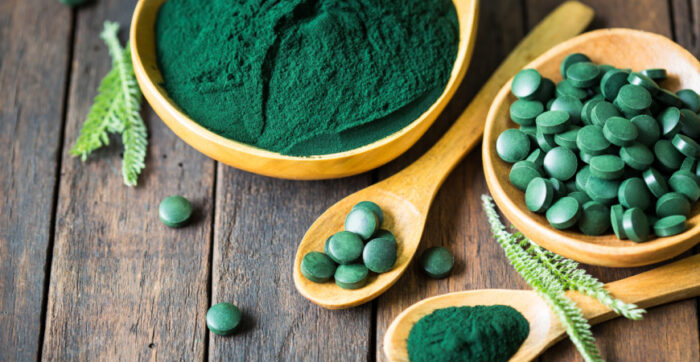
Spirulina is a microalga with an exceptional nutritional composition, used as a dietary supplement worldwide. Renowned for its high concentration of proteins, antioxidants, and phytonutrients, spirulina has attracted the attention of researchers, doctors, and nutritionists. Whether consumed in powder, capsule, or tablet form, this alga can support overall health and may even be an ally in the prevention and management of certain conditions.
Nutritional Table of Dried Spirulina (100 g)
| Component | Approximate Amount |
|---|---|
| Energy | 290 kcal |
| Proteins | 5765 g |
| Carbohydrates | 23 g |
| Total Fats | 7 g |
| Omega-6 Fatty Acids | ~1.0 g |
| Omega-3 Fatty Acids | ~0.1 g |
| Fiber | 3.6 g |
Minerals
| Component | Amount |
|---|---|
| Iron | 28.5 mg (158% RDI) |
| Calcium | 120 mg |
| Magnesium | 195 mg |
| Potassium | 1363 mg |
| Zinc | 2 mg |
| Selenium | 7 g |
| Sodium | 1048 mg |
| Phosphorus | 118 mg |
| Manganese | 1.9 mg |
Vitamins
| Component | Approximate Amount |
|---|---|
| Vitamin A (as beta-carotene) | 11 mg |
| Vitamin C | 10 mg |
| Vitamin E (alpha-tocopherol) | 5 mg (33% RDI) |
| Vitamin K | 25 g |
| Vitamin B1 (thiamine) | 2.4 mg |
| Vitamin B2 (riboflavin) | 3.7 mg |
| Vitamin B3 (niacin) | 12 mg |
| Vitamin B5 (pantothenic acid) | 3.5 mg |
| Vitamin B6 (pyridoxine) | 0.36 mg |
| Vitamin B9 (folic acid) | 94 g |
| Vitamin B12 (cyanocobalamin) | 2.6 g (low bioavailability) |
Phytonutrients and Specific Compounds
| Substance | Approximate Amount |
|---|---|
| Phycocyanin | up to 20% of weight |
| Chlorophyll | 11.5 g |
| Polysaccharides | 1520 g |
| GLA (gamma-linolenic acid) | ~1 g |
Notes:
- Values may vary slightly depending on the producer and the drying method (spray-dried, freeze-dried, etc.).
- Vitamins C and E are present in modest amounts but contribute to the overall antioxidant effect of spirulina.
- The vitamin B12 in spirulina is mainly an inactive analog, meaning it is not effective for correcting B12 deficiencies, as confirmed by several studies.
Benefits of Spirulina
1. Supports the Immune System
Spirulina contains phycocyanin, a pigment that acts as a powerful antioxidant and immunomodulator. Studies show that it stimulates the activity of macrophages, essential cells in the first line of immune defense. Additionally, spirulina helps increase the production of cytokines, which regulate the immune response to infections. Over the long term, regular consumption may reduce the incidence of viral and bacterial infections. Therefore, spirulina is often used in immune-boosting regimens, especially during the cold season.
2. Contributes to Lowering Cholesterol and Protects the Heart
Clinical studies have demonstrated that spirulina can reduce total cholesterol, LDL (bad cholesterol), and triglyceride levels. It works by inhibiting cholesterol absorption in the intestines and increasing HDL (good cholesterol) synthesis. Additionally, due to its antioxidant effects, it reduces oxidative stress in blood vessel walls, thus preventing the formation of atheromatous plaques. This combination helps reduce the risk of cardiovascular diseases. Spirulina is particularly useful in diets aimed at preventing heart attacks or hypertension.
3. Has Anti-Inflammatory and Antioxidant Effects
With its rich content of phycocyanin, beta-carotene, vitamin E, and polyphenols, spirulina effectively combats chronic inflammation. Phycocyanin inhibits inflammatory enzymes such as COX-2, involved in the onset of pain and joint inflammation. The antioxidants in spirulina neutralize free radicals, protecting cells from degradation and premature aging. Consistent consumption of spirulina can reduce inflammatory markers such as CRP and IL-6, according to recent research. Thus, spirulina is beneficial in chronic inflammatory conditions such as rheumatoid arthritis or autoimmune diseases.
4. Helps Control Blood Sugar in Diabetic Individuals
Several clinical studies have highlighted that spirulina can reduce fasting blood sugar and improve insulin sensitivity. The exact mechanism is not fully understood, but it is believed that the antioxidants and amino acids in spirulina contribute to better functioning of pancreatic beta cells. Additionally, some researchers indicate a decrease in HbA1c, a marker of long-term glycemic control. Therefore, spirulina could be a useful adjunct in diabetic regimens, but only with the approval of the attending physician. It is important to note that it does not replace standard treatments.
5. Supports Detoxification of the Body, Especially Heavy Metals
Spirulina has a remarkable ability to bind heavy metals, such as arsenic, lead, or mercury, facilitating their elimination through the digestive tract. This property is due to the polysaccharides and proteins with chelating capacity. A study conducted in Bangladesh on patients with chronic arsenic poisoning showed that spirulina administration led to reduced arsenic concentrations in urine and blood. Spirulina is often used in detoxification programs, especially for individuals exposed to toxic substances from the environment or food. Its action is complemented by liver support through the stimulation of detoxification enzymes in the liver.
Studies and Research on Spirulina
1. Study Published in Journal of Medicinal Food
This study analyzed the effects of spirulina on patients with mild hypercholesterolemia. Participants received 4.5 g of spirulina daily for 6 weeks. At the end of the period, a significant reduction in total cholesterol, LDL, and triglycerides was observed, with a slight increase in HDL. Researchers concluded that spirulina may play a preventive role in cardiovascular diseases. The study was well-controlled and included a diverse metabolic population.
2. Study Published in Diabetes, Obesity and Metabolism
The effect of spirulina on blood sugar and insulin was tested in patients with type 2 diabetes. After 8 weeks of administration (2 g/day), decreases in fasting blood sugar and improvements in insulin resistance markers were recorded. No adverse reactions were reported, which increased interest in using spirulina as an adjunct in diabetes therapy. Researchers also noted a decrease in systemic inflammation. This study is frequently cited in works about spirulina and diabetes.
3. Clinical Study in Bangladesh on Arsenic Detoxification
Published in Clinical Toxicology, the study evaluated patients chronically poisoned with arsenic. Administration of 250 mg of spirulina + 2 mg of zinc for 16 weeks led to a 47% reduction in arsenic levels in the body. Patients reported a significant improvement in their overall condition. This study was one of the first to demonstrate spirulina’s ability to eliminate heavy metals from the human body. The results continue to be confirmed by recent research in the field of toxicology.
Contraindications and Precautions
- Individuals with Phenylketonuria: spirulina contains phenylalanine, which can exacerbate this rare metabolic condition.
- Autoimmune Diseases: being an immunostimulator, it may enhance autoimmune activity in diseases such as lupus or multiple sclerosis.
- Pregnant and Nursing Women: there is insufficient data regarding safety during this period.
- Allergies: some individuals may experience allergic reactions to algae, manifested by rashes, nausea, or breathing difficulties.
- Unsafe Sources: spirulina grown in contaminated environments may contain heavy metals or toxic microcystins.
Sources:
- Journal of Medicinal Food Hypocholesterolemic Effects of Spirulina
- Diabetes, Obesity and Metabolism Effect of Spirulina on Glycemic Control
- Clinical Toxicology Spirulina in Chronic Arsenic Poisoning




