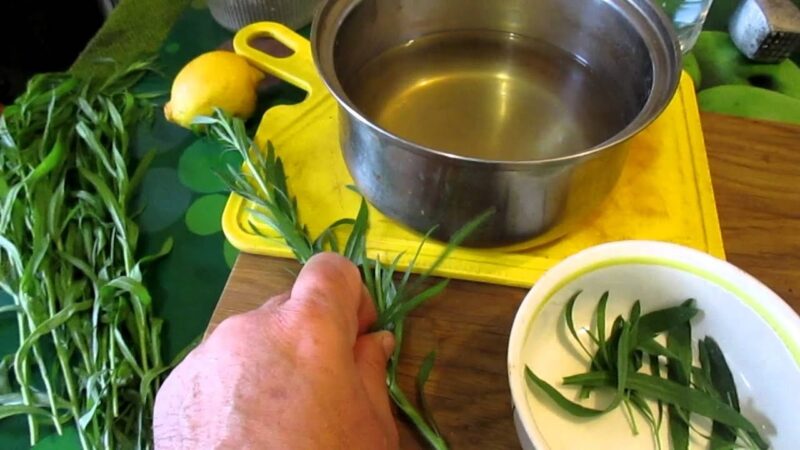
In a world where more and more people are seeking natural solutions for digestive issues, tarragon water is becoming an increasingly appreciated beverage. Its fine, slightly anise-like aroma not only provides a pleasant taste but also supports the digestive system. Used for centuries in folk medicine in the Mediterranean region and Central Europe, tarragon (Artemisia dracunculus) is an aromatic plant with remarkable medicinal properties. Consumed as a diluted infusion in water, it can become a daily remedy for digestion and more.
How to Prepare Tarragon Water
Ingredients:
- 1 tablespoon of dried tarragon leaves (or 2 tablespoons of fresh leaves)
- 250 ml boiling water
- 1 liter of still or filtered water
- Optional: a few slices of lemon, honey, or a mint leaf
Preparation Method:
- Pour boiling water over the tarragon leaves and let it steep for 10 minutes, covered.
- Strain the liquid and add it to one liter of cold water.
- It can be stored in the refrigerator and consumed throughout the day.
Benefits
1. Supports Slow Digestion and Bloating
Tarragon water stimulates the secretion of gastric juices and helps relax the intestinal muscles. The active substances in tarragon leaves, such as estragole and methylchavicol, contribute to reducing flatulence and calming abdominal cramps.
Tarragon is considered carminative, meaning it promotes the elimination of gas from the intestinal tract. Through this mechanism, it alleviates abdominal discomfort associated with heavy meals or hard-to-digest foods. Additionally, it is useful for individuals who frequently suffer from slow digestion or a feeling of heaviness after meals.
With its mild choleretic effect (stimulating bile secretion), it can also support the digestion of fats. In this regard, tarragon water is particularly beneficial after rich meals, helping to prevent indigestion.
2. Antispasmodic Effect on the Intestinal Tract
Regular consumption of tarragon water can reduce spasms of the smooth muscles in the intestines, being effective in cases of intestinal colic or irritable bowel syndrome. This action is due to the volatile oils in the plant, especially estragole, which have a relaxing effect on the digestive system.
Unlike some antispasmodic medications, tarragon water does not cause major adverse reactions and can be used long-term in moderate doses. Additionally, it has a calming effect on the entire nervous system, which can amplify the positive effects in cases of digestive pain caused by stress.
3. Mild Diuretic and Detoxifying
Tarragon has a mild diuretic action, helping to eliminate excess water and toxins through urine. This effect is particularly important for individuals suffering from water retention or abdominal bloating associated with slow intestinal transit.
Tarragon water can be a natural alternative to stronger diuretic teas, being gentler on the kidneys. Combined with a balanced diet, it supports natural detoxification processes and can be included in liver and digestive support regimens.
What Do Studies Say?
Study 1: Tarragon (Artemisia dracunculus) Improves Insulin Sensitivity and Digestion in Animal Models Phytomedicine Journal, 2020
A study published in 2020 in the Phytomedicine journal investigated the effects of tarragon extract on digestion and insulin sensitivity in animals with metabolic dysfunctions. The results showed that regular administration of tarragon extract for 28 days led to a significant improvement in digestion and carbohydrate metabolism.
Researchers observed an acceleration of intestinal transit and a reduction in local inflammation levels in digestive tissues. Additionally, animals treated with tarragon exhibited an increase in bile and pancreatic enzyme secretion, suggesting more efficient digestion.
Interestingly, the volatile compounds in tarragon (especially estragole and ocimene) had a pronounced effect on relaxing intestinal muscles. This property is essential in alleviating abdominal pain and reducing digestive spasms.
In conclusion, the study validated the traditional use of tarragon as a digestive plant and suggested its therapeutic potential in digestive and metabolic disorders.
Study 2: Essential Oil Composition and Biological Properties of Artemisia dracunculus Industrial Crops and Products, 2021
Another study from 2021 analyzed the composition of tarragon essential oil and evaluated its biological activity, particularly on the digestive system. The research was conducted on samples of tarragon cultivated in Central Europe and showed that the main bioactive components are estragole, limonene, and ocimene.
These substances have been shown to possess carminative, antispasmodic, and mild antimicrobial properties. Laboratory tests highlighted that tarragon inhibits the growth of pathogenic bacteria in the intestines, such as E. coli, thus contributing to the balance of the digestive flora.
Furthermore, tarragon oil had a relaxing effect on the smooth muscles of the intestines in experiments on animals, confirming its role in alleviating abdominal discomfort.
Researchers concluded that tarragon can be a valuable natural adjunct in treatments for mild to moderate digestive disorders, especially in non-concentrated forms, such as diluted infusion or tarragon water.
Contraindications
Tarragon water is contraindicated in the following situations:
- Pregnancy and breastfeeding, due to the content of estragole, which may have hormonal effects.
- Individuals with severe liver diseases, as some components may affect liver function.
- Allergy to plants in the Asteraceae family (e.g., wormwood, mugwort).
- Use in large doses or for very long periods without breaks may affect hormonal or digestive balance.
- Possible interactions with anticoagulants or hepatotoxic medications.
Sources:
- Phytomedicine Journal Tarragon (Artemisia dracunculus) Improves Insulin Sensitivity and Digestion in Animal Models
- Industrial Crops and Products Essential Oil Composition and Biological Properties of Artemisia dracunculus




