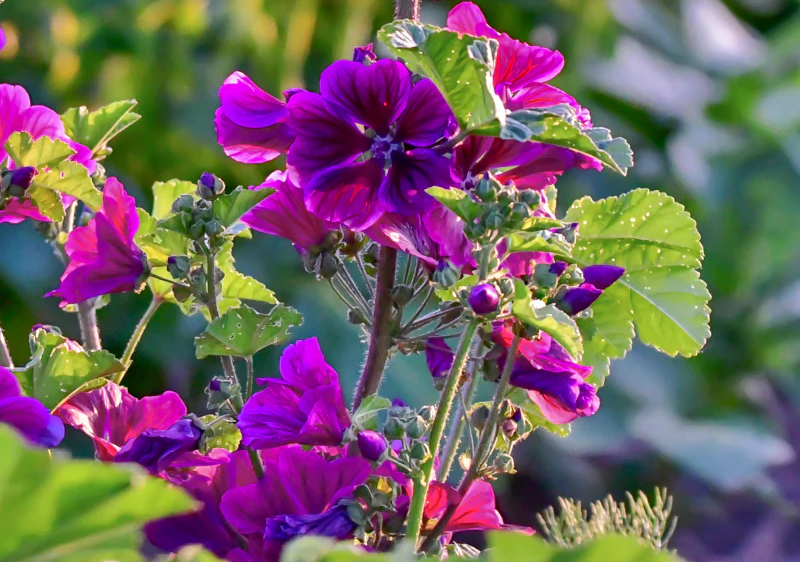
Irritable bowel syndrome is a condition increasingly encountered among adults and even young people, causing abdominal discomfort, bloating, alternating diarrhea-constipation, and a reduced quality of life. In search of solutions, nature offers us a precious ally: mallow (Malva sylvestris). This plant with delicate flowers is a well-known remedy from ancient times, and modern science is beginning to confirm its calming potential, especially in digestive disorders.
Benefits of Mallow Tea for Irritable Bowel Syndrome
Mallow contains mucilage in large quantities—gelatinous substances that, once in the digestive tract, form a protective film. This physiological effect is essential in calming the irritated intestinal mucosa.
Calms intestinal inflammation – Mucilages and flavonoids reduce inflammation of the intestinal mucosa, alleviating the sensation of burning, cramps, and discomfort.
Regulates intestinal transit – Mallow tea acts as a mild laxative in cases of constipation but does not irritate the colon, making it ideal for the alternating episodes specific to irritable bowel syndrome.
Relieves spasms – The flavonoids and anthocyanins in mallow have antispasmodic effects, reducing painful contractions of the intestines.
Protects intestinal flora – The protective film formed by mucilages reduces bacterial aggression on the mucosa and supports the balance of the microbiome.
A study published in Journal of Ethnopharmacology (2018) highlighted that aqueous extracts of Malva sylvestris demonstrated anti-inflammatory and protective activity on inflamed gastrointestinal tissues.
Another article in Phytotherapy Research (2020) showed that mucilages from plants like mallow can be compared in effect to gastrointestinal protective medications, but without the associated side effects.
Classic Recipe for Mallow Tea
Ingredients:
- 1 tablespoon of dried mallow leaves and flowers
- 250 ml water (not hot)
Preparation Method:
Mallow tea is prepared by cold maceration to preserve the active mucilages.
- Place the dried plant in a glass or cup.
- Add water at room temperature.
- Let it macerate for 4 to 8 hours (ideally overnight).
- Strain and drink slightly warmed, but not boiled.
For sustained effect, it is recommended to consume 2-3 cups per day for 14 days.
Other Forms of Use
Warm infusion (for combination with other plants) – It can be combined with chamomile, mint, or calendula for a synergistic effect.
Mallow powder – Administer 1/2 teaspoon, twice a day, with water, before meals.
Compresses for the abdomen – In case of abdominal pain, a warm compress with concentrated mallow infusion can be applied.
Contraindications and Precautions
Although mallow is considered a safe plant, there are some situations where caution is advised:
- Pregnancy and breastfeeding – Should be administered only with a doctor’s approval.
- Allergy to mucilages – Individuals sensitive to mucilage-containing plants may experience mild digestive discomfort.
- Drug interactions – Mucilages may reduce the absorption of certain medications. It is recommended to take them 1-2 hours apart from prescribed treatments.
Recommended Cure
Duration: 14-21 days
Frequency: 2-3 cups/day of cold maceration
Recommendation: Combine with an anti-inflammatory diet, avoid irritating foods (sugar, gluten, fermented dairy), and include natural prebiotics (flax seeds, psyllium).
Sources:
- Malva sylvestris: Pharmacological Activities and Active Compounds, Journal of Ethnopharmacology, 2018.
- Gastrointestinal mucosal protection by plant-derived mucilages, Phytotherapy Research, 2020.
- Mucilage-rich plants for gut health: a review, Herbal Medicine Journal, 2021.
- Statements from an interview with Dr. Antonella Cardone, phytotherapist (2022).




