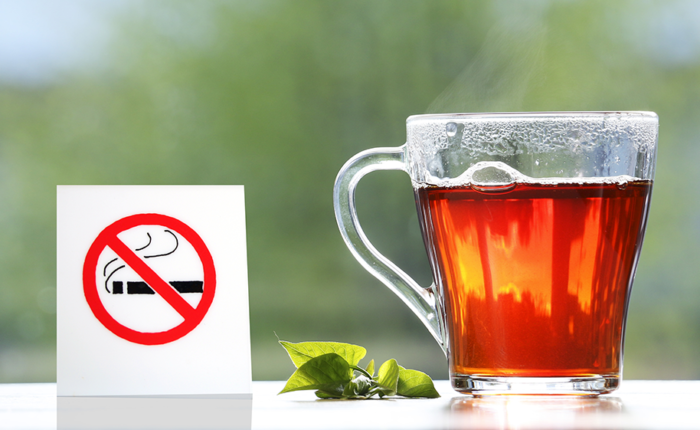
Many smokers face respiratory issues that they have come to consider normal due to their habit, but which can lead to serious complications sooner or later. Shortness of breath and chronic cough are common symptoms among smokers, caused by irritation of the airways and mucus formation due to the chemicals in cigarette smoke. Obviously, the main recommendation in such situations is to quit smoking; however, there are certain teas for the lungs that smokers can use to alleviate respiratory symptoms.
It is important to note that no tea for the lungs can counteract the harmful effects of smoking, and even if an improvement in respiratory function is observed, health risks increase with each cigarette smoked. Not surprisingly, most patients diagnosed with lung cancer are smokers, who also represent a significant proportion of patients with cardiovascular diseases.
What properties should a tea for the lungs have
To help smokers breathe easier and alleviate persistent cough, a tea for the lungs must possess a series of qualities provided by the specific substances in the plants from which it is prepared. Thus, a tea for the lungs with beneficial effects for smokers has the following properties:
Expectorant helps to eliminate mucus from the airways, making it easier for smokers to breathe and alleviating coughing episodes.
Mucolytic is a property that comes along with the one mentioned above; a tea for the lungs with mucolytic effects thins the mucus accumulated in the airways, thus facilitating its elimination.
Anti-inflammatory a tea for the lungs with anti-inflammatory effects improves breathing and alleviates cough, symptoms that are present in most smokers.
Antiseptic the airways constantly exposed to cigarette smoke become more vulnerable to pathogens, which can more easily enter the body through this entry point. An antiseptic tea for the lungs supports the weakened immune system, acting against pathogens and reducing the risk of respiratory infections.
Antioxidant oxidative stress is another harmful process that affects smokers, increasing the risk of chronic respiratory and cardiovascular diseases, among others. In addition to the free radicals produced in the body as a result of metabolic processes, a series of other compounds from the same category enter the body with cigarette smoke. These affect the structure and functionality of cells through chemical reactions that generate oxidative stress. A tea for the lungs must also have antioxidant effects, neutralizing free radicals and thus reducing oxidative stress.
Recommendations for lung tea
Fortunately, there are several types of tea for the lungs that can help smokers improve their breathing and get rid of bothersome coughs, while also contributing to reducing the risk of diseases associated with this habit. However, the risks remain high, and the consumption of lung tea can, at best, only delay the onset of these diseases, with the most effective preventive method being quitting smoking.
Below, we present the most effective types of tea for the lungs, recommended for both smokers and as a natural treatment for certain respiratory conditions.
Ginger Tea
This tea is particularly suitable for smokers as it encompasses many of the qualities mentioned in the previous section. These qualities are largely due to gingerol, which is the main active substance in ginger root. Thanks to gingerol and its properties, ginger tea can be considered a tea for the lungs, having beneficial effects that greatly help smokers. Specifically, it has an anti-inflammatory effect on the airways and simultaneously supports the immune system by neutralizing some of the pathogens that enter these pathways. Last but not least, ginger is also recognized as a good antioxidant, which is another reason it can be used as an ingredient in lung tea.
Eucalyptus Tea
Eucalyptus is known for its mucolytic and expectorant effects, which is why it is often found in various medications or dietary supplements aimed at treating respiratory infections. Due to these properties, eucalyptus can also be prepared as tea for the lungs, which is very effective in decongesting the airways. At the same time, eucalyptus tea acts as an anti-inflammatory, and the substances it contains are effective against viruses or bacteria that can cause respiratory infections.
It helps smokers by alleviating cough and easing breathing through its anti-inflammatory and expectorant effects.
Peppermint Tea
Peppermint competes with eucalyptus in terms of expectorant effect, as well as anti-inflammatory action and antimicrobial effect. Unlike eucalyptus, peppermint is much more accessible in our area, so the tea made from it is consumed more frequently. Among other things, it can also be considered a tea for the lungs due to the menthol in peppermint leaves. This decongests the airways, alleviating cough and improving breathing, the same effect being generated by its anti-inflammatory action. At the same time, it reduces the risk of respiratory infections and speeds up their healing due to its antimicrobial effect.
Thyme Tea
Known primarily as a culinary ingredient, thyme is also a medicinal plant with numerous therapeutic properties that can be beneficial for smokers. Thus, thyme can be prepared as a good tea for the lungs, with expectorant and antispasmodic effects. It calms cough and simultaneously improves breathing due to its anti-inflammatory action. Last but not least, thyme tea has a strong antimicrobial effect that protects the airways against infections.
Marshmallow Root Tea
This tea is considered a good tea for the lungs, particularly for smokers, due to its soothing effect on irritated and inflamed airways. It contains mucilage that forms a protective layer in the airways, acting as an anti-inflammatory. Thus, marshmallow root tea improves breathing and has expectorant effects that calm cough.
Licorice Root Tea
This tea is made from the root of the Glycyrrhiza glabra plant, commonly known as licorice. It is a shrub that has been used for thousands of years as a natural remedy due to the numerous beneficial substances contained in its root. The most important of these is glycyrrhizin, which gives licorice expectorant, anti-inflammatory, and antimicrobial properties. Due to these properties, licorice root is a suitable ingredient for preparing a tea for the lungs.
It cleans the airways by eliminating excess mucus, reduces inflammation, and simultaneously neutralizes pathogens. For smokers, regular consumption of licorice tea eases breathing and alleviates cough while also protecting the airways against infections.
Nettle Tea
This tea encompasses all the qualities specific to a tea for the lungs, having anti-inflammatory and expectorant effects, strengthening the immune system and neutralizing free radicals that cause oxidative stress. As mentioned, its anti-inflammatory and expectorant actions ease breathing and alleviate chronic cough, benefits also associated with the consumption of nettle tea.
Although it does not act directly on pathogens, this tea also protects against respiratory infections, as it is rich in vitamins and minerals that strengthen the immune system and make it more effective in fighting these microorganisms.
Additionally, nettle tea is also a good source of antioxidants that neutralize some of the radicals introduced into the body by cigarette smoke, thus reducing oxidative stress and the risk of chronic diseases associated with it.




