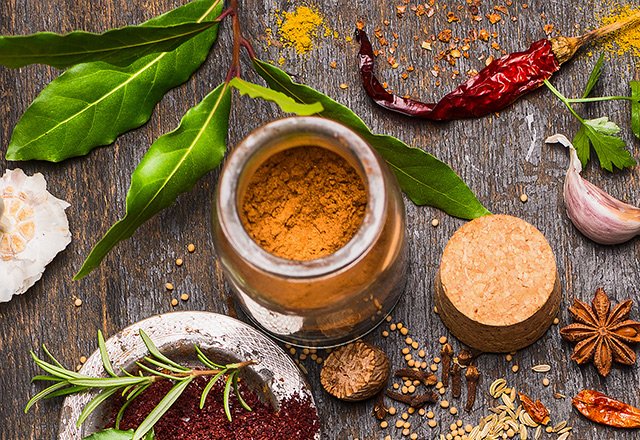
Garlic is one of the most common culinary ingredients worldwide. Many dishes from Europe, Africa, Asia, and America use this strongly flavored vegetable.
Garlic is similar to other bulbous plants, including onions, shallots, leeks, and green onions.
But garlic is special.
For centuries, people have used garlic not only for cooking but also as medicine.
Medicinal Garlic Throughout History
Researchers from Memorial Sloan-Kettering Cancer Center and Cornell University have studied the medicinal use of garlic throughout history. They found references to garlic in ancient texts from Egypt, Greece, Rome, China, and India.
For example, in ancient Greece and Rome, people considered garlic a helper for strength and endurance.
The first Olympic athletes in Greece consumed garlic to enhance their performance. The ancient Romans fed garlic to soldiers and sailors.
Workers who built the pyramids in Egypt ate garlic. In fact, this is a theme throughout early history—workers consumed garlic to boost their strength.
Why is Garlic Such a Healthy Food?
The short answer is that garlic produces a gas called hydrogen sulfide.
At first glance, hydrogen sulfide doesn’t seem very healthy. In fact, it is toxic and flammable. It smells like rotten eggs. But it serves an important function in our body. Hydrogen sulfide relaxes blood vessels.
The relaxation of blood vessels, in turn, allows a greater amount of oxygen to reach the organs of the body. This lowers high blood pressure and protects the body against cardiovascular diseases.
“Cardio” refers to the heart, while “vascular” refers to blood vessels.
Some researchers in China have gone so far as to call hydrogen sulfide the key to a longer life.
So many studies on garlic!
In a 2007 study, researchers from the University of Alabama at Birmingham examined how garlic increases hydrogen sulfide and how this, in turn, affects red blood cells.
David Kraus led this study. At the time, he was an associate professor in the Departments of Environmental Health Sciences and Biology at the university. He and his team conducted the study on rats. They discovered that when garlic compounds were converted into hydrogen sulfide in the vascular system, the gas caused the relaxation of the muscles.
In their report, the researchers wrote: “This relaxation is the first step in lowering high blood pressure and achieving heart-protective effects.” They found that these health effects are closely related to the hydrogen sulfide produced by garlic compounds interacting with red blood cells.
In 2013, scientists finally managed to see how this process occurs. Chemists Alexander Lippert from Southern Methodist University in Dallas and Vivian S. Lin discovered how to observe this process in living human cells.
In a press release from Science Daily, Lippert explained that they created a chemical probe that reacts and lights up when living human cells generate hydrogen sulfide. Lippert’s real-time video recording shows living human cells producing hydrogen sulfide.
Their discovery opened the door to further research on the health benefits of garlic and hydrogen sulfide production in the body.
In an experiment conducted in 2015 at Penn State University, researchers injected a solution that would create hydrogen sulfide into the arms of healthy young adults. They wanted to see what effect hydrogen sulfide would have on a small area of blood vessels.
Initial findings suggest that hydrogen sulfide dilated blood vessels, leading to increased blood flow. These researchers intend to continue their studies. They published their results in The Journal of Physiology.
Older Garlic May Be Even Healthier
But let’s leave the lab and head to the kitchen. Don’t throw away older garlic that has sprouted. You might have thought that garlic with light green sprouts has passed its prime or is old and on its way to the trash.
But not so fast.
Scientists have reported in the Journal of Agricultural and Food Chemistry that this older garlic has even more beneficial properties for our bodies than fresh garlic. When researchers tested garlic that had sprouted for five days, they found it had higher antioxidant activity than fresher garlic bulbs.
Also, to obtain the full effect of garlic’s health benefits, don’t just add it to food and cook it immediately. Crushing, chopping, or mincing garlic releases the healthy compound found in the vegetable. However, heating garlic or adding it to other ingredients hinders the release of this healthy compound. Therefore, crush, chop, or mince the garlic and let it rest for a few minutes.
So, are there any downsides to garlic? Well, the same reason garlic is good for us and great in food—the strong sulfur smell—is the same reason it gives us bad breath.
But there might be a remedy for that too. Another study showed that eating an apple or a salad after consuming garlic reduces the strong garlic odor from breath.




