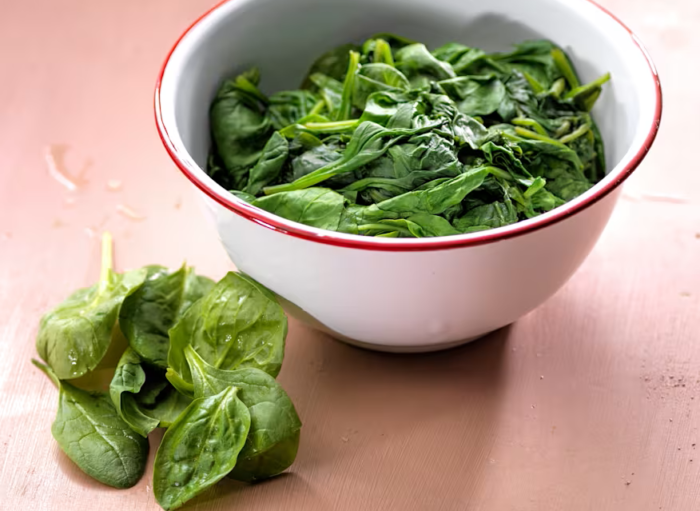
The leafy green vegetable recommended by doctors is spinach. According to specialists, it has antioxidant properties, contributes to blood clotting, regulates blood pressure, and improves the immune system.
The Leafy Green Vegetable Recommended by Doctors: A Beneficial Food for the Body
Nutritionist Ana Maria Demetrescu spoke about the benefits of consuming spinach.
Spinach is a beneficial food for the human body due to its content of minerals such as sodium, potassium, calcium, phosphorus, magnesium, sulfur, manganese, zinc, copper, iodine, and iron. It is also rich in vitamins A, B1, B2, B12, and C.
In addition to the wide range of vitamins and minerals in its composition, spinach has superior antioxidant properties, contains folic acid, and regular consumption can have a detoxifying effect, helping to purify the blood, reduce anemia, and consequently strengthen immunity, said the nutritionist.
Spinach works wonders for vision due to its content of carotenoids such as lutein and zeaxanthin. It can prevent the onset of certain ophthalmological conditions such as macular degeneration.
Spinach contains nitrates, and regular consumption can improve heart health by regulating blood pressure levels and strengthening heart function. Additionally, spinach contains alpha-lipoic acid, an antioxidant that can help lower blood sugar levels and regulate blood glucose levels.
Consuming spinach is also beneficial for the skeletal system, as it helps retain calcium in the bones, thus preventing the onset of osteoporosis. Spinach is also rich in fiber and can be an adjunct food in maintaining digestive tract health, the nutritionist added.
How Beneficial is Frozen Spinach? Does it Lose Its Properties?
The nutritionist clarifies the dilemma regarding the loss of properties due to freezing.
Through thermal treatment (boiling/cooking), as well as over time due to storage methods, spinach can lose some of its nutrients, especially vitamin B. Additionally, if stored in the refrigerator for more than a week, the appearance of spinach deteriorates. If not consumed immediately after harvesting, spinach can be frozen, and in this way, the product will retain all its nutritional qualities, the nutritionist stated.
Ana Maria Demetrescu also explained the contraindications that spinach consumption may have.
However, despite its multiple benefits, spinach also has contraindications. Due to its content of oxalates of potassium and calcium, spinach is not recommended for consumption by individuals with liver problems, rheumatic conditions, gastric inflammation, or intestinal issues.
In these cases, consuming spinach may increase the risk of kidney stones. Additionally, individuals suffering from gout and kidney stones should avoid consuming spinach, as it contains uric acid. Spinach consumption can also interfere with certain anticoagulant medications due to its high vitamin K1 content. For this reason, individuals undergoing treatment should consult a specialist before consumption, the nutritionist further advised.




