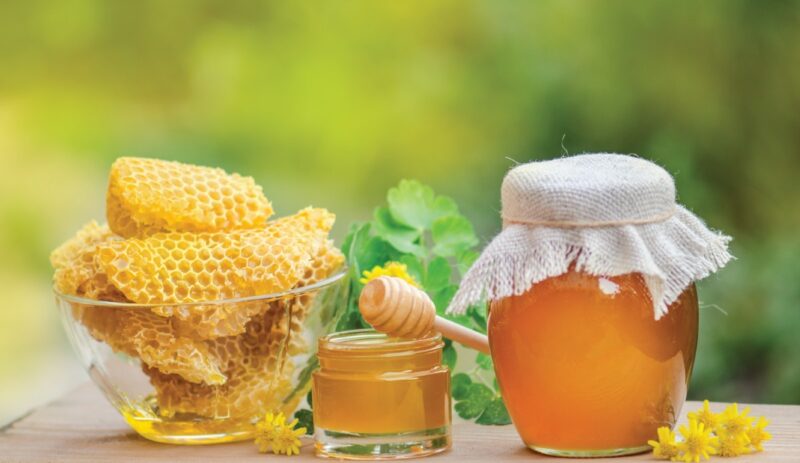
Since the dawn of civilization, honey has been more than just a food; it has been a symbol of healing, a gift from the gods, and a remedy with almost magical powers. The Egyptians used it for skin care and mummification, the Greeks called it the nectar of immortality, and Romanian folk medicine considered it food for the heart and blood. But what does modern science say? Why does honey remain one of the most studied and appreciated bee products in the world?
Chemical Composition: What Does a Spoonful of Honey Hide?
Honey is a complex mixture of:
-
Fructose (38%) and glucose (31%) provide immediate energy.
-
Enzymes (invertase, amylase, glucose oxidase) some of which are activated only in contact with bacteria.
-
Vitamins (B1, B2, B3, B5, B6, C) in small but synergistic amounts.
-
Minerals (potassium, calcium, magnesium, iron, zinc)
-
Polyphenols and flavonoids with strong antioxidant roles.
-
Gluconic acid produced by bees, contributes to the antibacterial effect.
Benefits of Honey: How It Affects the Body
1. Natural Broad-Spectrum Antibacterial
Studies show that honey destroys over 60 types of bacteria, including antibiotic-resistant strains (such as MRSA). The action is due to the low pH, hydrogen peroxide, and polyphenolic compounds.
2. Support for the Heart and Blood Vessels
The flavonoids in honey (especially pinocembrin and quercetin) reduce vascular inflammation, lower blood pressure, and improve circulation.
3. Natural Calming Agent for Sleep and Stress
Honey helps release serotonin and, implicitly, melatonin, promoting restful sleep. Consuming a spoonful of honey before bed reduces nighttime awakenings.
4. Gentle Detoxifier for the Liver
It stimulates liver function and helps eliminate toxins, especially when combined with lemon or ginger.
5. Ally in Colds, Coughs, and Throat Inflammation
Studies show that it is more effective than commercial cough syrups for children and adults. It has soothing, antiseptic, and regenerative action.
Natural Recipes with Honey
1. Honey with Garlic for Immunity
-
1 clove of garlic, finely chopped
-
200 g acacia honey
Let it macerate for 5 days. Take 1 tablespoon in the morning on an empty stomach.
2. Honey and Lemon Syrup for Cough
-
1 organic lemon (with peel), sliced
-
200 ml honey
-
Optional: grated ginger
Let it sit in the fridge for 2-3 days. Administer 3 tablespoons per day.
3. Regenerating Facial Mask with Honey and Turmeric
-
1 tablespoon honey
-
1 tablespoon turmeric
Apply for 10 minutes on the face, then rinse with warm water.
Types of Honey and Their Properties
| Type of Honey | Color | Main Indications |
|---|---|---|
| Acacia | Light yellow | Soothing gastritis, insomnia |
| Linden | Golden yellow | Cough, anxiety, colds |
| Polyflower | Intense golden | Stimulating general immunity |
| Manuka (New Zealand) | Dark brown | Severe bacterial infections, acne |
| Chestnut | Dark brown | Circulation, varicose veins, internal inflammation |
Contraindications
Honey is NOT recommended in the following situations:
-
Children under 1 year – risk of infant botulism
-
Uncontrolled diabetes – can rapidly increase blood sugar
-
Allergies to pollen or bee products – can cause severe reactions
-
Digestive disorders in acute phase – irritation or gastric discomfort
Honey is not just a natural sweetener; it is a complete medicine, with benefits validated by research and a millennia-old tradition. Whether consumed in the morning on bread, in a cup of tea, or as an ingredient in a facial mask, honey continues to fascinate and heal. With a gentle yet profound power, it remains a living symbol of the balance between nature and health.
Sources:
-
Nutrients Journal – Protective Effects of Honey on Cardiovascular Risk Factors
-
Pediatrics Journal – Effect of honey on nocturnal cough and sleep quality
-
Future Journal of Pharmaceutical Sciences – Honey: a therapeutic agent for disorders of the skin
-
National Institutes of Health – Honey in modern medicine
-
PubMed Central – Antibacterial properties of honey




