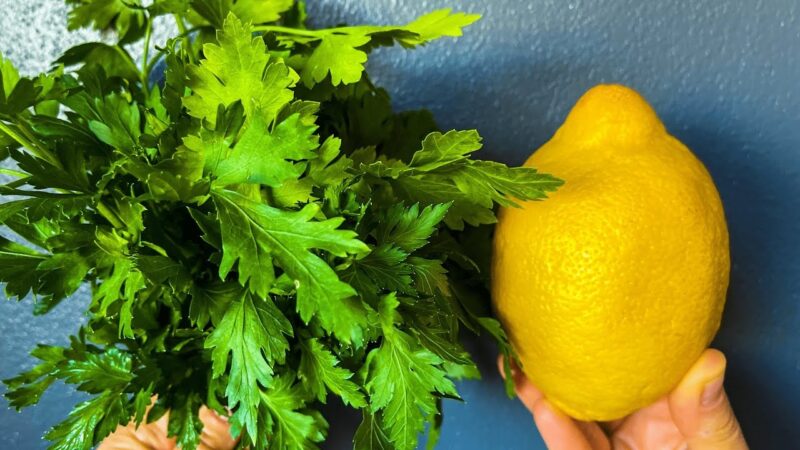
A simple mixture with amazing effects on the body, parsley and lemon are two accessible ingredients with exceptional therapeutic potential. When combined correctly, they can support the body in eliminating excess fluids, detoxification, digestive balance, and even regulating blood pressure.
Necessary Ingredients:
- 1 large bunch of fresh green parsley
- 1 large organic lemon (or very well washed)
- 1 glass of plain water (approx. 250 ml)
Step-by-Step Recipe:
- Wash the lemon and parsley very well. If the lemon is not organic, soak it for 15 minutes in water with baking soda, then rinse.
- Chop the parsley finely, including the stems (that’s where most of the active substances are found).
- Cut the lemon into pieces, including the peel. Remove the seeds.
- Put everything in a blender or a deep bowl, adding the glass of water.
- Blend well for 1 minute until you obtain a semi-liquid paste.
- Consume immediately, preferably in the morning on an empty stomach or in the evening, 2 hours before bedtime.
It can be consumed once a day for 5-7 days. For visible effects, consistency is important.
Benefits of the Parsley and Lemon Remedy
1. Reduces water retention and swelling in the body
The combination of parsley, a powerful natural diuretic, with lemon juice and peel, which supports lymphatic drainage, helps eliminate excess fluids retained in tissues. This effect is especially beneficial for individuals dealing with swollen feet, bloating, or a feeling of heaviness.
Increased diuresis caused by the apiol and myristicin in parsley stimulates the kidneys to eliminate toxins and regulate sodium levels. Lemon, rich in potassium, complements this effect by balancing minerals. After just a few days of consumption, many notice a reduction in edema and a feeling of lightness.
The effect sets in gradually but can sometimes be felt as early as the second day, especially if consumed in the evening before bed. Good hydration is recommended in parallel to support the detoxification process.
2. Supports the liver and detoxification process
Parsley is an excellent source of compounds that help the liver in neutralizing toxins: flavonoids, vitamin C, chlorophyll. In combination with citric acid from lemon, this mixture supports the synthesis of beneficial liver enzymes and stimulates bile secretion.
The liver becomes more efficient in processing fats and eliminating waste, resulting in easier digestion and a more stable energy level.
Additionally, lemon peel contains d-limonene, a compound with antioxidant and detoxifying effects on the liver, confirmed by multiple studies.
It is recommended that this remedy be included in short 7-day courses, especially after periods of rich diets or medication treatments.
3. Regulates intestinal transit and combats bloating
Lemon and parsley work synergistically to stimulate transit. The pectins in lemon, along with the fibers in parsley, support colon cleansing and prevent constipation.
Moreover, this combination reduces excessive fermentation that leads to bloating, due to the mild antibacterial and alkalizing effect of lemon.
After a few days of consumption, many users have reported a reduction in abdominal discomfort, decreased bloating, and a feeling of a flat stomach.
For maximum effect, it is recommended that the mixture be consumed at least 30 minutes before meals.
4. Supports the immune system
Lemon is renowned for its high vitamin C content, but few know that parsley also contains this vitamin in very large quantities. In fact, 50 g of fresh parsley can provide more vitamin C than an orange.
This combination helps stimulate white blood cells and improves the immune response, being particularly useful in the cold season or during periods of exhaustion.
Additionally, the antioxidant effect of flavonoids in parsley, such as luteolin, reduces oxidative stress and protects cells from damage.
This remedy can be consumed for 5-7 days, with a 2-week break, especially at the beginning of autumn or spring.
5. Regulates blood pressure and supports vascular health
Parsley contains substances like apigenin, which can help dilate blood vessels and reduce blood pressure. Lemon contributes with its vasodilatory effect and high potassium content.
The combination of these two ingredients supports the elasticity of blood vessels and the thinning of blood, especially in individuals with mild hypertension or circulatory issues.
Regular consumption can help prevent cardiovascular complications, especially if accompanied by a balanced diet and stress reduction.
It is important to note that this remedy does not replace prescribed treatments but can play a useful adjunct role.
Relevant Studies:
Journal of Ethnopharmacology The diuretic effect of parsley
A study published in 2016 analyzed the diuretic effects of parsley infusion on an animal model. Researchers observed a significant increase in the volume of urine eliminated over 24 hours.
They concluded that apiol and myristicin, two active compounds in parsley, directly stimulate renal filtration and sodium excretion. This effect can be utilized in natural treatments for edema and mild hypertension.
It is important to note that the effect was maintained over several days of administration, suggesting a real therapeutic potential.
The study recommends that parsley be used in the form of infusion or fresh juice to preserve the active compounds.
Phytotherapy Research D-limonene from lemon peel
Research on d-limonene, a major compound in lemon peel, has shown that it has hepatoprotective, anti-inflammatory, and powerful antioxidant effects.
The 2020 study demonstrated that regular administration of d-limonene reduced inflammatory markers at the liver level and increased glutathione activity, an endogenous antioxidant.
The results supported the use of lemon peel extracts in natural therapies for liver support and prevention of liver damage induced by toxins or medications.
The authors emphasized the importance of consuming lemons with the peel, in untreated chemical form.
Contraindications
- Pregnant women should avoid excessive consumption of parsley, as it may stimulate the uterus.
- Individuals with severe kidney conditions or those taking diuretic treatment should consult a doctor before consuming this remedy.
- Lemon may irritate the stomach in cases of hyperacid gastritis; testing with small quantities is recommended.
- Not recommended for those allergic to parsley or citrus fruits.
- Avoid daily consumption for more than 7 consecutive days without a break.
Sources:
- Journal of Ethnopharmacology Diuretic and hypotensive effects of Petroselinum crispum
- Phytotherapy Research D-limonene: A bioactive compound with hepatoprotective activity




