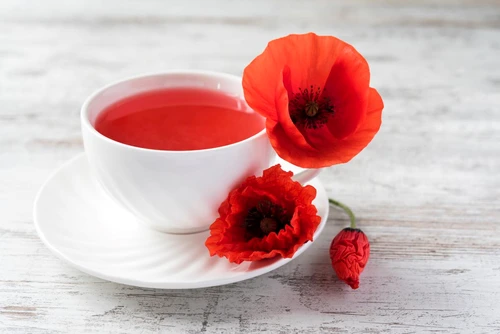
The poppy flowers (Papaver rhoeas), known for their delicate beauty in the fields, hide a remarkable therapeutic potential. When dried and used correctly, they can become an effective natural remedy for insomnia, anxiety, and nervous agitation. This ancient remedy is being rediscovered by herbalists due to its calming and mildly sedative action, without the risk of dependence or severe side effects.
Active Ingredients and Mechanism of Action
The red poppy flowers contain:
- Mild alkaloids (rhoeadin, papaverine in small amounts) that act on the central nervous system with a mild calming effect.
- Mucilages that protect mucous membranes, useful in coughs and irritations.
- Anthocyanin pigments with antioxidant effects.
It is important to note that red poppy flowers (Papaver rhoeas) are not narcotics like the opium poppy (Papaver somniferum), but they still have beneficial sedative effects, especially in states of agitation.
Recipe: Infusion of Dried Poppy Flowers
Ingredients:
- 1 tablespoon dried red poppy flowers
- 250 ml hot water
- (optional) 1 tablespoon honey
Preparation Method:
- Pour hot water over the poppy flowers in a cup.
- Let it steep for 10-12 minutes, covered.
- Strain and consume in the evening, 30-60 minutes before bedtime.
It can be combined with lime, valerian, or lavender.
Benefits
1. Soothes the nervous system without adverse effects
Red poppy flowers act gently on the nerve centers responsible for excitability and stress. Ideal for:
- anxiety,
- mild anxiety states,
- difficulties in falling asleep,
- shallow sleep.
2. Induces natural sleep without the risk of dependence
The red poppy tea does not create dependence and can be consumed in courses of 5-7 days, with a break of one week. Unlike chemical sleeping pills, it does not affect sleep quality and does not cause morning grogginess.
3. Calming effect for coughs and irritations
Due to its mucilages and emollient effect, the red poppy infusion is also effective in:
- irritative cough
- dry throat,
- mild respiratory discomfort, associated with stress.
Contraindications
- Not to be administered during pregnancy and breastfeeding.
- Do not combine with synthetic sedatives or alcohol.
- Avoid overdosing – no more than 1 tablespoon per 250 ml of water.
- Do not use in parallel with psychotropic treatments without medical advice.
Sources:
- The therapeutic potential of Papaver rhoeas – A review, Journal of Ethnopharmacology, 2018
- Herbal remedies in sleep disorders, Sleep Medicine Reviews, 2020
- Traditional use and phytochemistry of Papaver species, Plant Science Today, 2021




