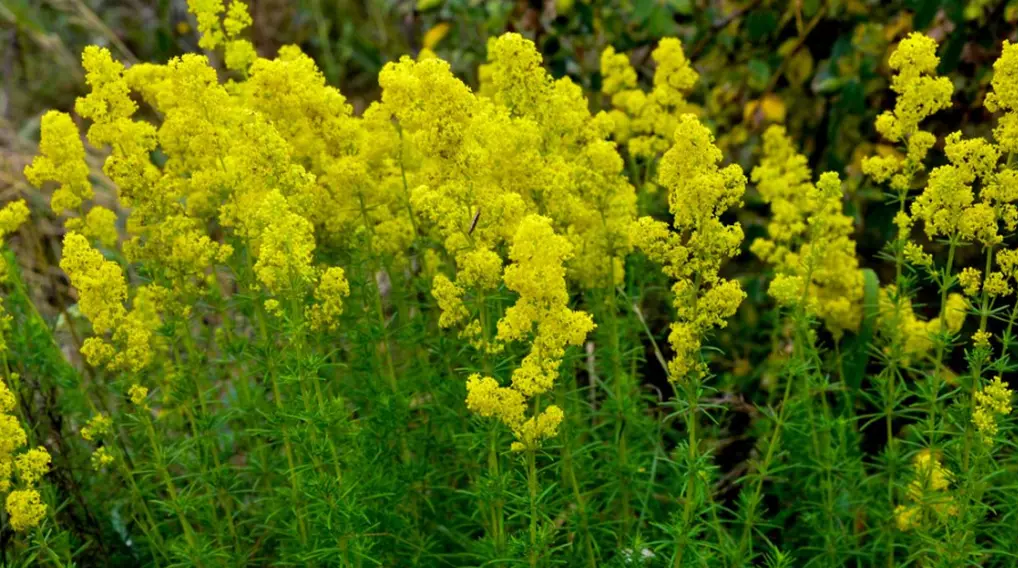
Romanian tradition attributes magical powers to St. John’s Wort flowers, which bloom in the second half of June and are associated with June 24, also known as St. John’s Day. There are both white and yellow St. John’s Wort flowers, which are used as a folk remedy for treating various ailments, as well as in natural cosmetics. Let’s explore the popular traditions and what science says about St. John’s Wort flowers and their uses.
St. John’s Wort flowers are wildflowers that grow in plains and hilly areas. Scientifically known as Galium verum, they belong to the Rubiaceae family. In some cultures, St. John’s Wort is considered a magical or sacred flower, often associated with the summer solstice and other popular traditions. Scientific research has also found various beneficial properties for health.
Traditions and Superstitions on St. John’s Day
It is said that on June 24, St. John’s Wort flowers gain magical powers, helping unmarried girls discover who their destined partner will be, when they will marry, and to be loved and fertile.
This is a celebration during which, in rural areas, rituals are performed for the well-being of the household and the health of its members. Fires are lit for purification, and wreaths made of flowers are woven and thrown onto the roofs of houses. Doors, tables, and windows are decorated with flowers.
When the wreath of St. John’s Wort thrown onto the roof remains there, it is believed that the girl who threw it will marry that year. If it falls back down, she will have to wait longer. Flowers placed at the door are put one by one or in bunches for each family member, and it is said that those who find them dried the next day will die before the others.
June 24 is a holiday in Orthodox tradition because it is the day St. John the Baptist was born. The yellow St. John’s Wort flowers are also called St. John’s flowers for this reason. It is also considered the day of the Romanian blouse, and many women wear traditional blouses on this day. Even in cities, you can find them in all the shops during this period, as it is said that having them in the house on St. John’s Day will bring prosperity and good fortune.
In the past, pregnant women would place St. John’s Wort flowers on their beds, believing it would lead to an easy delivery. It is also said that other plants endowed with healing powers have a better effect when harvested on this day.
In popular tradition, if you honor this day properly, you will receive help from the St. John’s Worts, seen as good fairies. If not, they become mischievous and are then called “iele.” They are depicted as very beautiful girls who dance in a circle at night under the moonlight, leaving behind a trampled place where they danced, and those who see them lose their minds or cannot speak.
How to Use St. John’s Wort Flowers as a Natural Remedy?
Beyond all these superstitions or legends, St. John’s Wort flowers contain substances that make them truly useful for various ailments, if you know how to use them. The active substances include tannins, citric acid, enzymes, carbohydrates, and saponins. Enzymes, for example, help in curdling milk, which is good to know for those who want to make yogurt, kefir, or cheese at home and do not wish to use animal rennet.
Internal Effects
In internal therapy, St. John’s Wort infusion helps the proper functioning of the thyroid gland and vocal cords, has diuretic, laxative, anti-rheumatic, anti-spasmodic, purifying, sedative, and even aphrodisiac effects. It also aids the nervous system, having a calming effect despite its strong bitter taste. Thus, individuals with depressive tendencies may notice they feel more relaxed after consuming St. John’s Wort infusion. Recent studies show that extracts of St. John’s Wort have antioxidant effects that improve heart function.
External Effects
In cosmetics, the same infusions soothe irritated skin, have emollient, healing, tonic, and antiseptic effects. They are successfully used in cases of eczema, wounds, and even psoriasis, to alleviate symptoms. In the past, girls would apply dew from St. John’s Wort flowers on their eyelids, thus achieving a rested appearance and helping to prevent the appearance of wrinkles.
How to Treat Your Skin with St. John’s Wort Flowers?
For skin care, you can use both St. John’s Wort infusion and maceration. These are good for cleansing the skin. For skin conditions, you can apply poultices made from powdered plants mixed with water, trying to keep them in place as long as possible with a local bandage. You need two tablespoons of powder and enough water to form a paste, which you apply to the skin, then cover with a bandage. For boils or various skin wounds, you can squeeze fresh plants and mix the obtained juice with fat (butter, lard), then apply the paste to the skin.
St. John’s Wort tincture is also successfully used to treat discomfort that appears on the skin. You can directly dab the area with tincture (the plant is left to macerate in ethyl alcohol to obtain this) or with diluted tincture (two teaspoons of solution in a glass of 200 ml of water).
How to Make St. John’s Wort Tincture?
If you have access to fresh St. John’s Wort, pick them from a clean, unpolluted environment. Make sure to use only the upper part of the plant, namely the flowers and leaves. It is important to gather the plants from areas that have not been treated with pesticides or other chemicals. Place the St. John’s Wort in a cool, dark, and well-ventilated place to dry. This process may take a few days.
Once the St. John’s Wort is completely dry, cut it into small pieces and place it in a clean, sterilized glass jar. Ensure the jar is large enough to hold all the St. John’s Wort and the necessary alcohol. Pour strong alcohol, over 60 degrees, over the St. John’s Wort in the jar, so that it completely covers them; about one liter of alcohol should be used for 20 tablespoons of dried St. John’s Wort flowers.
Seal the jar tightly with a lid and label it with the date and contents. Store the jar in a cool, dark place for about 4-6 weeks. Gently shake it a few times a week to help extract the active substances from the St. John’s Wort.
After the tincture has macerated, filter the liquid through a fine sieve or cheesecloth to remove the flowers. Place the filtered tincture in airtight glass containers and label them accordingly. Store the tincture in a cool, dark place, as light and heat can degrade its quality.
How to Make St. John’s Wort Tea?
Put about one teaspoon of dried St. John’s Wort in a tea strainer or infuser, over an empty cup, and pour hot water, about 250 ml, ensuring the flowers are covered by the water. Then cover the strainer and let it steep for 5-10 minutes to allow infusion. At the end of the time, strain and drink the warm tea, one or at most two cups a day, or as recommended by a herbalist.
Where to Get St. John’s Wort Flowers?
The plants can be found in health food stores, but if you manage to pick them outdoors, away from the city or in parks, you can also find them in the fields. They can be harvested until September. You can dry them at home on newspapers or sheets of paper, then store them in paper bags or closed ceramic containers. You can also prepare your own St. John’s Wort powder or powder by grinding the dried plant with a coffee grinder.
Potential Side Effects and Contraindications
Although remedies with St. John’s Wort are generally considered safe when used correctly and in moderate amounts, there are certain side effects and contraindications to be aware of.
Allergic Reactions
Individuals who are allergic to plants from the Rubiaceae family or other similar plants should be cautious when using St. John’s Wort. Allergies can cause symptoms such as rashes, itching, swelling, or breathing difficulties.
Drug Interactions
St. John’s Wort may interact with certain medications, especially sedatives or anticoagulants. For example, consuming St. John’s Wort tea in combination with sedative medications could enhance the effects of drowsiness or calming.
Additionally, St. John’s Wort may interfere with anticoagulant medications, increasing the risk of bleeding. It is important to seek medical advice before using St. John’s Wort in combination with other medications.
Toxicity
Excessive consumption of St. John’s Wort or using it in large amounts can be toxic and may cause adverse reactions such as nausea, vomiting, diarrhea, or stomach pain. It is important to adhere to recommended dosages and not exceed the recommended amounts.
Interactions with Certain Conditions
Individuals suffering from certain medical conditions, such as blood clotting disorders, liver or kidney disorders, or pregnant or breastfeeding women, should consult a doctor before using St. John’s Wort to ensure that remedies with St. John’s Wort are appropriate.




