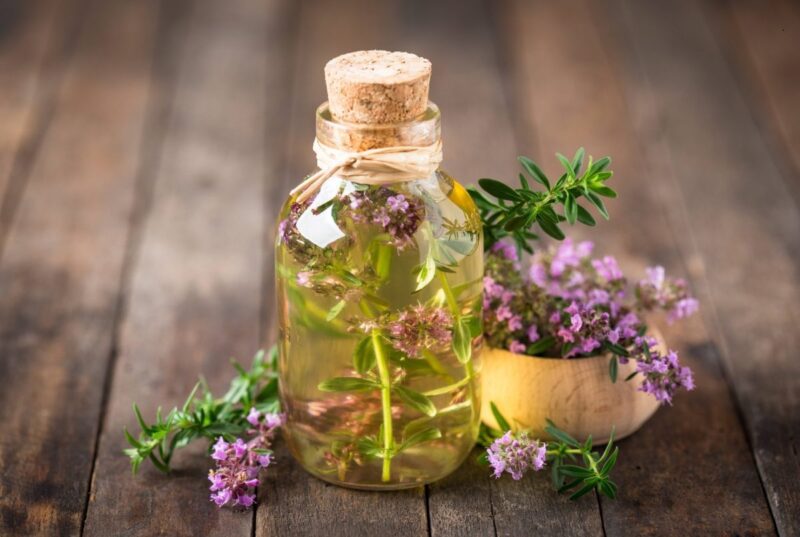
Thyme oil (Thymus serpyllum or Thymus vulgaris) is a valuable extract, concentrated in volatile substances with strong antimicrobial, anti-inflammatory, and antispasmodic action. Used for centuries in folk medicine, this essential oil is now found in modern treatments for muscle pain, respiratory conditions, skin issues, and even hormonal imbalances.
Recipe for Preparing Thyme Oil
Traditional Method (Oil Infusion)
Ingredients:
- 50 g dried thyme (Thymus vulgaris) flowering aerial parts
- 250 ml cold-pressed vegetable oil (olive, grape seed, or almond)
Preparation Method:
- The plant is crushed and placed in a sterilized jar.
- Add the oil, completely covering the plant.
- Let it macerate for 2-3 weeks in a warm place, away from direct light, shaking the jar daily.
- After this period, strain through double cheesecloth and store in dark glass bottles, in a cool place.
Quick Method (Warm Oil Bath)
For urgent use:
- The same proportions, but the plant and oil are heated in a water bath for 2 hours at 40-50°C.
- Strain and store in the same way.
This is not the same as essential oil, but it is gentle and suitable for frequent external use.
How to Apply: Usage for Each Problem
| Problem | Recommended Application |
|---|---|
| Muscle Pain, Rheumatism | Local massage twice a day, preferably after a warm bath |
| Bronchitis, Cough | Massage on the chest and back + inhalations (2-3 drops of essential oil in hot water) |
| Respiratory Infections | Inhalation + application on the soles and chest (diluted) |
| Superficial Wounds, Boils | Local application with a cotton pad soaked in oil |
| Vaginal Candidiasis | External washes with water + a few drops of infused oil, NOT essential oil |
| Stress, Fatigue | Massage on the temples and neck with diluted oil before sleep |
| Hair Loss, Thinning Hair | Application on the scalp, massage, and leave for 30 minutes, then wash |
Benefits of Thyme Oil Supported by Science
Antibacterial and Antifungal
Contains thymol and carvacrol, two compounds with documented action against bacteria such as Staphylococcus aureus, E. coli, and Candida albicans. According to a study published in Journal of Applied Microbiology, thymol inhibits the growth of microorganisms even in small concentrations.
Expectorant and Antitussive
Through massage and inhalations, the oil stimulates the elimination of bronchial secretions. Carvacrol has a mild bronchodilator effect and helps soothe irritating coughs.
Analgesic and Anti-inflammatory
Through local application, it reduces joint inflammation and pain. A study from Phytotherapy Research showed that locally applied thyme oil had effects comparable to ibuprofen in reducing mild joint pain.
Improves Peripheral Circulation
Massage with warm oil activates blood flow, reduces the feeling of heavy legs, and alleviates early varicose veins.
Calming and Nervous Tonic
Inhaling vapors or applying to the temples reduces anxiety and induces sleep. It has been shown that thymol acts on GABA receptors in the brain, with a mild anxiolytic effect.
Contraindications and Precautions
- DO NOT administer internally, except under the supervision of a herbalist!
- Not to be used in children under 3 years old or in pregnant women without medical advice.
- May irritate sensitive skin; perform a tolerance test on a small area.
- Avoid contact with eyes and mucous membranes.
- Do not apply undiluted essential oil directly to the skin!
Sources:
- Journal of Applied Microbiology Antibacterial and antifungal activity of Thymus vulgaris essential oil
- Phytotherapy Research Comparative study of analgesic effects of thymol and ibuprofen
- Molecules Carvacrol and Thymol: Natural Compounds with Antimicrobial and Anti-inflammatory Activity
- National Center for Biotechnology Information (NCBI) Thyme essential oil and its major constituents modulate GABA receptors




