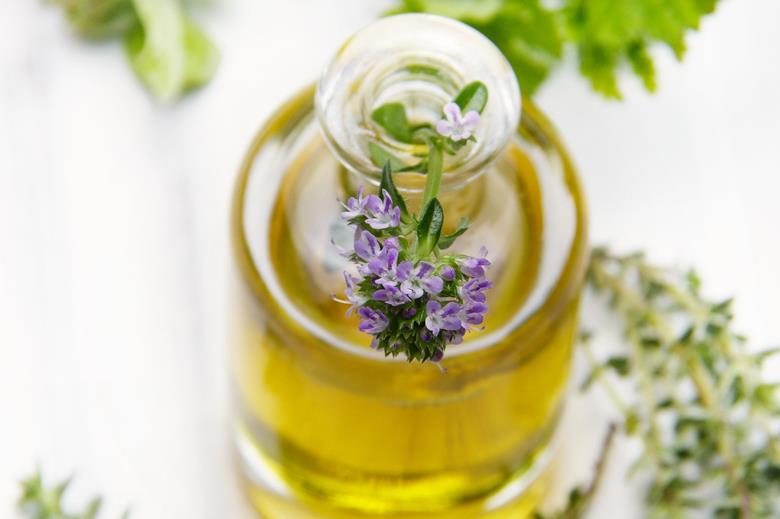
In the midst of summer, when abrupt temperature changes, air conditioning, and excessive humidity can weaken the immune system, unusual colds and pronounced joint pain often occur. In this context, thyme oil becomes a precious remedy, a plant concentrate with recognized antimicrobial, anti-inflammatory, and tonifying effects supported by natural medicine and science.
Obtained through the distillation of the flowers and leaves of the Thymus serpyllum or Thymus vulgaris plant, this oil has a rich chemical composition in thymol, carvacrol, borneol, and cineole—compounds that explain its intense therapeutic actions, especially in cases of respiratory infections and osteoarticular inflammation.
Detailed Benefits and Therapeutic Action
Alleviates Joint and Muscle Pain
Thyme oil penetrates quickly through the skin and acts directly on inflamed joints or tense muscles. Thymol and carvacrol reduce the secretion of pro-inflammatory prostaglandins, and its effect is comparable to that of topical anti-inflammatories.
Recommended for: arthritis, rheumatism, sciatica, lower back pain.
Effectively Combats Summer Colds and Congestion
Due to its antiviral, expectorant, and antibacterial properties, thyme oil is very helpful in sinusitis, pharyngitis, bronchitis, and viral infections. Inhaling the vapors soothes coughs, disinfects the respiratory tract, and clears the sinuses.
Stimulates Circulation and Warms the Body
Applied to the skin, thyme oil locally increases tissue temperature, improving microcirculation and promoting regeneration. This effect is useful in muscle cramps, the sensation of cold feet, or general fatigue.
Supports Immunity and Tones the Body
It has general tonic effects, improving vitality, physical and mental resistance. It helps the body adapt better to thermal stress, effort, or infections.
Recipes and Usage Methods
1. Massage for Joint Pain
-
Ingredients:
-
10 drops of thyme essential oil
-
2 tablespoons of almond oil or olive oil
-
-
Application Method: Massage the painful areas twice a day. The effect is visible after 2-3 days of continuous use.
2. Inhalation for Colds or Sinusitis
-
Ingredients:
-
3-4 drops of thyme oil
-
1 liter of hot water
-
-
Usage Method: Inhale the steam for 7-10 minutes, with a towel over your head. Repeat twice a day for 3-4 days.
3. Aromatherapy Bath for Relaxation and Immune Strengthening
-
Ingredients:
-
8 drops of thyme oil
-
1 tablespoon of milk or Epsom salt (for dispersion)
-
-
Usage Method: Add to warm bath water. Soak for 15-20 minutes, 2-3 times a week.
4. External Ointment for Rheumatism
-
Ingredients:
-
20 ml of sunflower oil
-
10 drops of thyme oil
-
5 g of beeswax
-
-
Preparation: Melt the beeswax in a bain-marie together with the sunflower oil, remove from heat, and add the essential oil. Pour into a glass jar.
-
Usage: Apply in the evening to the painful areas.
Contraindications and Precautions
-
Do not apply directly to the skin undiluted, due to the risk of severe irritation.
-
Prohibited for pregnant women or those who are breastfeeding.
-
Do not administer internally without medical advice!
-
Avoid use in children under 6 years and in individuals with epilepsy or hypertension.
-
Always test on a small area of skin before extensive application.
Sources:
-
Medical News Today What are the health benefits of thyme oil?
-
Journal of Lipid Research The anti-inflammatory properties of thymol and carvacrol
-
National Center for Biotechnology Information Thymus vulgaris essential oil: composition, antimicrobial and antioxidant properties
-
Plant Medica Essential oil-based preparations in rheumatism management




