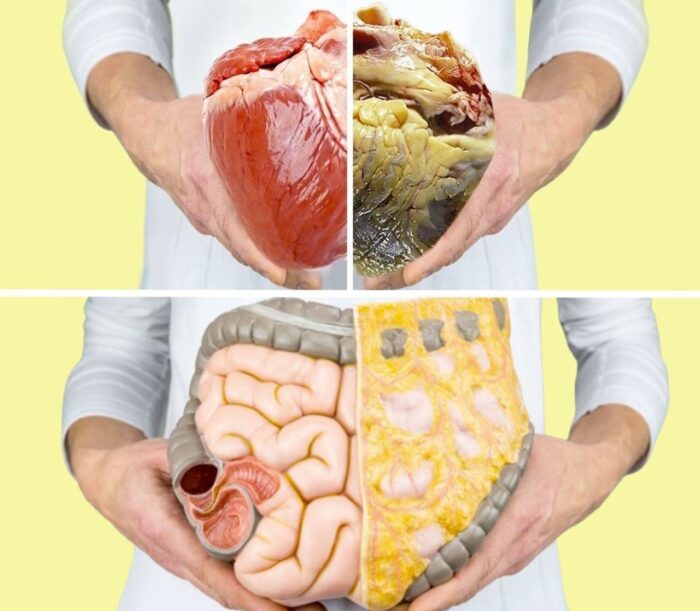
Visceral fat is one of the most dangerous types of fat in the body. It accumulates around internal organs and can increase the risk of serious diseases. Let’s see how it occurs, what risks it involves, and how we can get rid of it!
What is visceral fat?
Visceral fat is the fat that deposits deep in the abdomen, around internal organs such as the liver, pancreas, and intestines. Unlike subcutaneous fat (the fat that is under the skin), it is not visible and can affect health even in individuals with a normal body mass index (BMI).
Why does visceral fat occur?
There are several factors that contribute to the accumulation of this dangerous fat:
Unhealthy diet Excessive consumption of sugar, trans fats, and refined carbohydrates promotes fat storage in the abdomen.
Lack of physical activity A sedentary lifestyle leads to slower calorie burning and fat accumulation.
Chronic stress Elevated cortisol levels (the stress hormone) cause the body to store more fat around the organs.
Lack of sleep Insufficient sleep disrupts hunger hormones and leads to increased appetite.
Genetic factors Some individuals are genetically predisposed to accumulate visceral fat.
Risks associated with visceral fat
Visceral fat is not just an aesthetic problem, but also a major risk factor for:
Cardiovascular diseases Increases bad cholesterol (LDL) and blood pressure.
Type 2 diabetes Affects insulin sensitivity.
Chronic inflammation Increases the risk of autoimmune diseases and systemic inflammation.
Fatty liver disease Can lead to serious liver diseases.
Hormonal imbalances Can affect the production of essential hormones.
How can we reduce visceral fat?
To get rid of visceral fat, it is essential to combine several effective strategies:
1. Adopt a healthy diet
Consume lean proteins (chicken, fish, tofu).
Choose healthy fats (avocado, nuts, olive oil).
Avoid sugar and processed foods.
Eat more fiber (vegetables, fruits, seeds, oats).
2. Exercise regularly
Cardio workouts (running, cycling, swimming).
Strength training (lifting weights helps burn fat).
HIIT (high-intensity interval training to boost metabolism).
3. Get enough rest
Sleep 7-9 hours per night.
Avoid screens an hour before bedtime.
Create a relaxing bedtime routine.
4. Reduce stress
Practice meditation or yoga.
Take walks outdoors.
Spend quality time with loved ones.
Healthy recipes for reducing visceral fat
1 Anti-visceral fat salad
1 avocado diced
1 cup of spinach
100 g grilled chicken breast
juice of 1 lemon
1 tablespoon of olive oil
Mix the ingredients and serve fresh.
2 Detox smoothie for fat burning
1 cup of coconut water
1 banana
1 tablespoon of chia seeds
1 tablespoon of cocoa powder
1 handful of spinach
Blend everything and consume in the morning.
3 Protein breakfast for fat burning
2 boiled eggs or an omelet
1 avocado
1 slice of whole grain bread
1 tablespoon of flax seeds
Ideal for an energetic start to the day!
Visceral fat is dangerous, but it can be reduced through a healthy lifestyle. Adopt a balanced diet, exercise daily, manage stress, and get enough sleep. With perseverance, you will improve your health and reduce associated risks!
Have you ever tried a strategy for reducing visceral fat? Let me know in the comments!




