Inspections in markets across Romania have revealed excessively high levels of pesticides in seasonal fruits. Specifically, images circulating on social media showed the testing of pesticide concentrations, with surprisingly high results: values far exceeding the normal limit.
Since we cannot avoid them, specialists explain how we can reduce the amount of harmful substances in our bodies. Pesticides are present in both fruits and vegetables. While we cannot neglect their use, it is important to understand their impact on the food we consume and how much they diminish its nutritional properties. There are very few studies available. Pesticides are used to suppress or alter the life cycle of pests, but they produce toxic reactions in our bodies. This leads to many issues related to decreased immunity, water retention, bloating, and digestive tract problems, explained Dr. Alina Stoica, a nutritionist.
Dr. Radu Incu states that certain forms of cancer, lymphomas, Hodgkin’s and non-Hodgkin’s diseases, leukemias, and some solid tumors such as brain tumors or tumors in the digestive tract can be induced or accelerated by the use of pesticides.
These pesticides act as substances that can alter the normal functioning of the endocrine system. This means they mimic certain hormones, and these hormones are crucial for our endocrine system and can lead to dysfunctions. There are studies indicating that allergies can develop both at the skin level and at the respiratory level if individuals are exposed to pesticides, Dr. Radu Incu further explained.
Watermelons with Pesticides in Markets
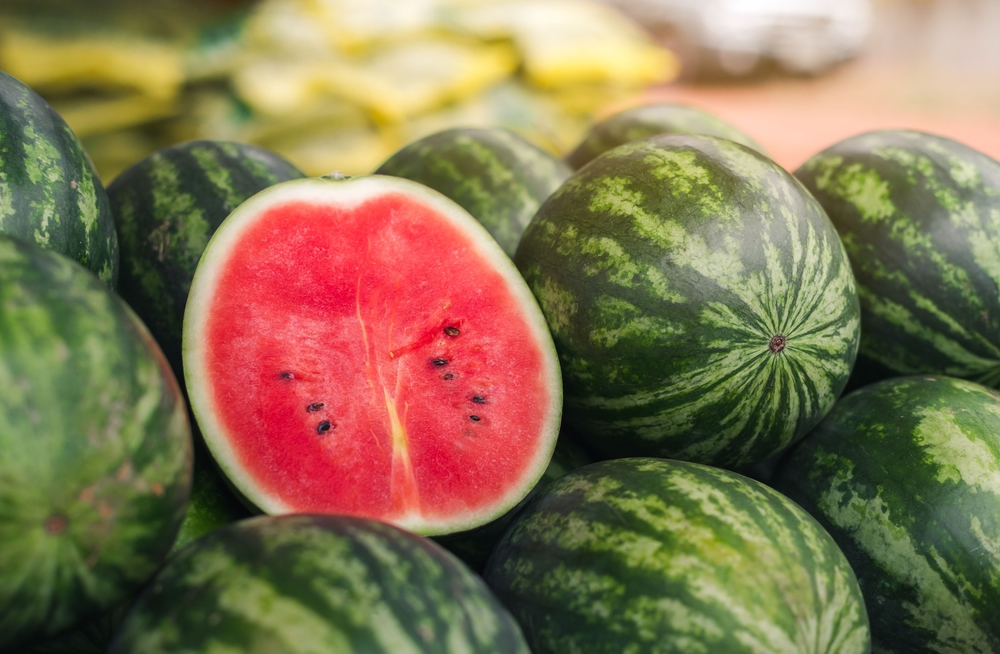
Watermelons in markets across Romania have been subjected to inspections after social media posts suggested that, following measurements, significant exceedances of chemical substance concentrations used as fertilizers were detected.
Sanitary inspectors visited stalls and checked seasonal fruits available for sale. Inspections were conducted by the Phytosanitary Authority, which collected samples from both green and yellow watermelons to be sent to the laboratory.
If it is found that the fruits contain pesticides in quantities that exceed the legally permitted limit, the producer will face severe penalties. They risk receiving fines ranging from 5,000 to 7,000 lei, and their products will be immediately withdrawn from sale to protect consumer health.
In the coming period, inspectors will extend controls not only to fruits but also to vegetables, collecting samples to ensure that these products also meet food safety standards.
According to researchers, in some cases, the devices used for testing pesticides are not properly calibrated. For this reason, it is very easy to arrive at inaccurate results.
In the case of watermelons, it is essential that samples for analysis be taken from the rind, as it may contain pesticide residues. These testers, which can cost up to 600 lei, do not guarantee the accuracy of the results.
In light of these issues, specialists advise consumers to purchase watermelons only from trusted sources.
They are full of chemicals: against fungi, insects, for growth, or to prevent root rot. Through irrigation, systemic pesticides (i.e., neonicotinoids) are also introduced, which remain in the flesh. In other countries, they have been banned.
And food means other chemicals that inflate: nitrogen and urea. But no one controls them anymore, explains a small farmer from Teleorman, adding that, most of the time, farmers carry out phytosanitary treatments based on guesswork.
Many agricultural producers prefer this type of pesticide because it provides greater protection against pests, unlike so-called contact pesticides, which can be washed away by rain.
The head of the Sanitary Veterinary and Food Safety Directorate (DSVSA) Dâmbovița, Sandu Tolea, stated that when used in large quantities and without a clear treatment protocol, systemic pesticides are dangerous. When the fruit is forming, only contact substances should be used, which can be washed off. Systemic products enter fruits and vegetables and maintain their ability to react to diseases and pests, but when used in the last period of growth, they pose health risks to humans. Only those who are irresponsible use them.
Producers are required to conduct self-control, and when the Central Laboratory reports that the pesticide limit has been exceeded, we self-report through the rapid alert system, which operates at the national level, Sandu Tolea further stated.
In addition to the farmers’ awareness, state institutions, such as the Phytosanitary Police, should also function in a European country, established precisely to oversee food safety on the market.




