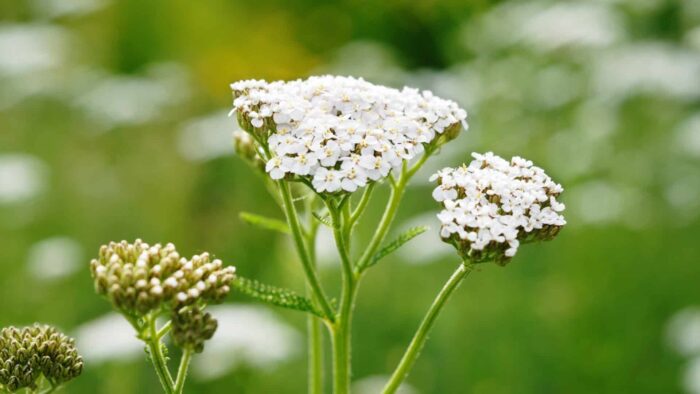
With its white or pinkish flowers and unmistakable scent, yarrow (Achillea millefolium) is one of the oldest medicinal plants used in traditional European medicine. Found in rustic gardens or along country roads, this seemingly ordinary plant hides an impressive therapeutic arsenal, validated by both tradition and science.
Composition of the Plant
Yarrow is rich in active principles with proven effects:
- Essential oils (especially azulenes and chamazulene with anti-inflammatory properties)
- Flavonoids (with antioxidant and anti-allergic effects)
- Tannins (with astringent action)
- Sesquiterpene lactones (which support the immune and digestive systems)
- Alkaloids, phenolic acids, phytosterols, and mineral salts
This complex composition makes it effective for a variety of ailments.
What Recent Studies Say
A study published in the Journal of Ethnopharmacology (2021) confirmed the efficacy of yarrow extracts in reducing inflammation and alleviating gastrointestinal spasms. Other research, such as those published in Phytotherapy Research, highlighted its antimicrobial effect against bacteria like Staphylococcus aureus and E. coli.
Additionally, a Romanian study (University of Medicine and Pharmacy in Târgu Mureș, 2020) evaluated the calming effect of yarrow tea on menstrual pain, showing significant results.
Ways to Use and Recipes
1. Yarrow Tea (Internal Use)
Ingredients:
- 1 tablespoon of dried plant
- 250 ml boiling water
Preparation: Infuse the plant for 10 minutes, then strain. Consume 1-2 cups per day, preferably before meals.
2. Tincture (Digestive and Antispasmodic)
Ingredients:
- 20 g crushed plant
- 100 ml 40% food-grade alcohol
Preparation: Let it macerate for 10 days, shaking daily. Strain and store in a dark glass bottle. Administer 20-30 drops twice a day, diluted in water.
3. Poultices (for wounds or inflammation)
Fresh leaves are crushed and applied directly to the skin or can be used as a decoction (30 g of plant in 500 ml of water, boiled for 5 minutes).
4. Bath Soaks
Add 2 liters of concentrated infusion to bath water, excellent for soothing skin irritations and reducing muscle tension.
Recommended Consumption
Internally: tea and tincture should be taken in courses of 2-3 weeks, with a 7-day break.
Externally: poultices or baths can be applied as needed.
Contraindications and Precautions
- Not recommended during pregnancy, as it may stimulate the uterus.
- Individuals allergic to plants in the Asteraceae family (e.g., ragweed, marigolds) may experience adverse reactions.
- Excessive consumption may cause nausea or dizziness.
- May interact with anticoagulant medications; consult a doctor before use.
Doctors’ Opinions
Dr. Andreea Stoian, herbalist:
Yarrow is an extremely versatile plant. I often recommend it for gynecological, digestive issues, and even for mild anxiety. However, it should be used judiciously and integrated into a personalized treatment plan.
Dr. Daniel Pop, naturopath:
It is a very effective natural anti-inflammatory. Personally, I consider it one of the most valuable native plants, but contraindications should not be ignored.




