Yogurt is not just a nutritious food, but also a natural remedy recognized for skin care. Due to its rich composition in probiotics, vitamins, and minerals, yogurt has been used for centuries to restore elasticity and radiance to the skin. Modern dermatologists confirm that yogurt applied to the skin can bring multiple benefits, especially for hydration and soothing irritations.
Nutritional table of yogurt (100 g natural, plain yogurt)
| Nutrient | Average amount | Role for skin |
|---|---|---|
| Water | 81 g | Maintains natural skin hydration |
| Proteins | 3.5 g | Restores skin barrier, supports regeneration |
| Fats | 3.3 g | Nourishes and protects skin from dryness |
| Carbohydrates | 4.7 g | Cellular energy, supports metabolic processes |
| Calcium | 121 mg | Essential for skin firmness and elasticity |
| Phosphorus | 95 mg | Aids in cellular regeneration |
| Magnesium | 12 mg | Soothes irritations and supports skin enzyme function |
| Potassium | 155 mg | Regulates the water balance of cells |
| Vitamin B2 (Riboflavin) | 0.14 mg | Contributes to skin radiance |
| Vitamin B12 | 0.4 g | Prevents dryness and supports cellular recovery |
| Vitamin A | 28 g | Aids in elasticity and tissue repair |
| Lactic acid | variable | Hydrates and gently exfoliates dead cells |
Why are these values important for the skin?
-
Water and potassium maintain cellular hydration.
-
Proteins restore the skin barrier, being useful for dry skin.
-
Fats create a protective film, reducing water loss.
-
Calcium and magnesium support the structure and balance of the skin.
-
Vitamins A, B2, and B12 accelerate regeneration, restoring radiance and elasticity.
-
Lactic acid provides deep hydration and gentle exfoliation, preventing dryness and flaking.
Benefits for skin hydration
1. Intense hydration due to water and lipid content
Yogurt contains over 80% water, making it an ideal ingredient for rapid skin hydration. Additionally, the fats in yogurt create a protective film that retains water in cells, preventing dehydration. When applied regularly, it can improve skin texture and reduce the feeling of dryness.
2. Soothes irritations and redness
Yogurt has a slightly acidic pH, close to that of the skin, making it gentle and suitable even for sensitive skin. Lactic acid reduces redness and helps soothe irritations caused by wind, sun, or pollution.
3. Improves skin barrier
The proteins in yogurt (especially casein) contribute to restoring the skin’s protective barrier. This is essential for maintaining healthy skin resistant to external factors.
4. Provides radiance and elasticity
Vitamin B2 (riboflavin) and calcium in yogurt support cellular regeneration, giving the skin a brighter and more elastic appearance. Regular use prevents a dull and tired look.
5. Has anti-aging effects through lactic acid
The lactic acid in yogurt not only hydrates but also gently exfoliates dead cells, stimulating collagen production. Thus, the skin becomes smoother, and superficial wrinkles are diminished.
Simple yogurt recipes for skin hydration
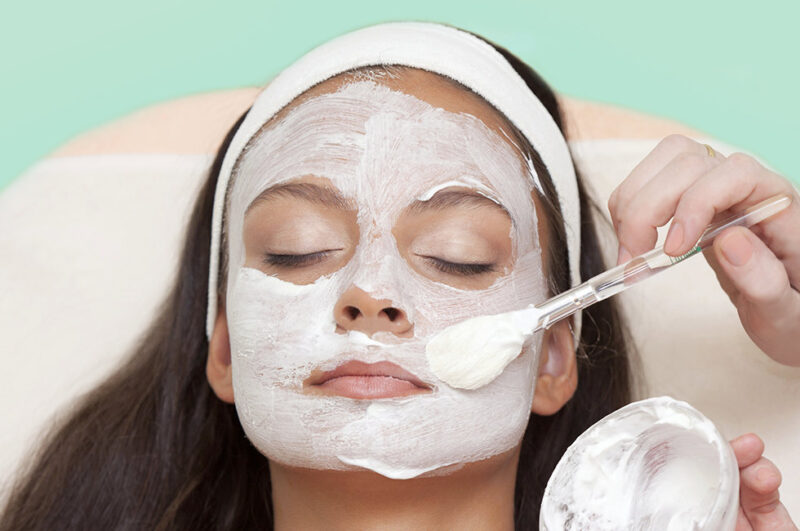
- Simple hydrating mask with yogurt
- 2 tablespoons of natural yogurt
- Apply directly to the face, leave for 15-20 minutes, then rinse with warm water.
- Mask with yogurt and honey
- 1 tablespoon of yogurt + 1 tablespoon of honey
- Suitable for very dry skin, with an intense nourishing effect.
- Mask with yogurt and cucumber
- 2 tablespoons of yogurt + 2 mashed cucumber slices
- Hydrates and tones, recommended in summer or after sun exposure.
- Gentle scrub with yogurt and oats
- 2 tablespoons of yogurt + 1 tablespoon of oat flakes
- Gentle exfoliation that removes dead cells, leaving the skin soft.
Scientific studies and research
A study published in the Journal of Cosmetic Science (2015) demonstrated that lactic acid from yogurt improves skin hydration and supports cellular regeneration. Participants who used yogurt masks 3 times a week for 4 weeks reported a significant reduction in dryness and an improvement in skin elasticity.
In the International Journal of Women’s Dermatology (2019), researchers showed that topical probiotics (including those from yogurt) reduce inflammation and strengthen the skin barrier, having a protective role against dehydration.
Another study (2020, Clinical, Cosmetic and Investigational Dermatology) highlighted that the external application of yogurt-based products reduces transepidermal water loss (TEWL), meaning the skin retains moisture better.
Contraindications
- Individuals with lactose or milk protein allergies should not use yogurt on the skin.
- Not recommended for very oily or severely acne-prone skin, as it may exacerbate issues.
- Yogurt with sugar or flavors should NOT be used on the skin—only plain, natural yogurt.
- In case of irritation after application, the mask should be removed immediately.
Sources
- Journal of Cosmetic Science – The effect of lactic acid on skin hydration and elasticity
- International Journal of Women’s Dermatology – Topical probiotics and skin barrier function
- Clinical, Cosmetic and Investigational Dermatology – Yogurt-based topical formulations for skin hydration