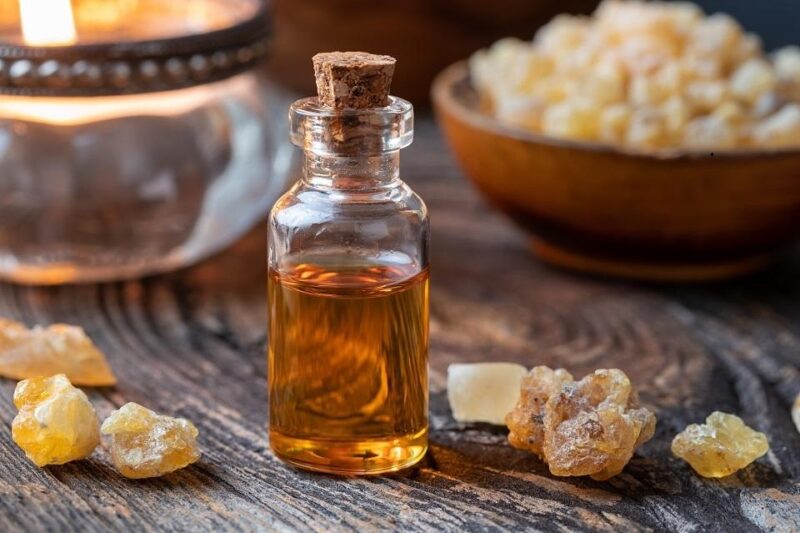
For thousands of years, frankincense has been considered a sacred gift of nature. Mentioned in the Bible and used in the rituals of ancient Egyptian and Greek civilizations, this precious resin is now being rediscovered by modern medicine through essential frankincense oil, a therapeutic treasure with scientifically proven properties.
What is Frankincense Oil
Frankincense oil is obtained through steam distillation of the resin from the Boswellia carterii or Boswellia serrata tree. Its warm, balsamic aroma with a slight woody scent makes it ideal for both therapeutic use and aromatherapy. The most valuable active substances are boswellic acids, compounds that have anti-inflammatory, antioxidant, and cellular regenerative properties.
Nutritional Table (for 100 g of Frankincense Oil – estimated values)
| Active Component | Approximate Amount | Main Role |
|---|---|---|
| Boswellic Acids | 65-70% | Anti-inflammatory, immunomodulator |
| Alpha-pinene | 20-25% | Antiseptic, respiratory relaxant |
| Incensol and Incensol Acetate | 1-3% | Neuroprotective, anxiolytic |
| Limonene | 1-2% | Antioxidant, detoxifying |
| Diverse Monoterpenes | 2-4% | Antibacterial and analgesic effects |
Major Benefits of Frankincense Oil
1 Reduces Chronic Inflammation
Boswellic acids inhibit the enzymes that trigger inflammation in the body, such as 5-lipoxygenase. Studies show that regular use of frankincense oil can reduce inflammation in arthritis, inflammatory bowel diseases, and respiratory conditions. Unlike conventional anti-inflammatories, it does not irritate the gastric mucosa, making it a safe natural alternative for sensitive individuals.
2 Supports the Immune System
Frankincense stimulates the production of lymphocytes and antibodies, helping the body respond more effectively to viral and bacterial infections. The oil applied through aromatherapy has been shown to be useful in supporting recovery after colds, bronchitis, or viral infections. Additionally, it has a direct antimicrobial effect, inhibiting the growth of bacteria and fungi.
3 Supports Skin Health
Applied topically (diluted in a carrier oil), frankincense oil helps regenerate tissues, fades scars, spots, and fine wrinkles. Its anti-inflammatory and antioxidant properties accelerate the healing of lesions and give the skin a more even and radiant appearance. Studies have shown significant improvements in skin elasticity after daily application for 8 weeks.
4 Calms Anxiety and Stress
Inhaling frankincense vapors positively influences the activity of the limbic system, the area of the brain responsible for emotions. This induces a state of calm, clarity, and inner balance. Therapists frequently use it in aromatherapy to reduce anxiety, sleep disturbances, and mental exhaustion.
5 Supports Respiratory Health
With its expectorant and antiseptic effects, frankincense oil clears the respiratory pathways and reduces nasal congestion. Inhaled or diffused in a room, it can soothe coughs, bronchitis, and sinusitis. In combination with eucalyptus oil, it has a synergistic action on the respiratory mucosa.
6 May Support Hormonal Balance in Women
Some research suggests that frankincense oil regulates estrogen secretion and helps reduce premenstrual and menopausal symptoms. Its calming effect on the endocrine glands is useful in regulating the menstrual cycle and alleviating cramps.
7 Has Anticancer Potential
In vitro studies have shown that boswellic acids can inhibit the proliferation of tumor cells and induce apoptosis (programmed cell death of malignant cells). Although research is still ongoing, results suggest a promising role in supporting complementary cancer therapies.
8 Supports Intestinal Health
By reducing inflammation of the intestinal mucosa, frankincense oil is useful in colitis, irritable bowel syndrome, and Crohn’s disease. It has an antiseptic effect on pathogenic bacteria, promoting the balance of intestinal flora and reducing bloating or cramps.
Recent Studies and Research
A study published in Phytotherapy Research (2022) analyzed the effect of boswellic acids on patients with rheumatoid arthritis. After 8 weeks of administration, inflammation and joint pain significantly decreased, without major side effects.
Researchers from Johns Hopkins University (2020) discovered that incensol acetate from frankincense activates neuronal ion channels associated with calmness and mental balance. The effect was comparable to that of some synthetic anxiolytics, but without dependency.
In the Journal of Natural Products (2021), it was observed that the extract of Boswellia serrata reduces the growth of cancer cells at the pancreatic and colon levels by activating apoptotic pathways. The action was shown to be selective, affecting only malignant cells.
Another study published in Evidence-Based Complementary and Alternative Medicine (2023) confirmed the effectiveness of frankincense oil in regenerating damaged skin. Researchers noted an increase in collagen synthesis and a reduction in oxidative stress at the skin level.
Additionally, an Indian clinical study from 2021 showed that supplements based on Boswellia serrata significantly reduce intestinal inflammation in patients with ulcerative colitis compared to standard treatments.
All these findings scientifically validate the ancient reputation of frankincense as a remedy for body and spirit.
Ways to Use
- Inhalation: 2-3 drops in an aromatherapy diffuser for relaxation and air purification.
- Topical Use: 2 drops of frankincense oil diluted in 1 tablespoon of carrier oil (coconut, almond) for massage or skin care.
- Aromatic Bath: 3 drops in warm water, mixed with a tablespoon of sea salt.
- Internal Use (only with medical recommendation): 1 drop diluted in honey or water for anti-inflammatory and digestive effects.
Contraindications
- Not recommended for pregnant or breastfeeding women without medical advice.
- May cause skin irritation if applied undiluted.
- Do not administer internally without the recommendation of a herbalist.
- Individuals undergoing anticoagulant or anti-inflammatory treatments should consult a doctor.
- Avoid combining with other strong essential oils without proper dilution.
Sources
- Phytotherapy Research Boswellia serrata extract in the treatment of rheumatoid arthritis
- Johns Hopkins University Medical News Frankincense resin and neuroactive compounds
- Journal of Natural Products Boswellic acids and apoptosis induction in cancer cells
- Evidence-Based Complementary and Alternative Medicine Topical Frankincense oil and collagen synthesis
- Indian Journal of Gastroenterology Clinical efficacy of Boswellia serrata extract in ulcerative colitis




