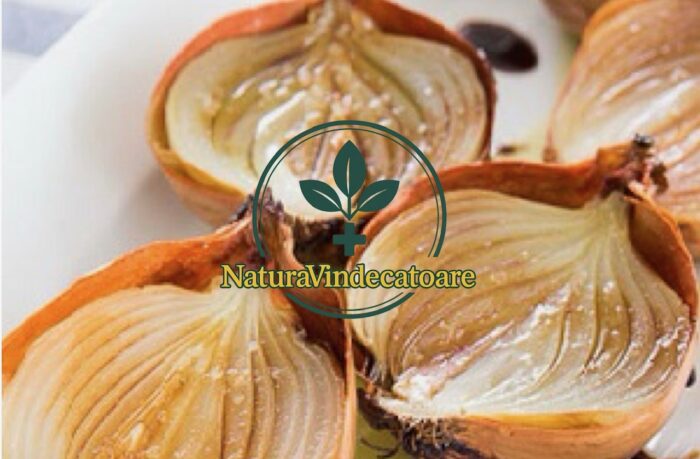
Onion, used for centuries as a natural remedy, remains one of the most effective treatments against skin infections. The baked onion poultice, applied directly to the skin, is known for its antibacterial, anti-inflammatory properties and its ability to stimulate the drainage of pus from abscesses and boils. In European folk medicine, this remedy was considered the garden antibiotic, and today, more and more studies confirm the beneficial action of compounds in onion on inflamed and infected skin.
Benefits of Baked Onion Poultice for Abscesses and Boils
1. Natural Antibacterial Action
Onion contains sulfur compounds (allicin, thiosulfates) with strong antimicrobial effects. These compounds act on the bacteria commonly involved in abscesses and boils, such as Staphylococcus aureus. Local application allows these substances to penetrate the inflamed skin easily. Thus, it increases the chance of stopping the spread of infection and reducing bacterial load in the affected area. This is an important advantage over synthetic treatments, especially for people with sensitive skin.
2. Intense Anti-inflammatory Effect
Due to its rich content of quercetin and phenolic compounds, baked onion reduces local inflammation. Quercetin inhibits the enzymes involved in the inflammatory process, diminishing redness and the sensation of heat around the lesion. This anti-inflammatory action is beneficial for limiting discomfort and accelerating recovery. Additionally, reducing inflammation decreases pressure on tissues and alleviates pain.
3. Promotes Pus Drainage
The heat and active compounds in onion soften the superficial layer of the skin and increase local blood flow. This effect stimulates the collection and elimination of pus, shortening the duration of the abscess or boil. Rapid removal of infected material reduces the risk of infection spreading. The procedure is simple but extremely effective in the active phases of inflammation.
4. Relieves Local Pain
Through the combined action of quercetin and moderate heat, the baked onion poultice reduces the sensitivity of nerve endings. This natural analgesic effect is important for individuals who avoid synthetic anti-inflammatory medications. Pain relief often occurs within the first 20-30 minutes of application. Thus, the poultice can provide quick comfort without significant adverse effects.
5. Stimulates Local Circulation
The active components in onion and the warm temperature of the poultice cause the dilation of blood vessels. Increased blood flow brings more nutrients and immune cells to the affected area. This helps the body fight the infection more effectively. Additionally, accelerated circulation contributes to faster healing of tissues.
6. Antioxidant Action on Inflamed Skin
Quercetin and flavonoids in onion neutralize free radicals in the inflamed area. This antioxidant protection prevents further damage to skin cells. Moreover, it supports the natural tissue regeneration process. The skin heals more quickly, and the risk of scarring decreases.
7. Prevents Infection Spread
Local application limits the spread of pathogens to neighboring areas. This is crucial in the case of boils that tend to appear in clusters (furunculosis). Through its antimicrobial effect, onion reduces the likelihood of new lesions appearing nearby. Thus, it also serves as a local preventive measure.
8. Supports Local Immunity
Onion stimulates the activity of leukocytes in the application area. This helps eliminate bacteria and accelerates tissue repair. Additionally, the antioxidants in onion protect immune cells from oxidative stress. The combined effect leads to faster healing and a reduced risk of recurrence.
Studies and Research
A study published in Journal of Wound Care (2017) evaluated the effect of onion extract on the healing of infected wounds. Researchers observed that local application of an onion-based preparation significantly reduced bacterial load and inflammation. The scientific explanation for this effect is attributed to the presence of sulfur compounds, which act as natural antibiotics.
Another study, published in Phytotherapy Research (2020), showed that onion has the ability to inhibit the growth of methicillin-resistant Staphylococcus aureus (MRSA). This type of bacteria is responsible for severe and hard-to-treat skin infections.
Additionally, a clinical study in BMC Complementary Medicine and Therapies (2019) demonstrated that local application of onion extract accelerates wound closure and reduces pain. The mechanism involves both anti-inflammatory effects and stimulation of angiogenesis (the formation of new blood vessels).
Recipe and Application Method
- Choose a large onion, either white or red.
- Peel and cut it in half.
- Bake the onion in the oven at 180°C for 20-25 minutes until it becomes soft.
- Allow it to cool slightly, then mash the warm pulp.
- Place the obtained paste in a clean cloth or towel and apply it directly to the affected area.
- Leave it on for 30-60 minutes, 2-3 times a day, until complete drainage of pus and healing occurs.
Contraindications
- Individuals with allergies to onion or other plants in the Allium family.
- Extensive open wounds require medical consultation.
- Severe infections with fever or systemic symptoms may require synthetic antibiotics.
- Very sensitive skin or active dermatitis in the application area.
- Small children under 2 years old: local application should only be done with a doctor’s consent.
Nutritional Table (100 g raw onion)
| Component | Quantity |
|---|---|
| Energy | 40 kcal |
| Water | 89% |
| Carbohydrates | 9.3 g |
| Proteins | 1.1 g |
| Fiber | 1.7 g |
| Vitamin C | 7.4 mg |
| Potassium | 146 mg |
| Quercetin | 20-30 mg |
| Sulfur Compounds | variable |




