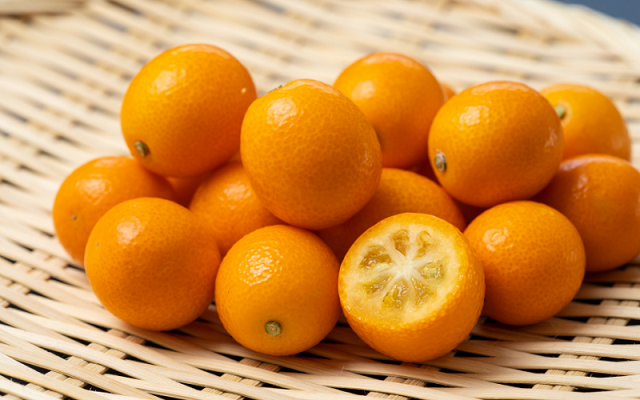
Kumquat (Fortunella spp.) is a small fruit native to Southeast Asia, belonging to the citrus family. Unlike oranges or mandarins, kumquat is consumed whole, including the peel, which gives it a unique flavor that is sweet on the outside and slightly tart on the inside. In recent years, this fruit has started to gain popularity in Europe, being appreciated both for its unique taste and for its rich content of vitamins, minerals, and bioactive compounds. Doctors and nutritionists increasingly recommend it as part of a balanced diet due to its beneficial effects on the body.
Nutritional Table (100 g of fresh kumquat)
| Nutrient | Approximate Amount |
|---|---|
| Calories | 71 kcal |
| Carbohydrates | 15.9 g |
| Dietary Fiber | 6.5 g |
| Protein | 1.9 g |
| Fats | 0.9 g |
| Vitamin C | 44 mg (73% DV) |
| Vitamin A | 15 g |
| Vitamin E | 0.15 mg |
| Calcium | 62 mg |
| Potassium | 186 mg |
| Magnesium | 20 mg |
| Iron | 0.9 mg |
| Zinc | 0.2 mg |
Benefits of Consuming Kumquat
1. Boosts Immunity
Kumquat is an excellent source of vitamin C, essential for strengthening the immune system. Regular consumption can help the body fight more effectively against bacterial and viral infections. Additionally, the antioxidants in the peel protect cells from oxidative stress, reducing inflammation. Nutritionists emphasize that a diet rich in vitamin C can shorten the duration of colds and improve the immune response of the body.
2. Improves Digestion
Due to its high fiber content, kumquat stimulates intestinal transit and prevents constipation. Soluble fibers also help maintain a healthy microbiome, promoting the growth of beneficial bacteria. Gastroenterologists recommend including citrus fruits with the peel for a stronger prebiotic effect. Additionally, fibers reduce the risk of irritable bowel syndrome and support the health of the intestinal mucosa.
3. Contributes to Heart Health
Potassium and fiber in kumquat help regulate blood pressure and reduce LDL cholesterol levels. Studies show that a diet rich in citrus fruits lowers the risk of cardiovascular diseases. The flavonoids in kumquat have a protective role on blood vessel walls, maintaining arterial elasticity. Moreover, frequent consumption may reduce the risk of atherosclerosis.
4. Supports Weight Control
With low calorie content and high fiber, kumquat provides a feeling of fullness for a longer time. Fibers slow down carbohydrate absorption, preventing sharp increases in blood sugar levels. This makes it suitable for weight loss diets and for people with type 2 diabetes. Nutritionists recommend consuming whole fruits, not in juice form, for a better effect on weight control.
5. Protects Skin and Hair
Vitamin C stimulates collagen synthesis, essential for maintaining skin firmness and elasticity. The antioxidants in kumquat combat free radicals that accelerate skin aging. Additionally, the vitamins and minerals in the fruit support the health of the scalp and hair. Dermatologists recommend regular consumption of citrus fruits to maintain younger and brighter skin.
6. Reduces Oxidative Stress
The polyphenols in kumquat, especially flavonoids, reduce inflammation and protect cells from damage caused by free radicals. This effect contributes to the prevention of chronic diseases, including cancer. Recent studies have shown that antioxidants from citrus can protect cellular DNA and reduce the risk of mutations. Regular consumption of kumquat provides a valuable intake of such bioactive compounds.
7. Supports Bone Health
Kumquat contains calcium, magnesium, and vitamin C, important nutrients for maintaining bone density. These reduce the risk of osteoporosis and strengthen the skeletal structure. Additionally, flavonoids may have a protective role against bone loss associated with aging. Specialists recommend including citrus fruits in a balanced diet to prevent bone fragility.
8. Aids in Detoxifying the Body
The fibers and antioxidants in kumquat support the liver and kidneys in eliminating toxins. Regular consumption promotes a more efficient metabolism and better elimination of harmful substances. Additionally, the water and plant compounds in the fruit contribute to hydration and cleansing of the body. Detox diets often include kumquat for its diuretic and antioxidant effects.
Scientific Studies and Research
-
A study published in Food Chemistry (2018) analyzed the phytochemical composition of kumquat and demonstrated that it contains powerful flavonoids with antioxidant and anti-inflammatory effects. Researchers emphasized that these compounds can prevent cardiovascular and degenerative diseases. The study showed that even the peel has a high content of antioxidants, confirming the importance of consuming the whole fruit.
-
A study from Journal of Agricultural and Food Chemistry (2020) demonstrated that kumquat extracts can inhibit the development of cancer cells in laboratory conditions. The authors showed that flavonoids reduce cellular proliferation and induce apoptosis (programmed cell death). The results indicate anticancer potential, but more clinical research on humans is needed.
-
Research published in Nutrients (2021) analyzed the effects of citrus fruits on metabolic health and included kumquat as a relevant example. It was shown that fibers and flavonoids can reduce insulin resistance and improve the glycemic profile. This makes the fruit beneficial for individuals at risk of diabetes.
-
A study conducted in China (2022) on a group of individuals who consumed kumquat daily for 12 weeks highlighted a significant decrease in LDL cholesterol and an increase in HDL cholesterol. This result confirms the benefits for cardiovascular health.
Contraindications
-
Individuals with citrus allergies should avoid consumption.
-
Due to its acidity, it may cause gastric discomfort in individuals with gastritis or gastroesophageal reflux.
-
Excessive consumption may lead to diarrhea or abdominal cramps due to the high fiber content.
-
Not recommended in large quantities for individuals with oxalate-based kidney stones, as citrus fruits contain oxalates.
-
Diabetics should consume kumquat in moderation and under medical supervision to avoid fluctuations in blood sugar levels.
Simple Recipes with Kumquat
-
Kumquat Tea: Boil 45 sliced fruits in 300 ml of water, adding a little honey after it cools.
-
Kumquat Jam: Boil whole fruits with a little lemon juice and natural sweetener until a thick consistency is obtained.
-
Winter Salad: Combine sliced kumquat with arugula, pomegranate, and nuts for an energizing dish.
-
Revitalizing Smoothie: Blend kumquat, banana, and ginger for an energy boost.
Sources
-
Food Chemistry Phytochemical composition and antioxidant properties of kumquat
-
Journal of Agricultural and Food Chemistry Flavonoids in kumquat and their anticancer potential
-
Nutrients Citrus fruits and metabolic health: clinical evidence
-
MDPI Effects of kumquat consumption on lipid profile and cardiovascular risk




