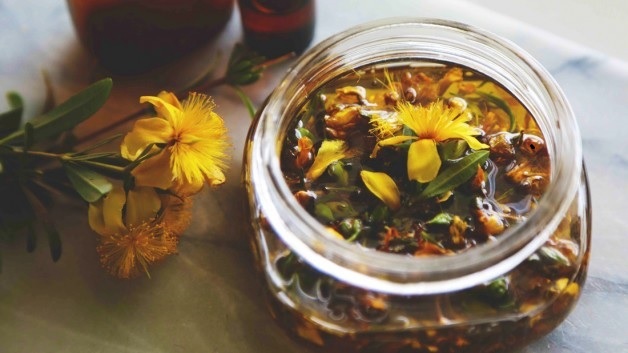
St. John’s Wort (Hypericum perforatum) is one of the most studied medicinal plants in the world regarding its effects on the nervous system. Used since ancient times to treat emotional disturbances, this plant has gained the attention of modern science, which has confirmed some of its antidepressant properties. In some European countries, St. John’s Wort extract is prescribed as an official treatment for mild to moderate depression, due to its effectiveness comparable to that of certain synthetic medications.
Benefits of St. John’s Wort in Depression
1. Regulates serotonin and dopamine levels
The active substances in St. John’s Wort, such as hypericin and hyperforin, influence the balance of neurotransmitters in the brain. They inhibit the reuptake of serotonin, dopamine, and norepinephrine, thus contributing to maintaining a positive mental tone. The mechanism of action is similar to that of SSRIs, but with fewer side effects. The increase in these neurotransmitter levels leads to a reduction in symptoms such as apathy, lack of interest, and mental fatigue. Thus, St. John’s Wort can be an effective natural option for those who do not wish to undergo traditional medication treatment.
2. Alleviates anxiety associated with depression
Anxiety is often associated with depressive episodes, and St. John’s Wort can reduce symptoms such as restlessness, inner tension, and panic attacks. By influencing GABA (another important neurotransmitter), the plant helps induce a state of calm without causing excessive drowsiness. This action makes it suitable for those experiencing chronic stress or mental agitation. Moreover, its anxiolytic effects have proven beneficial even in cases of premenstrual syndrome and menopause. The calm induced by St. John’s Wort helps restore daily emotional balance.
3. Improves sleep quality
Many people suffering from depression report sleep disturbances, such as difficulty falling asleep or frequent awakenings during the night. Consuming St. John’s Wort can improve the circadian rhythm by regulating the secretion of melatonin and serotonin. Unlike traditional sleeping pills, it does not create dependency and does not cause daytime drowsiness. Restorative sleep is essential for emotional and mental recovery, accelerating healing in cases of depression. Thus, St. John’s Wort becomes a valuable adjunct for complete mental hygiene.
4. Reduces episodes of deep sadness and uncontrollable crying
One of the characteristics of depression is the frequent occurrence of episodes of sadness without apparent reason, accompanied by spontaneous crying. Studies show that the consistent administration of St. John’s Wort can reduce the incidence of these intense emotional moments. By balancing brain chemistry and improving overall mood, the plant helps affected individuals regain emotional control. Additionally, the effects are not abrupt but appear gradually, within 24 weeks, providing a natural adaptation of the body. This gentle approach is important for sensitive individuals or those with multiple conditions.
5. Increases daily energy and motivation
Depression is often associated with a lack of energy, apathy, and social withdrawal. St. John’s Wort can combat this state by subtly stimulating the central nervous system. Individuals who consume the plant regularly have reported an increase in initiative, mental clarity, and greater involvement in daily activities. This benefit is essential for breaking the vicious cycle of inactivity and isolation. By resuming usual activities, the brain receives positive stimuli that support long-term recovery.
Studies and Research
One of the most well-known studies in the field is the meta-analysis published in BMJ (British Medical Journal) in 2008, which evaluated the efficacy of St. John’s Wort in treating mild to moderate depression. The analysis included 29 randomized clinical trials with over 5,000 participants. The results showed that St. John’s Wort extracts were significantly more effective than placebo and as effective as traditional antidepressants (fluoxetine, sertraline, etc.), with fewer adverse effects.
Another study, published in Journal of Affective Disorders (2016), analyzed the efficacy of standardized St. John’s Wort extract (300 mg three times a day) compared to an SSRI antidepressant. Over a period of 6 weeks, patients treated with St. John’s Wort had a significant reduction in depression scores on the Hamilton scale, similar to the group receiving medication. Additionally, the dropout rate was lower in the St. John’s Wort group, suggesting better tolerability.
German studies are the most relevant, as St. John’s Wort is used as an official treatment in Germany. The Federal Institute for Drugs and Medical Devices in Germany has approved its use in mild depression. In a report published by this institute, it is mentioned that efficacy is proven through rigorous clinical studies, and safety is confirmed through long-term monitoring.
More recently, in 2021, a systematic review published in Cochrane Database concluded that St. John’s Wort is effective in mild to moderate depression but is not recommended in severe cases or those with suicidal risk. Additionally, studies draw attention to potential drug interactions (including with anticoagulants, contraceptives, or antivirals), which necessitates caution.
Preparation and Consumption
- Infusion: 1 tablespoon of dried plant (flowers and leaves) in 250 ml of boiling water. Let it steep for 10 minutes, then strain. Consume 2 cups a day for 4-6 weeks.
- Tincture: 30 drops, 2-3 times a day, dissolved in a glass of water, before meals.
- Capsules/standardized extracts: Administer according to the manufacturer’s or herbalist’s instructions.
Duration of treatment: between 4 and 12 weeks, depending on individual response and the form of depression.
Contraindications
- Should not be taken concurrently with antidepressant medications (risk of serotonin syndrome).
- May reduce the effectiveness of oral contraceptives, anticoagulants, immunosuppressants, and some antivirals.
- Not recommended for pregnant or breastfeeding women without medical advice.
- May increase skin photosensitivity – avoid prolonged sun exposure during treatment.
- Contraindicated for individuals with bipolar disorder, schizophrenia, or other severe psychiatric conditions.
Sources:
- BMJ Efficacy and safety of St. John’s Wort for depression
- Journal of Affective Disorders Comparison between St. John’s Wort and SSRIs in mild to moderate depression
- Cochrane Database St. John’s Wort for major depression




