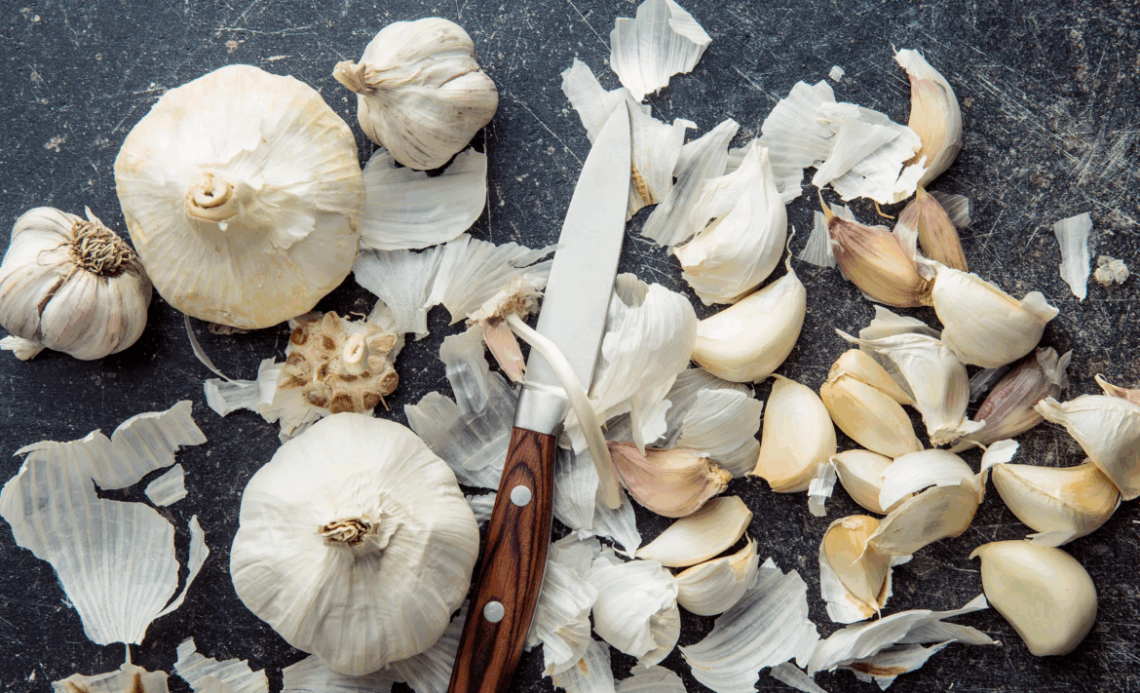
When peeling garlic, the first instinct is to throw away the skins, without considering that they hide active compounds with remarkable benefits. Although not regularly consumed, garlic peels contain antioxidants, flavonoids, and other phytochemical substances that can support heart health, the immune system, and even skin health. Recent studies have begun to highlight these properties, suggesting that this seemingly useless part of garlic may have more uses than previously thought.
Benefits of Garlic Peels
1. Powerful Natural Antioxidant
Garlic peels are rich in polyphenolic compounds, substances that act as antioxidants combating free radicals. They help prevent oxidative stress in cells, a major factor in the onset of chronic diseases such as cancer and cardiovascular diseases.
Regular consumption of garlic peel extract may help reduce systemic inflammation. This effect has been observed in several laboratory tests, where the peels demonstrated the ability to inhibit oxidative processes better than garlic pulp in some cases.
The antioxidants in the peels also have an anti-aging effect, contributing to cellular structure protection and supporting skin regeneration.
Compared to other natural sources, such as onions or green tea, garlic peels contain a unique combination of flavonoids and phenolic acids.
This makes them useful in preparing teas or infusions that can be consumed or applied externally.
2. Support for Immunity
The peels contain traces of allicin, as well as other sulfur compounds that indirectly contribute to supporting the immune system. Although the concentration is lower than in actual garlic, the cumulative effect can play a preventive role in infections.
When used in infusions, the peels can have mild antimicrobial and antiviral effects.
In traditional Asian medicine, decoctions made from garlic peels were used to prevent colds and coughs.
The active substances stimulate white blood cells, increasing the body’s defense capacity.
Additionally, extracts from the peels may have a supportive effect on the lymphatic system through mild detoxification.
3. Cardiovascular Protection
Research suggests that the flavonoids in the peels contribute to the relaxation of blood vessels, lowering blood pressure.
Regular consumption of a weak tea made from peels may have a mild vasodilatory effect.
Polyphenols can reduce the oxidation of LDL cholesterol, thus preventing deposits in arteries.
Some studies also show that peel extract reduces homocysteine levels, an amino acid associated with an increased risk of heart attack.
Moreover, it contributes to protecting the vascular endothelium, reducing the risk of atherosclerosis.
4. Local and Internal Anti-inflammatory Effect
Applied as a poultice or compress, the peels can soothe minor skin inflammations, especially those caused by insect bites.
A concentrated infusion can be used for steam inhalation in cases of sinusitis or nasal congestion.
Polyphenols act on pro-inflammatory enzymes such as COX-2, thereby reducing inflammatory reactions.
Extracts may have a protective effect in cases of arthritis by reducing pain and joint stiffness.
Laboratory studies have identified a significant decrease in inflammatory markers after administration of the extract.
5. Beneficial Effects on Skin
Due to their active compound content, garlic peels can be used in natural cosmetic preparations.
Applying an infusion to the face may help reduce acne due to its mild antibacterial effect.
They can be used in steam treatments for oily or congested skin.
Extracts from the peels may help reduce pigmentation spots through their antioxidant effect.
In combination with other plants like chamomile, the peels can have a calming and regenerating effect on sensitive skin.
Studies and Research
A study published in Journal of Food Biochemistry analyzed extracts obtained from garlic peels, highlighting the increased antioxidant content compared to the pulp. Researchers noted that these peels could be utilized as a natural supplement with cardiovascular health benefits.
Researchers from South Korea discovered that garlic peel infusion has the ability to reduce blood sugar levels in experimental models with induced diabetes. This effect is attributed to phenolic compounds and flavonoids.
Another study conducted by the Department of Pharmacology, Cairo University showed that the ethanolic extract from peels has anti-inflammatory effects comparable to ibuprofen in animal models, without the adverse effects associated with synthetic drugs.
In the International Journal of Green Pharmacy, a detailed analysis of the antimicrobial potential of peels was published, demonstrating inhibitory effects on strains of Staphylococcus aureus and E. coli.
Research from the University of Tokyo concluded that infusions made from garlic peels have a mild anticancer activity by inhibiting the proliferation of tumor cells in the laboratory.
All these studies suggest that a neglected resource, such as garlic peels, can be utilized for therapeutic purposes.
Preparation of Garlic Peel Infusion
Ingredients:
- 1 tablespoon of dried garlic peels (well cleaned)
- 250 ml boiling water
Preparation:
Pour boiling water over the cleaned and dried peels. Let it steep for 10-15 minutes, then strain. It can be consumed warm, optionally with a bit of honey.
External Use
- For the face: the infusion can be used as a facial tonic.
- For the scalp: rinsing hair with infusion can help reduce dandruff.
- For joint pain: warm compresses can be prepared with concentrated infusion.
Contraindications
- Frequent consumption is not recommended for individuals with digestive issues (gastritis, reflux), as sulfur compounds may irritate the gastric mucosa.
- Should not be consumed in excess by pregnant or breastfeeding women due to lack of safety studies.
- Individuals allergic to garlic should avoid using the peels externally as well.
- Concentrated extracts may interact with anticoagulant medications.
- For external use, it is recommended to perform a patch test on a small area of skin to avoid irritation reactions.
Sources:
- Journal of Food Biochemistry – Comparative study of antioxidant activity in garlic peels and cloves
- International Journal of Green Pharmacy – Antimicrobial properties of Allium sativum peel extracts
- Cairo University – Anti-inflammatory potential of garlic peel extract
- Seoul National University – Hypoglycemic effects of garlic peel infusion
- Tokyo University – Cytotoxic effects of garlic skin extract on tumor cell lines




