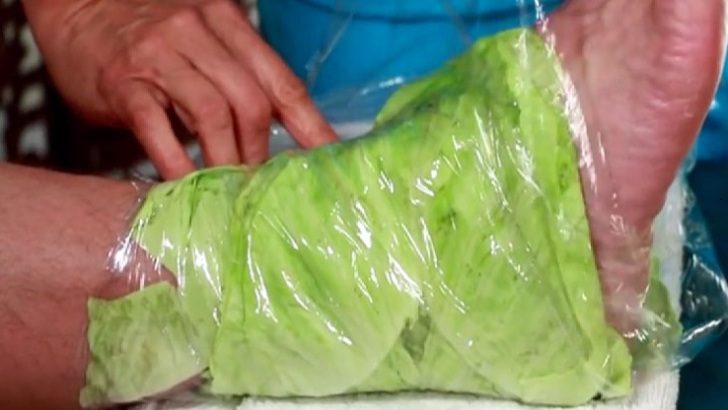
Cabbage leaves, used for centuries in rural households as an external remedy for inflammation and pain, are gaining attention in modern medicine. The simple application of a leaf on the skin seems too simple to be effective, but science is beginning to confirm what tradition has always known. However, this remedy is not suitable in every situation.
When Cabbage Leaf Compresses Work
1. Joint Inflammation (knees, hands, fingers, ankles)
Cabbage leaf compresses are effective in reducing inflammation due to anti-inflammatory compounds such as glucosinolates, anthocyanins, and vitamin K.
A study published in Evidence-Based Complementary and Alternative Medicine (2016) showed that daily application of cabbage leaf compresses for 4 weeks in individuals with knee osteoarthritis led to a significant reduction in pain and improvement in mobility, comparable to the effects of a diclofenac gel.
2. Muscle Pain After Exercise
The cooling effect and ability to stimulate local circulation make cabbage leaves useful in combating muscle pain.
It is recommended to apply crushed leaves and leave them on the affected area for 20-30 minutes.
3. Mastitis (during breastfeeding)
Cold cabbage leaves applied to the breast are a commonly used remedy for early-stage mastitis or discomfort caused by breastfeeding.
Research published in International Journal of Childbirth Education (2014) confirmed that women who used cold cabbage leaves experienced a faster reduction in pain and inflammation compared to the control group.
4. Sprains, Minor Strains
Cabbage leaves can help reduce swelling and local pain in the case of sprains or minor strains by stimulating lymphatic circulation and local drainage.
5. Minor Burns and Skin Irritations
Due to their emollient effect and content of vitamin U (an anti-ulcer factor), compresses can speed up healing and soothe burning sensations on the skin.
When They DO NOT Work or Are Contraindicated
1. Bacterial or Fungal Skin Infections
Applying cabbage leaves to open wounds, infected ulcers, or areas with infected dermatitis can worsen the situation or push the infection deeper.
2. Deep Venous Thrombosis
In cases where inflammation is caused by a deep blood clot (thrombosis), compresses not only do not help but can induce a false sense of relief that delays appropriate treatment.
3. Other Severe Systemic Conditions (severe autoimmune arthritis, generalized infections)
In these conditions, cabbage leaf compresses may provide only temporary relief and do not replace specific medical treatment. Additionally, they can mask symptoms that require careful medical monitoring.
4. Allergies to Crucifers
Individuals allergic to cabbage, broccoli, or other crucifers may experience skin reactions upon contact with the applied leaf.
How to Correctly Apply Cabbage Leaf Compresses
- Select healthy, clean outer leaves from a green or red cabbage.
- Wash the leaf and dry it well.
- Remove the thick central vein.
- Gently crush the leaf with a rolling pin to release the juice.
- Apply directly to the skin, cover with gauze or plastic wrap, and leave for 20-40 minutes.
- Repeat 2-3 times a day if necessary.
For enhanced anti-inflammatory effects, it is recommended to cool the leaves in the refrigerator before application.
Detailed Contraindications
- Contact dermatitis or allergies to cabbage (reaction to sulfur compounds).
- Infected wounds, open wounds, necrotic skin.
- Severe venous conditions (e.g., deep thrombophlebitis).
- Replacement of medical treatment for severe joint conditions.
- Use on irritated areas in children under 2 years old; pediatric consultation recommended.
Sources
- Evidence-Based Complementary and Alternative Medicine, article: Topical Application of Cabbage Leaves for Knee Osteoarthritis
- International Journal of Childbirth Education, article: Cabbage Leaves for Engorgement in Breastfeeding Mothers




